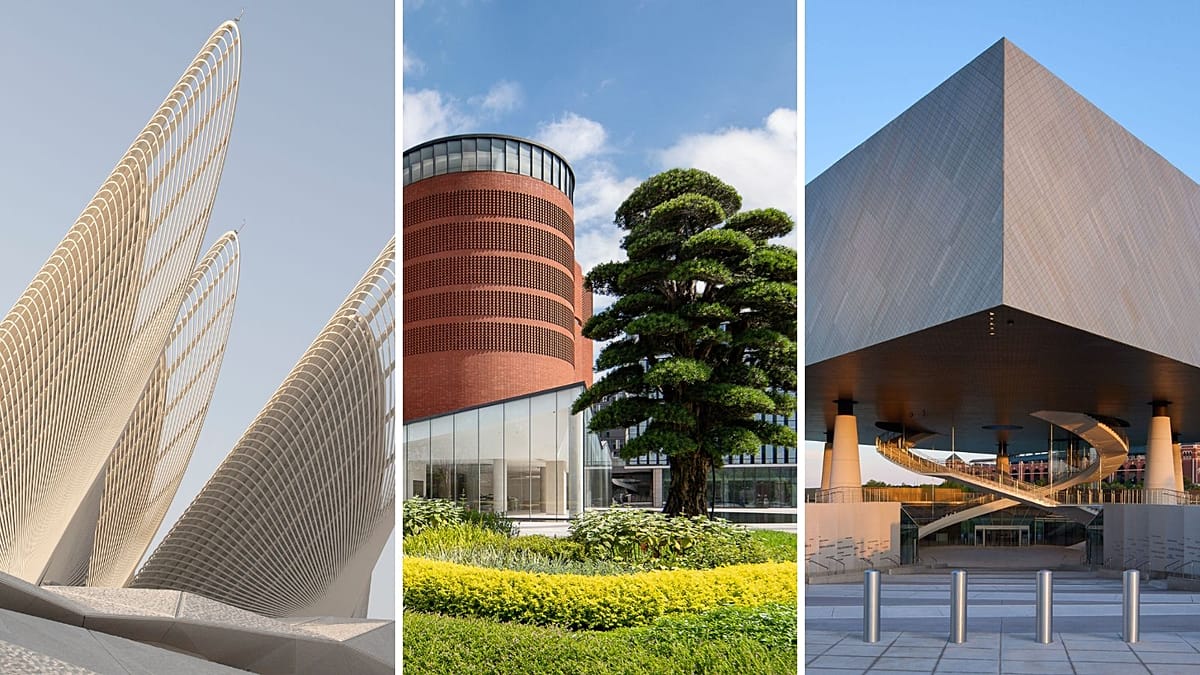
The Prix Versailles, an international architectural award that celebrates outstanding design, has announced its 2026 selection of the world's most beautiful museums. Among the seven laureates, only one is located in Europe: the Lost Shtetl Museum in Šeduva, Lithuania.
Jérôme Gouadain, Secretary General of the Prix Versailles, described the shortlist as distinguished by “the quality of its architectural interpretations and staging, elevating the sites with extraordinary narrative power.” He added that the museums “provide a real illustration of how strength and talent can be revealed through harmony, sensitivity and sharing.”
A Museum That Tells a Story of Jewish Life
The Lost Shtetl Museum, also known as the Šeduva Jewish Museum, is a privately run NGO dedicated to preserving the history of the Jewish community that once thrived in this small town in the Radviliškis district municipality. The word shtetl is Yiddish for “small town,” reflecting the close-knit communities that were central to Jewish life in Eastern Europe before the Holocaust.
Finnish architect Rainer Mahlamäki, who previously designed the POLIN Museum of the History of Polish Jews in Warsaw, collaborated with Enea Landscape Architecture to create a unified structure whose “dynamic rooftops evoke the silhouette of a small village.” The museum’s urban design is arranged as a series of “individual houses,” each presenting a distinct chapter of the exhibition. Covering more than 3,400 square meters, the building is complemented by a Memorial Park that extends the narrative into the landscape.
The selection of the Lost Shtetl Museum underscores a broader European trend of using architecture to confront difficult histories. This approach aligns with recent recognition of adaptive reuse and transformation in the EUmies Awards 2026, which honored projects that reimagine existing spaces.
The Other Laureates
The remaining six museums on the list span Asia, the Americas, and Central Asia. They include the Zayed National Museum in the United Arab Emirates, the Shenzhen Science & Technology Museum in China (designed by Zaha Hadid Architects), the Xuelei Fragrance Museum in Guangzhou, the MoN Takanawa: The Museum of Narratives in Tokyo (by Kengo Kuma), the National Medal of Honor Museum in Arlington, United States (by Rafael Viñoly), and the Center of Islamic Civilization in Tashkent, Uzbekistan.
Three of these seven museums will receive additional World Titles in the categories of Prix Versailles, Interior, or Exterior, to be announced by the end of 2026.
The Prix Versailles list arrives amid a period of cultural investment across Europe. In Spain, for instance, new museums and hotels are part of a broader push to attract visitors, as seen in Spain 2026: New Museums, Hotels, and F1 Grand Prix in Madrid. Meanwhile, the European Heritage Awards 2026 recently recognized 30 projects from 18 countries for conservation and adaptive reuse, further highlighting the continent’s commitment to preserving and reimagining its cultural fabric.
Gouadain expressed hope that these museums would “be sources of inspiration for all those who serve the common good of humanity.” For the Lost Shtetl Museum, that mission is particularly poignant: it not only preserves the memory of a lost world but also invites visitors to reflect on the resilience of community and the power of place.