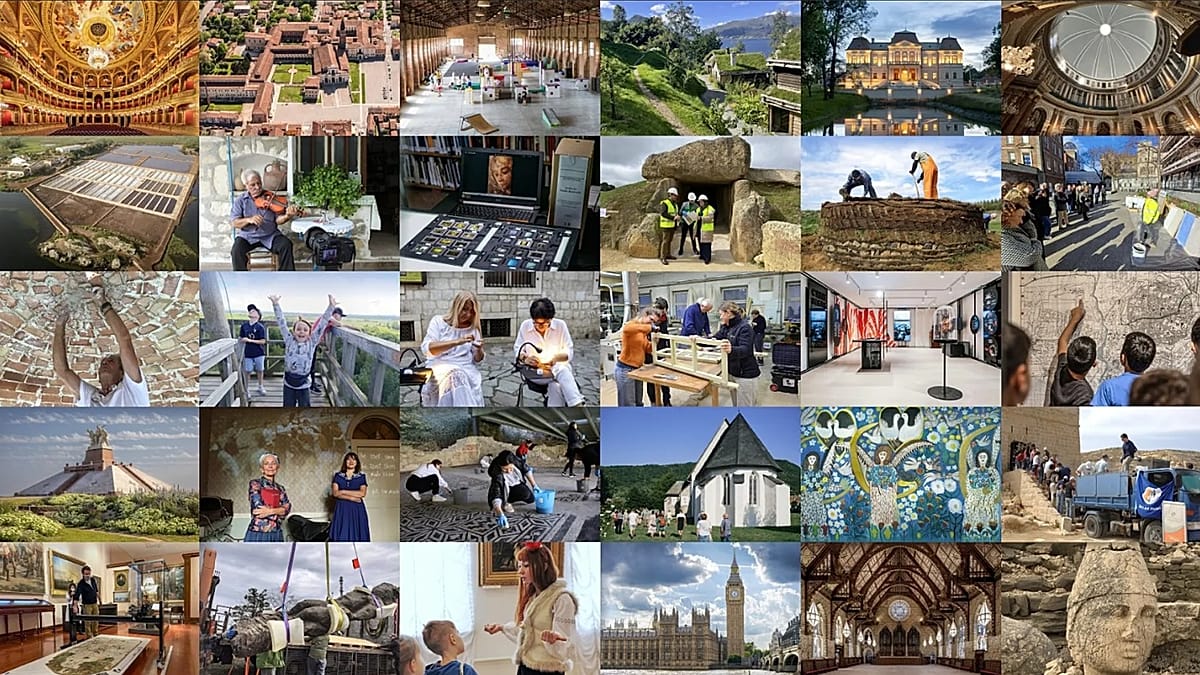
The 2026 European Heritage Awards, organized by Europa Nostra with support from the European Commission, have recognized 30 projects from 18 countries for their contributions to conservation, adaptive reuse, research, education, and awareness-raising. The awards, first launched in 2002, celebrate initiatives that demonstrate how heritage can drive progress rather than merely preserve the past.
Glenn Micallef, European Commissioner for Intergenerational Fairness, Youth, Culture and Sport, emphasized the forward-looking nature of the winners. "From pioneering AI-based risk prevention to hands-on training in traditional building techniques, these projects show that heritage is not just about the past, it is a living force for progress," he said.
Cecilia Bartoli, President of Europa Nostra, underscored the broader context of the awards. In a world marked by conflicts, geopolitical tensions, and rapid technological change, she stated that "the need to champion what unites us has become more urgent and important than ever."
From Railway Yards to Lace Traditions: A Diverse Range of Winners
The winning projects span five categories: conservation, adaptive reuse, research, education, and awareness-raising. Among the most notable is the DumBO project in Bologna, Italy, which transformed a former railway yard into a vibrant cultural hub. This adaptive reuse initiative exemplifies how industrial spaces can be repurposed to serve contemporary community needs.
In Cyprus, the Fiddler research project documented the life stories of some of the last surviving traditional Greek Cypriot and Turkish Cypriot musicians, preserving a musical heritage that risks disappearing. The project highlights the role of heritage in fostering dialogue between communities divided by history.
Montenegro's Pacijenca project revived the nearly extinct Dobrota lace tradition, a delicate craft that had been passed down through generations but was on the verge of being lost. By training new artisans and creating market opportunities, the project ensures that this cultural practice continues.
In France and Belgium, the Gardens of Peace project created contemporary public gardens along the First World War front line. These spaces rethink how Europeans remember conflict, transforming sites of violence into places of reflection and reconciliation.
The National Trust for Malta, which has been protecting the island's heritage since 1965—shortly after the country gained independence—was also recognized for its long-standing conservation efforts. Malta's heritage includes prehistoric temples, Baroque architecture, and a rich maritime history.
Heritage supporters can vote online for the Public Choice Award 2026 until 12 May. The awards ceremony will take place on 28 May in Nicosia, Cyprus, bringing together laureates, experts, and policymakers from across the continent.
For those interested in broader heritage trends, the Brussels Festival recently offered rare access to architectural landmarks, while digital archaeology and open science are reshaping preservation methods from Amsterdam to Chongqing. The awards also echo themes explored in the cross-continental preservation of artisan traditions.