In an era of mass production and digital replication, the meticulous work of artisans preserving ancient crafts offers a vital connection to cultural memory. From the canals of Venice to the mountains of Hunan Province in China, dedicated individuals are ensuring that skills passed down through generations do not vanish, maintaining tangible links to history and identity.
Venice: The Enduring Power of the Mask
Venice, once the wealthiest city in Europe and a pivotal hub for trade between East and West, carries its history in its architecture and its art. Beyond the palazzos and piazzas, a less visible but equally significant tradition thrives in workshops like Ca’ Macana. Here, artisan Davide Belloni practices the centuries-old Venetian craft of creating hand-sculpted masks.
These masks are far more than tourist souvenirs; they are artefacts of social history. For generations, they granted Venetians a unique social freedom, allowing the concealment of identity and class during the city's famed Carnival and other festivities. Today, Belloni and his contemporaries blend historic iconography with contemporary fantasy, ensuring the craft evolves while honouring its origins. The mask remains a potent symbol of creativity and transformation, a physical object that channels the spirit of the Serenissima.
Hunan: Stories Stitched in Thread
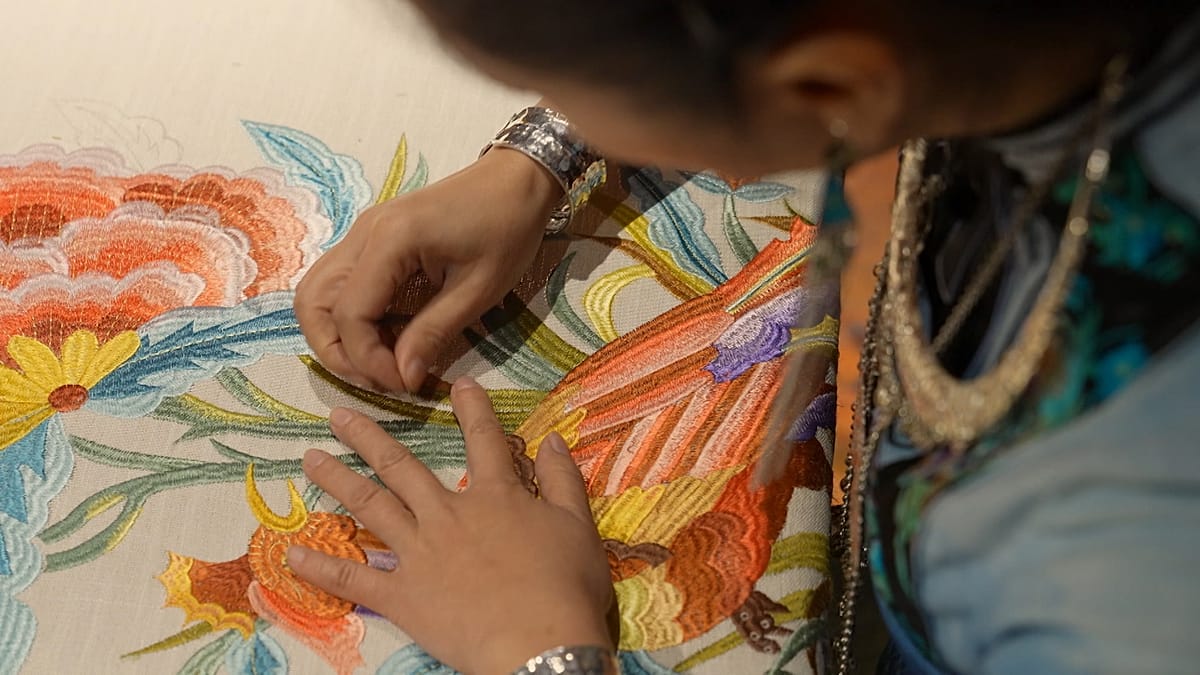
Half a world away, in China's Hunan Province, a different but parallel dedication to heritage unfolds. Artisan Yi Hua, featured by presenter Yegor Shyshov on CGTN's 'Inheritors', practices the intricate art of Miao embroidery. In Miao culture, this is not merely decoration; it is a language of memory and blessing, woven directly into the fabric of life's most important moments.
"A family's love stitched in red," Yi explains, describing the wedding dresses she creates. Each pattern and colour choice narrates a story—of migration, of clan history, of hopes for the future. These garments become living archives, carrying the emotional and historical weight of generations. The survival of this craft represents a conscious resistance to cultural homogenisation, a choice to wear one's history proudly.
This focus on preserving cultural memory through craft resonates with broader global efforts to safeguard intangible heritage, a challenge faced by communities worldwide. It echoes the difficult work of documenting traditions in regions facing profound disruption, such as Darfur's enduring crisis, where preserving cultural identity becomes an act of resilience.
An Ancient Material Link Revealed
While these crafts appear worlds apart, new scientific research suggests a material connection that predates the famous journeys of Venetian explorer Marco Polo. Professor Gilberto Artioli of the University of Padua has conducted chemical analysis on one of Venice's most iconic symbols: the Lion of Saint Mark.
The findings point to an unexpected origin for the copper used in the statue's casting: China. This evidence indicates that trade in raw materials between these distant regions was occurring hundreds of years earlier than previously documented by Western chroniclers. It rewrites a small but significant part of the history of global exchange, proving that connections between Europe and Asia were both older and more substantive than the traditional narrative suggests.
This revelation about historic supply chains underscores how global interdependence is not a modern phenomenon. Today, similar complex dependencies shape contemporary policy, as seen when the EU Energy Chief warns of prolonged price hikes stemming from conflict in distant regions, highlighting Europe's continued vulnerability to global material flows.
The discovery by Professor Artioli's team adds a profound layer to the story. It means the artisans of Venice and Hunan are not just parallel examples of cultural preservation; their histories are, in a literal sense, forged from the same elemental sources. The copper that may have travelled from ancient Chinese mines to become Venice's lion finds its echo in the threads of Miao embroidery—both are materials transformed by human hands into carriers of meaning.
In a rapidly modernising world, the work of Davide Belloni, Yi Hua, and countless other inheritors of tradition provides a crucial counterbalance. They remind us that value is not solely measured in efficiency and scale, but also in continuity, story, and the human touch. Their crafts are acts of preservation that, as the research from Padua reveals, may quietly commemorate ancient global connections that the modern world has only just begun to understand.