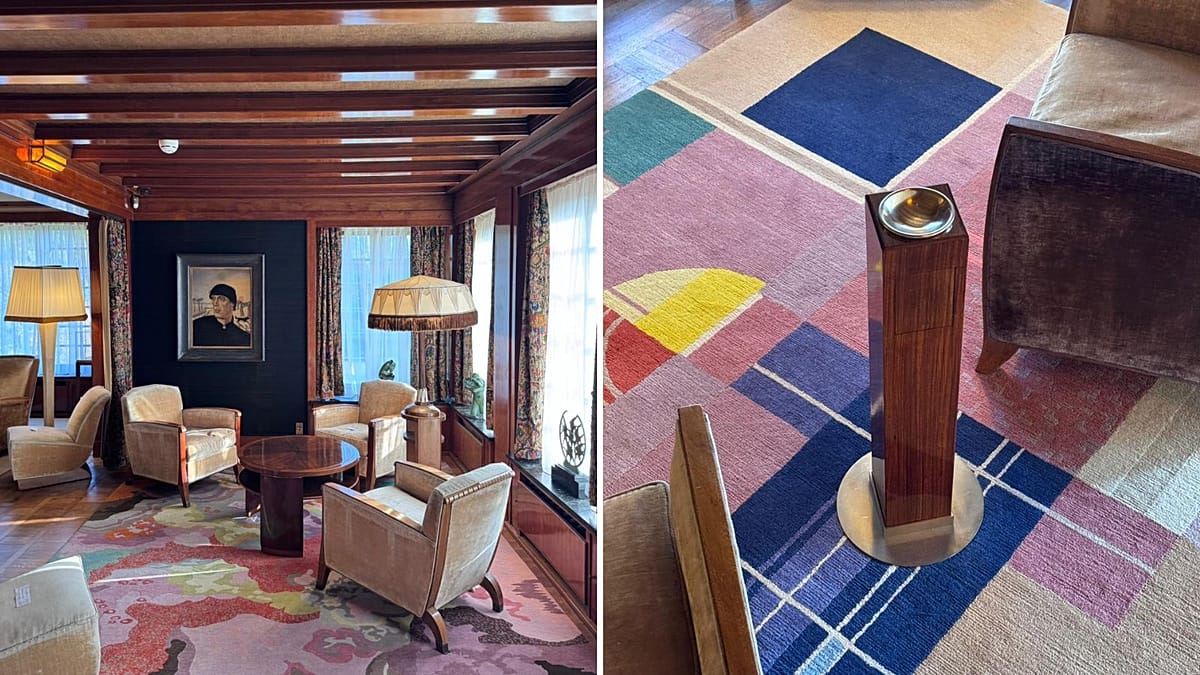
For the month of March, Brussels offered a unique glimpse into its architectural soul. The Brussels Art Nouveau & Art Deco (BANAD) festival opened the doors to approximately sixty historic buildings, many of them private residences and institutional sites typically closed to the public.
The event, organised by the non-governmental body Explore.Brussels, proved immensely popular. “We sold 19,426 tickets, almost 100% of our entire availability,” said Amaury de Smet, the organisation’s Program & Communication Director. Beyond interior visits, the programme featured around fifty guided walking and cycling tours, conferences, and exhibitions across the Belgian capital.
A Living Museum of Design Evolution
Brussels holds a unique position in architectural history. It is widely regarded as a birthplace of Art Nouveau, a status largely attributed to the pioneering work of architect Victor Horta. His innovative use of iron, glass, and organic forms in buildings like Hôtel Solvay and Hôtel Tassel defined the movement. The city also boasts an exceptional concentration of roughly five hundred Art Deco structures.
The festival allows scholars and the public alike to trace the tangible transition between these styles across the city’s streets. Art Nouveau, which peaked around the turn of the 20th century, gradually evolved into the more geometric and industrial Art Deco. This shift moved away from flowing lines and floral motifs toward symmetry, abstraction, and materials like reinforced concrete. Many buildings in Brussels are hybrids, combining elements of both.
This focus on preservation comes as Brussels lobbying intensifies on various regulatory fronts, demonstrating the city's dual role as a political hub and a cultural custodian.
Embracing Modernism and Securing Funding
The 2026 edition of BANAD marked a significant expansion by formally introducing Modernism as a third architectural movement alongside Art Nouveau and Art Deco. “This anniversary year, marking the tenth edition of the BANAD Festival, saw the introduction of a third architectural movement... a development that has been very well received by our visitors,” de Smet confirmed.
Modernism, emerging in the early 20th century as a reaction against decorative styles, is characterised by functional design and clean lines. In Brussels, it often blended with Art Deco, resulting in minimalist exteriors that contrast with richly decorated interiors. The festival showcased modernist homes like Villa Berteaux and the Dotremont house, designed by architect Louis-Herman De Koninck.
Substantial funding underpins these conservation efforts. In 2026, the regional heritage agency Urban.Brussels, a partner in the festival, announced a €56 million allocation for sustainable renovation and façade enhancement across Brussels. Separately, the City of Brussels municipality had earmarked €5.6 million for town planning and heritage in its budget, including grants for renovating façades in pedestrian zones.
This commitment to cultural heritage stands in contrast to the political shifts occurring elsewhere in Europe, such as Péter Magyar's victory in Hungary reshaping Budapest's stance towards EU institutions. While politics evolve, Brussels invests in preserving the physical layers of its history.
First established in 2017, though building on earlier biennial events dating back to 2001, the BANAD festival has become an annual fixture. Its mission extends beyond celebration to active protection, ensuring that Brussels remains a living reference point for the study of architectural evolution, where original structures retain their authenticity for future generations.