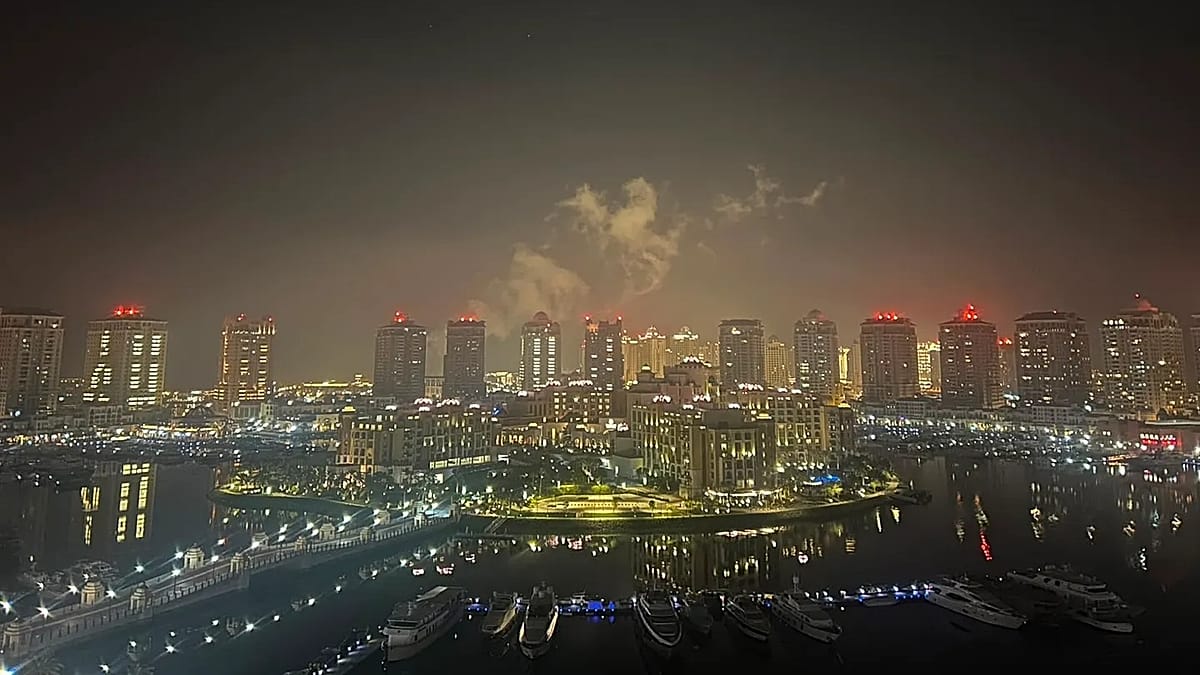
Iran launched a fresh barrage of ballistic missiles at Qatar early Friday morning, striking in two waves at 3:30 am and 5:45 am local time (2:30 am and 4:45 am CET). The attacks targeted the Al-Udeid US airbase, the largest American military installation in the Middle East, which Washington has used to conduct strikes on Iranian territory over the past week.
Qatar's air defence systems intercepted all incoming missiles, according to authorities, but falling shrapnel injured a child in Doha. The minor was receiving medical care at the time of the announcement. Air-raid mobile alerts woke residents across the capital, urging them to take shelter, as loud booms from interceptions and shockwaves shook the city.
The assault came at the end of Qatar's four-day national mourning period for former Emir Sheikh Hamad bin Khalifa Al Thani, who died earlier this week. European leaders joined global dignitaries in Doha to pay their respects, underscoring the emirate's diplomatic ties with the continent.
Iran's Expanding Campaign
Iran's Islamic Revolutionary Guard Corps (IRGC) confirmed it had launched missiles at Qatar in previous incidents, claiming the Al-Udeid base was the target. The latest strikes follow a pattern of renewed Iranian attacks on neighbouring Gulf states, including Kuwait, Bahrain, and Jordan, after the collapse of a ceasefire and interim deal with the United States that was intended to pave the way for a final peace agreement.
Iranian Foreign Minister Abbas Araghchi travelled to Doha on Wednesday to meet with Qatari authorities and offer condolences for the former emir's death, according to Iran's foreign ministry. The visit came just days before the missile strikes, highlighting the volatile mix of diplomacy and military confrontation in the region.
The escalation is part of a broader confrontation between Tehran and Washington over the Strait of Hormuz, a vital chokepoint for global oil shipments. The US-Iran conflict escalated after a deadly missile strike on oil tankers in the strait, drawing in Gulf states that host American military assets.
For European capitals, the crisis poses a direct challenge. The European Union has long sought to mediate between Iran and the US, but the collapse of the 2015 nuclear deal and subsequent hostilities have left Brussels with limited leverage. EU defence officials have been pushing for greater military mobility and coordination among member states, as outlined in the bloc's strategic compass, but the rapid deterioration in the Gulf underscores the limits of European influence in a region where US and Iranian interests collide.
Qatar, a key mediator in regional conflicts and a major energy supplier to Europe, now finds itself on the front line of a confrontation it has tried to avoid. The emirate's ability to defend its airspace while maintaining diplomatic channels with both Tehran and Washington will be tested in the coming days.
The injured child in Doha is a stark reminder that even precise missile defences cannot fully shield civilians from the fallout of a widening war. As Iran continues to target US bases and their host countries, the risk of a broader regional conflagration grows, with potential consequences for energy markets, migration flows, and security cooperation that extend well beyond the Gulf.