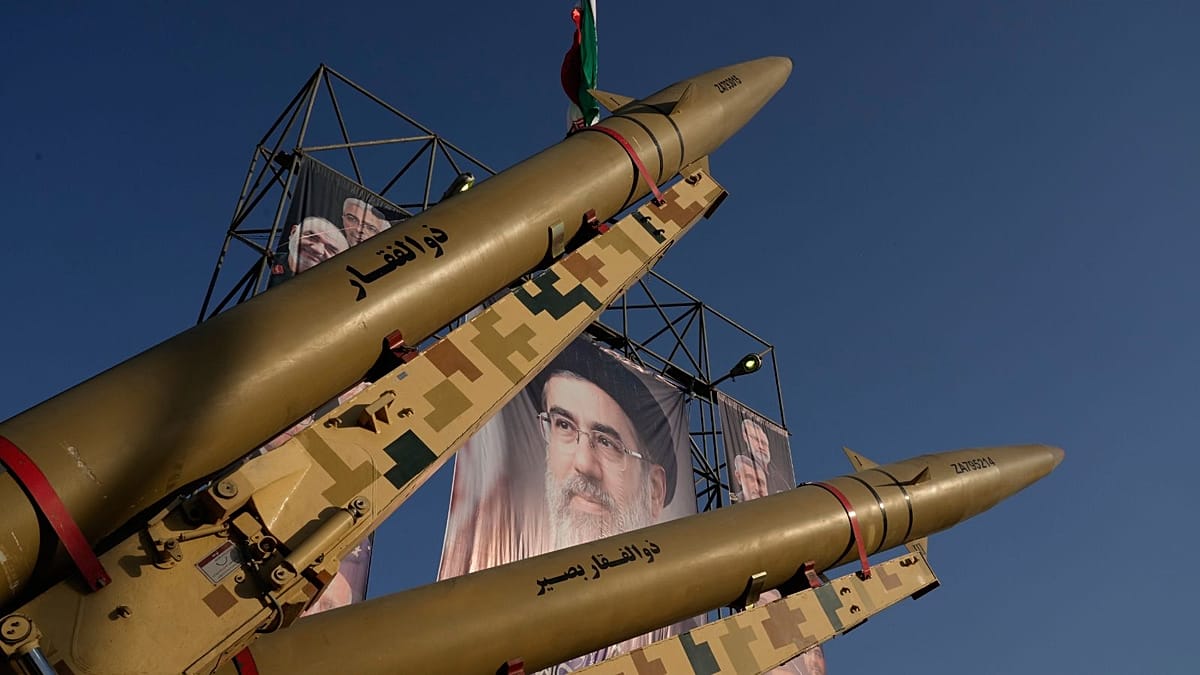
Tehran has escalated its rhetoric against Europe, with a senior Iranian lawmaker warning that any US military action launched from European soil would trigger missile strikes on those bases. The threat comes amid heightened tensions following recent US strikes on an Iranian island in the Strait of Hormuz, as reported by Euronews.
Ahmad Bakhshayesh Ardestani, a member of the Iranian parliament's National Security Committee, told Euronews: "If America uses its bases in Europe, including in Italy and Germany, Iran's missiles will be fired towards Europe." He added that in previous conflicts Iran had held back, but "this time we will not let Europe's assistance to America for an attack on Iran go without consequence."
Ardestani's comments reflect a hardening stance in Tehran, where officials increasingly view European nations as complicit in US military planning. He asserted that European countries had already been "at war with Iran" by allowing their bases to be used, and that Iran would target any base used against it, as well as "the material and non-material assets of countries that assist America."
New scenarios and threats
Another committee member, Fada Hossein Maleki, claimed Iran had prepared a "new approach and scenario" for any renewed conflict that would surprise both the US and European nations. The remarks were echoed by state-run media, which warned that any confrontation could reach "the heart of Europe."
The Islamic Revolutionary Guard Corps (IRGC) issued a statement on Wednesday, the anniversary of the 1979 seizure of the US embassy in Tehran, pledging "an immediate, effective response without geographical limits to every level and type of threat." The statement cited orders attributed to Ayatollah Mojtaba Khamenei to update Iran's "target bank" and place "the enemy's material and non-material assets within range."
In a visible sign of the escalating rhetoric, a banner was hung outside the German embassy in Tehran, quoting Mohsen Rezaei, secretary of Iran's National Security Council: "Europe will pay the price for supporting Israel." The banner was reportedly placed by student members of the Basij, a volunteer militia affiliated with the IRGC. Euronews sought comment from the German embassy and the German foreign ministry, but neither was reachable at the time of publication.
Separately, the IRGC-affiliated Fars news agency reported that Iran had warned Germany that its military assets across the region would be treated as "legitimate defensive targets" if Berlin entered open military confrontation with Iran. The claim could not be independently verified.
Tehran has summoned Germany's ambassador in recent weeks over Berlin's support for Israel. The Kayhan newspaper, which is overseen by a representative of Ayatollah Mojtaba Khamenei, wrote that Iran's potential targets were no longer confined to US bases in the Middle East and could extend to "the heart of Europe," citing an order for a "military response without geographical limits."
Rezaei also wrote on X that the US response to Iran's demands had been "not convincing," insisting that Washington would need to meet all seven of Iran's conditions before the Strait of Hormuz could be reopened. The strait, a critical chokepoint for global oil shipments, has been the focus of recent tensions, with oil prices dipping on talks but the US keeping a strike option open.
Meanwhile, Iranian parliament speaker Mohammad Bagher Ghalibaf welcomed the Republicans' defeat in Tuesday's congressional elections, writing on X that the American people had "said no to war" and that Iran supported that message.
The threats come as Europe grapples with multiple security challenges, from the war in Ukraine to the fallout from the Middle East. The possibility of Iranian missiles targeting European soil would mark a dramatic escalation, with implications for NATO's southern flank and the security of member states like Italy and Germany.
Analysts note that while Iran's rhetoric is often bellicose, the actual capability to strike European targets with precision remains limited. However, the psychological impact of such threats should not be underestimated, particularly as European publics grow weary of extended conflicts. The situation underscores the delicate balance European leaders must strike between supporting allies and avoiding actions that could drag the continent into a wider war.