Ireland has taken the helm of the rotating presidency of the Council of the European Union for the next six months, a role that places Dublin at the centre of EU agenda-setting. The presidency comes at a time of heightened geopolitical tension, with debates over defence cooperation, economic resilience, and the bloc's core values taking centre stage.
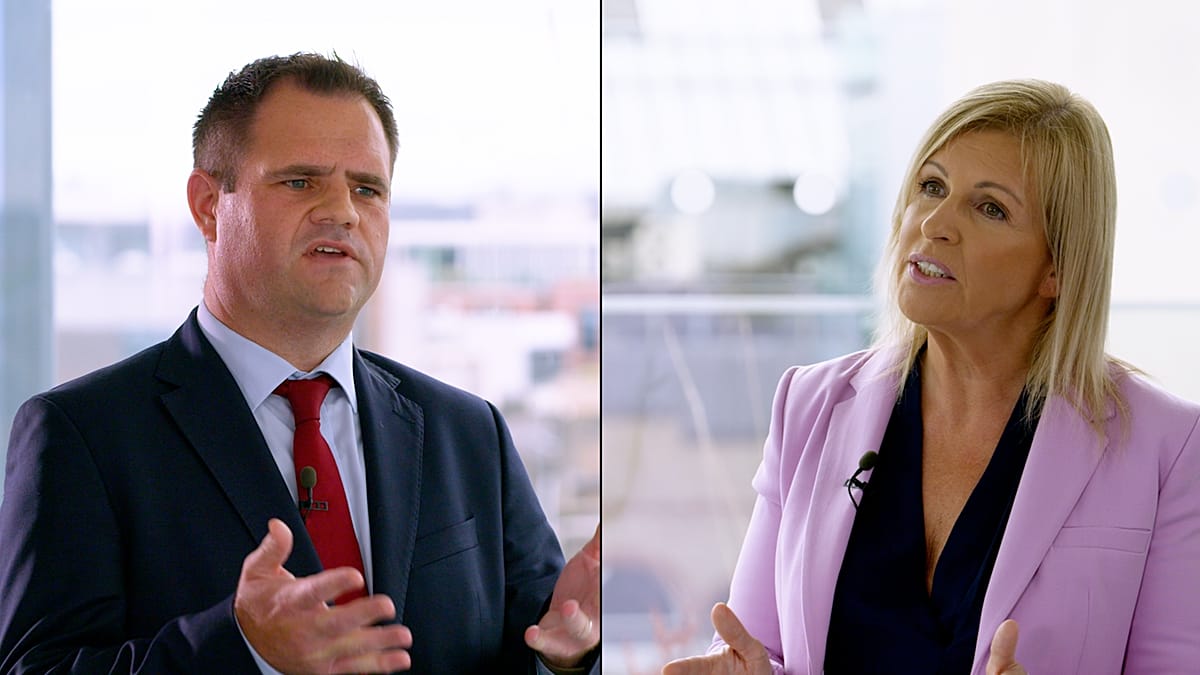
On the latest episode of The Ring, Euronews' weekly debate programme, two Irish politicians—Minister of State for International Development and Diaspora Neale Richmond (Fine Gael) and Sinn Féin TD Rose Conway-Walsh—faced off over the priorities and challenges ahead. Their exchange highlighted the delicate balance Ireland must strike between its traditional neutrality and the EU's push for deeper security integration.
Punching Above Its Weight
Richmond, representing the government, argued that Ireland has historically wielded influence disproportionate to its size. "Ireland is 0.9% of the European Union, but we've always punched above our weight," he said, pointing to previous Irish presidencies that helped shape major European decisions, such as the Lisbon Treaty and the EU's enlargement process. He stressed that the current presidency should focus on practical outcomes, including advancing the new passenger rights rules and strengthening the single market.
Conway-Walsh countered that the presidency must reflect Ireland's core values. "This is a real opportunity for us to show what the real values of the Irish nation are. I think peace has to be central to that. But also equality," she said. She argued that the government should prioritise social justice, climate action, and a fairer economic model over what she described as the EU's "creeping militarisation."
Defence and Neutrality: A Clash of Visions
The most contentious issue was Europe's push to bolster its defence capabilities in response to Russia's war in Ukraine and broader security threats. Richmond insisted that there is "absolutely no pressure for us to join NATO" and argued that Ireland must deepen security cooperation with its European partners through the EU's Common Security and Defence Policy. He emphasised that such cooperation does not compromise Ireland's military neutrality, which is enshrined in its constitution.
Conway-Walsh was unconvinced. She warned that the EU's defence initiatives, including the European Peace Facility and the Strategic Compass, risk drawing Ireland into a military bloc. "Our neutrality is a cornerstone of our foreign policy and a tool for peacekeeping," she said. She called for a referendum on any significant shift in defence policy, arguing that the Irish people should have the final say.
Economic and Environmental Challenges
Beyond defence, the presidency will grapple with economic and environmental issues. The Aughinish Alumina plant in County Limerick, which is under investigation for alleged environmental breaches, was cited as a test case for Ireland's commitment to green transition. Richmond defended the government's record on climate action, while Conway-Walsh accused it of being too lenient on corporate polluters.
The presidency also comes amid broader EU debates on fiscal rules, energy security, and migration. Ireland, as a net contributor to the EU budget, will have a voice in shaping the bloc's long-term financial framework. The government has signalled its intent to push for a digital single market and stronger ties with the Global South, reflecting its development aid priorities.
A Test of Leadership
Ireland's presidency is the first since the UK's departure from the EU, a shift that has altered the dynamics of the Council. With the UK no longer at the table, Ireland has become the largest English-speaking member state, giving it a unique role in bridging divides between northern and southern Europe.
Both politicians agreed that the presidency is a moment of opportunity, but they diverged on what success looks like. For Richmond, it is about delivering concrete results on trade, security, and innovation. For Conway-Walsh, it is about staying true to Ireland's identity as a neutral, peace-loving nation that champions equality and human rights.
As the six-month term unfolds, the world will be watching to see whether Ireland can indeed punch above its weight—and whether its presidency will steer Europe toward greater integration or a more cautious, values-driven path.