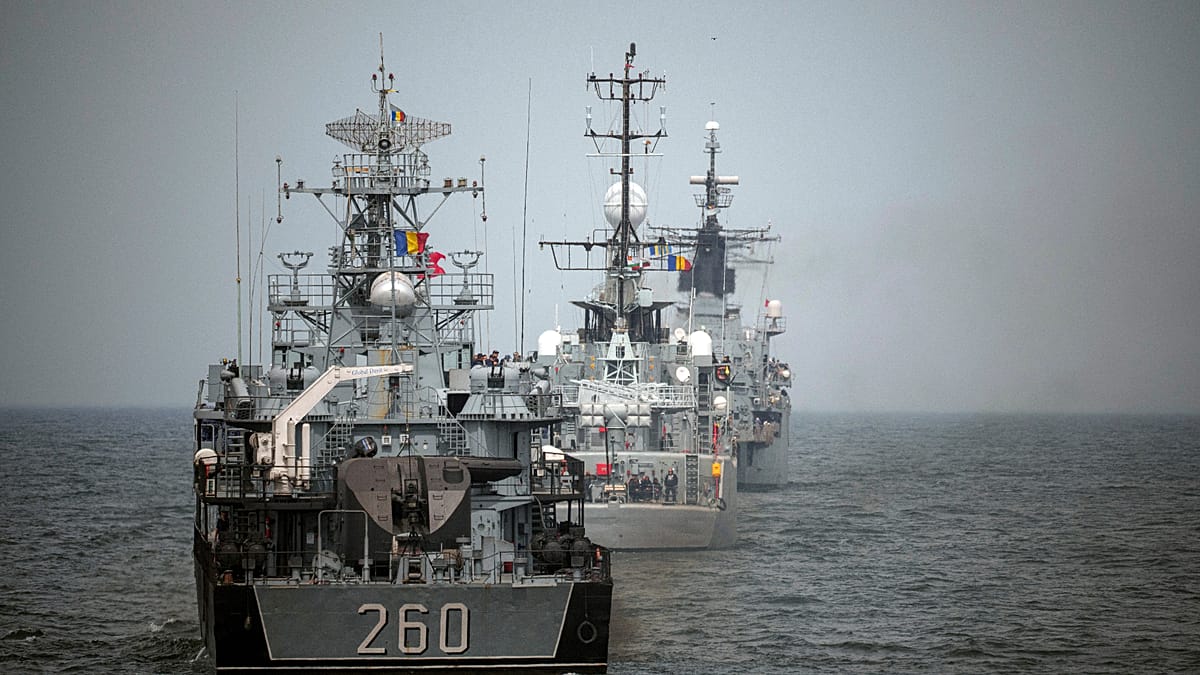
Talks between Israel and Cyprus over a naval procurement package worth roughly €150 million have reached an advanced stage, according to the Israeli financial daily Calcalist. The proposed agreement would see Israeli shipbuilder Israel Shipyards deliver warships fitted with weapons systems manufactured by Rafael, with the contract expected to be signed within weeks once the two defence ministries finalise the terms.
The deal is being structured as a government-to-government (G2G) arrangement, giving it a formal institutional backing that goes beyond a standard commercial sale. For Cyprus, the acquisition would significantly enhance the naval capabilities of the National Guard, while for Israel it represents another step in a deepening strategic partnership with Nicosia at a time when security dynamics in the Eastern Mediterranean are under close scrutiny.
Building on existing cooperation
This is not the first such project between the two countries. Less than a decade ago, Israel Shipyards supplied Cyprus with a patrol vessel designed to protect its Exclusive Economic Zone (EEZ). That ship is equipped with radar, command-and-control systems, and two Typhoon naval weapon stations, also produced by Rafael. The two Israeli firms have previously collaborated on defence programmes for other clients, including Azerbaijan and the Philippines, so the Cypriot deal would draw on established expertise and a proven working relationship.
The naval agreement is part of a broader pattern of defence and diplomatic alignment between Israel and Cyprus. Israeli systems are already embedded in Cyprus's military architecture. According to the Calcalist report, Israel Aerospace Industries (IAI) has supplied Cyprus with the Barak MX air and missile defence system, which was publicly displayed during a military parade in Nicosia in early October marking the 66th anniversary of Cypriot independence. Although Israel has not officially confirmed that sale, the public showing underscored the breadth of the technological links between the two states.
These ties carry particular weight given the regional context. Tensions with Turkey over maritime boundaries and energy resources, as well as the wider instability stemming from the Middle East conflict, have made cooperation between Israel, Cyprus, and Greece increasingly significant. In August, Israel and Greece signed a €3 billion agreement for the "Achilles Shield" programme, a multi-layered air defence network using Rafael and IAI systems. That initiative, alongside the prospective Cypriot naval deal, points to a coordinated effort to bolster security across the eastern Mediterranean.
For Cyprus, the deepening relationship with Israel offers a path to modernise its armed forces and gain access to advanced defence technology. Israeli defence sources quoted by Calcalist suggest the agreement could also open the door to further collaboration, including joint production and technology transfer, which would give the partnership a longer-term industrial dimension rather than a one-off procurement.
The timing of the report is notable, coming as the EU and Turkey prepare for an October summit on Cyprus-related issues. While the naval deal is a bilateral matter, it inevitably intersects with broader geopolitical calculations in the region. The strengthening of the Israel-Cyprus-Greece axis is likely to be watched closely in Ankara, which has repeatedly challenged Cypriot maritime claims.
For now, the focus remains on finalising the contract. Once signed, the agreement would mark a significant upgrade in Cyprus's naval posture and reinforce the strategic alignment between Jerusalem and Nicosia—a relationship that has grown steadily closer over the past decade, driven by shared security concerns and a common interest in regional stability.