Three years after the Hamas attacks of October 7, 2023, Europe remains deeply divided over how to commemorate the dead and address the ongoing war in Gaza. The anniversary was marked across the continent, but it was a small gesture in Strasbourg that reignited a fierce political and diplomatic confrontation.
During a ceremony at the European Parliament, French MEP Rima Hassan, a member of La France Insoumise, was filmed removing an Israeli flag from its stand. She later denied kicking it to the ground, insisting she had only taken it down. In a post on X, she framed the act as a protest against what she called “the ongoing genocide” and “violations of international law,” adding that a Russian flag would never be allowed inside the institution’s premises. “The State of Israel, which is a partner in this event through its embassy, continues to enjoy total impunity,” she wrote.
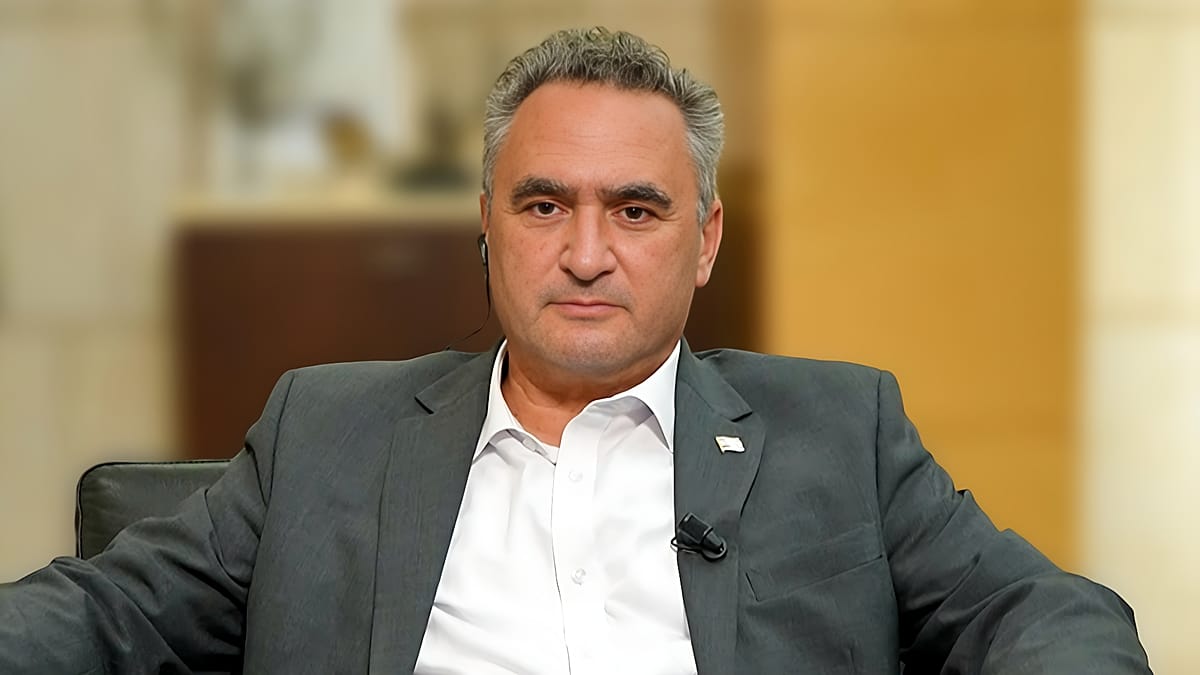
The incident drew an immediate response from Israel’s ambassador to France, Joshua Zarka, who told European Pulse that the episode reflects a broader and deeply worrying trend. “France has a serious antisemitism problem,” Zarka said in an interview. “This is not about criticism of Israeli policy. This is about the demonisation of the Jewish state and, by extension, of Jewish people in Europe.”
Zarka’s comments come at a time when France is already grappling with a spike in antisemitic incidents. According to the French Jewish community’s security service, the number of reported antisemitic acts has risen sharply since the October 7 attacks. The ambassador’s warning echoes concerns raised by other European leaders, who have noted that the line between legitimate political protest and hate speech is becoming increasingly blurred.
A broader European debate
The Strasbourg clash is not an isolated event. Across the EU, member states are struggling to balance free expression with the need to protect Jewish communities. In Germany, the Bundestag has passed resolutions condemning antisemitism, while in the Netherlands and Belgium, pro-Palestinian demonstrations have sometimes escalated into confrontations with police. The European Commission has proposed a new strategy to combat antisemitism, but implementation remains uneven.
For France, the issue is particularly sensitive. The country is home to the largest Jewish community in Europe, estimated at around 500,000 people, as well as a significant Muslim population. The war in Gaza has exacerbated tensions, with protests and counter-protests taking place in Paris, Lyon, and Marseille. President Emmanuel Macron has repeatedly called for unity, but his government has struggled to contain the fallout.
Zarka’s remarks also highlight a growing frustration in Israel with European responses to the conflict. While the EU has imposed sanctions on some Hamas-linked entities, it has also called for a ceasefire and expressed alarm over civilian casualties in Gaza. Israeli officials have accused European governments of applying double standards, a charge that resonates with many Jewish communities across the continent.
The debate has also spilled into French domestic politics. Marine Le Pen’s Rassemblement National has sought to position itself as a defender of Jewish citizens, but the party has faced fresh antisemitism allegations involving its own ranks. Meanwhile, the far-left La France Insoumise, to which Rima Hassan belongs, has been accused by critics of tolerating anti-Jewish rhetoric within its ranks. The party denies this, arguing that its criticism of Israel is purely political.
At the European Parliament, the flag incident has prompted calls for stricter rules on what can be displayed during official ceremonies. Some MEPs have demanded an investigation, while others have defended Hassan’s right to protest. The parliament’s president, Roberta Metsola, condemned the removal of the flag, calling it “an act of disrespect” that undermines the institution’s values.
For Zarka, the episode is symptomatic of a wider failure to confront antisemitism in European institutions. “When a member of the European Parliament feels emboldened to remove the flag of a member state of the United Nations, that sends a message,” he said. “It tells Jewish citizens that they are not safe, that their identity is not respected.”
The ambassador’s warning is likely to resonate beyond France. In recent months, several European countries have reported increases in antisemitic incidents, from vandalism of synagogues to online harassment. The EU’s Fundamental Rights Agency has documented a rise in hate crimes, and Jewish community leaders have called for more robust legal protections.
As the anniversary of October 7 passes, the question of how Europe remembers the attacks—and how it addresses the war in Gaza—remains unresolved. The Strasbourg flag incident may have been a minor act, but it has become a symbol of the deep divisions that persist. For Israel’s ambassador, the message is clear: Europe must decide whether it stands with its Jewish citizens or allows hatred to fester.