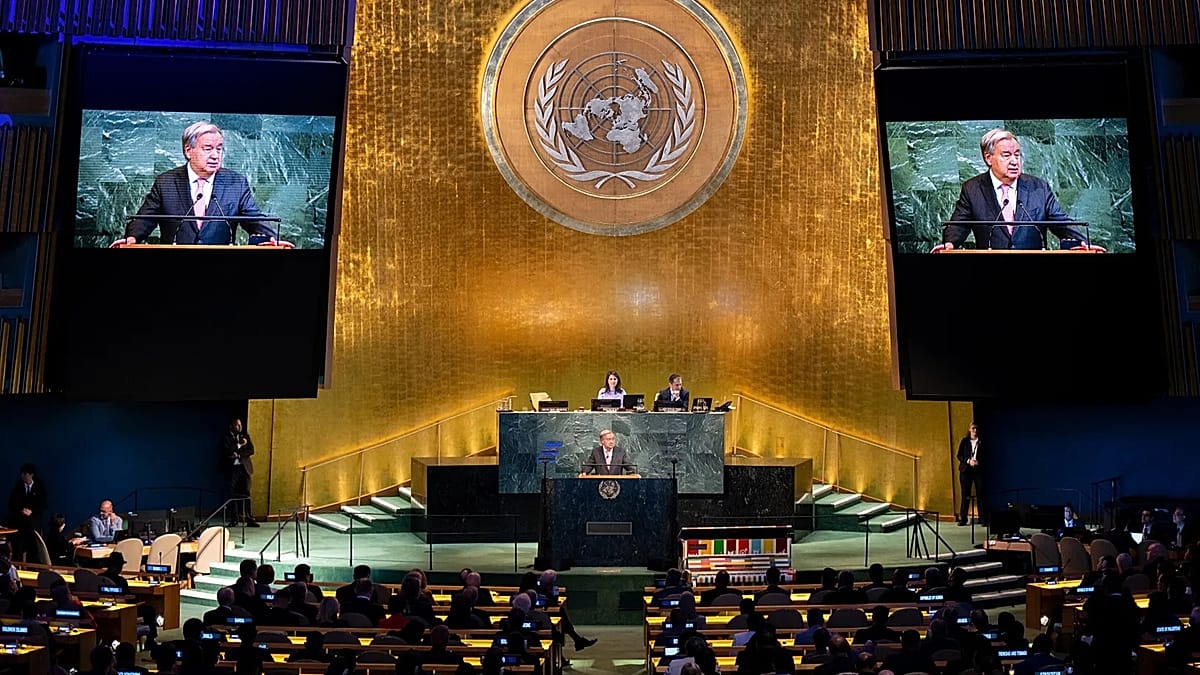
Israel has formally cut all communication with United Nations Secretary-General António Guterres, following the inclusion of the country on a UN list of parties suspected of committing sexual violence in conflict zones. The announcement, made by Israel's ambassador to the UN, Danny Danon, marks a significant escalation in the already strained relationship between Jerusalem and the international body.
In a video posted on X, Danon declared: “We are done with this secretary-general.” He described the decision to blacklist Israel as “outrageous,” adding: “The secretary general and his team continue to spread lies against Israel. To put us and Hamas terrorists on the same list, that's unacceptable.”
The list in question is part of Guterres’ annual report on conflict-related sexual violence, which is typically shared with relevant states before publication. The UN cited “credible information” regarding sexual violence allegedly committed by Israeli security forces against Palestinians in prisons and other detention centres. UN inspectors, the report noted, had been denied access to those facilities.
Israel’s foreign ministry spokesman, Oren Marmorstein, called the inclusion “shameful and absurd,” and argued that it “is further proof of the UN's true nature: a politicised and corrupt organisation that has abandoned its founding principles and systematically targets Israel as its primary mission.” The Israeli mission to the UN confirmed it will have no contact with the secretary-general’s office as long as Guterres remains in the role.
Broader diplomatic fallout
Relations between Israel and the UN have deteriorated sharply since the Hamas-led attack on 7 October 2023, which triggered Israel’s military campaign in Gaza. Israeli authorities have repeatedly criticised Guterres and other UN officials for condemning the scale of Israeli strikes on Gaza. In 2024, Israel declared Guterres persona non grata, effectively barring him from the country.
The UN’s annual report also includes Hamas, citing allegations of sexual violence committed during the 7 October attack and against hostages. The inclusion of both parties on the same list has drawn particular ire from Israeli officials.
Guterres’ spokesman, Stéphane Dujarric, responded to the Israeli announcement by stating: “For our part, the secretary general's door remains open.” Guterres’ term as UN chief ends on 31 December, leaving a limited window for any potential reconciliation.
The dispute has broader implications for European diplomacy. Several EU member states, including France and Germany, have maintained a delicate balance between supporting Israel’s right to self-defence and criticising its conduct in Gaza. The UN’s move may put additional pressure on European capitals to take a clearer stance on the allegations. Italy, under Prime Minister Giorgia Meloni, has recently signalled a shift in its foreign policy, distancing itself from both the US and Israel on certain issues, as noted in Meloni's Foreign Policy Pivot.
Meanwhile, the EU’s justice chief, Michael McGrath, has been advocating for a zero-tolerance approach to corruption across member states, a principle that could extend to accountability mechanisms in international bodies. The current crisis underscores the challenges of maintaining multilateral engagement when one party perceives the process as biased.
Israel has also accused employees of the UN agency for Palestinian refugees, UNRWA, of participating in the 7 October attack, further complicating the relationship. The agency has denied the allegations and called for an independent investigation.
As the report is finalised and circulated, European diplomats will be watching closely. The inclusion of a democratic state like Israel on a list alongside non-state armed groups raises questions about the criteria used and the potential for diplomatic repercussions across the continent. The coming weeks may test the EU’s ability to uphold international law while maintaining strategic partnerships in the Middle East.