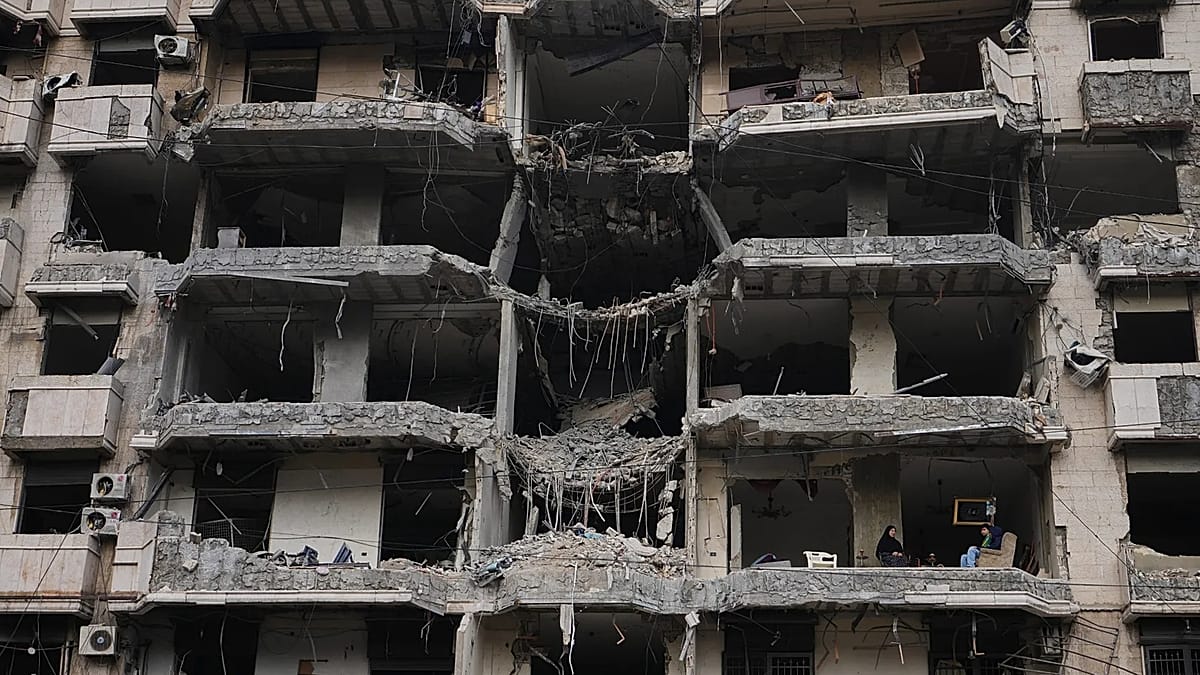
An Israeli air strike on the eastern Lebanese village of Mashghara, located in the Bekaa Valley, killed at least twelve people late Monday, according to Lebanon's state-run National News Agency. The attack occurred as Israeli Prime Minister Benjamin Netanyahu announced an acceleration of military operations against the Hezbollah militant group across Lebanon.
In a video statement posted on his Telegram channel, Netanyahu declared: "I have ordered an even greater acceleration of our operations." He later added, "What this requires of us now is to increase the blows, to increase the intensity. We will smite them hip and thigh." The Israeli military did not comment on the specific strike on Mashghara but stated on Monday that it was targeting Hezbollah infrastructure in eastern Lebanon.
An Israeli security official, speaking on condition of anonymity in line with regulations, confirmed that the military had called up an additional battalion to Lebanon. Rescue workers reported pulling a dozen bodies from the rubble following an intense wave of overnight strikes that also targeted parts of southern Lebanon.
Escalation Ahead of Washington Talks
The intensified attacks come just three days before Lebanese and Israeli military delegations are scheduled to meet in Washington for direct negotiations. Lebanese President Joseph Aoun defended his decision to hold talks with Israel, emphasizing that his demand for a complete Israeli withdrawal from southern Lebanon was "non-negotiable." Hezbollah, which is not party to the talks, opposes them.
Hezbollah has continued to attack Israeli troops in southern Lebanon and northern Israeli towns, vowing to persist until Israel ceases its daily airstrikes and withdraws its forces from Lebanese territory. In recent weeks, the group has claimed to deploy new fibre-optic drones that Israeli forces have struggled to intercept, striking both military positions and border villages.
Israel has updated its defensive guidelines for northern areas, advising residents to avoid large gatherings. The conflict, which began on 2 March when Hezbollah fired rockets into northern Israel in solidarity with Iran, has displaced over one million people in Lebanon. According to the Lebanese Health Ministry, at least 3,185 people have been killed and over 9,600 wounded in Israeli strikes since the war started.
The renewed escalation has sparked fears in Beirut of a full-scale war. "By just saying a few words on TV he (Netanyahu) causes everyone to panic and flee their homes," said Tony Aboud, a resident of Beirut's bustling Hamra district. "I don't know what's going to happen and how long we can live like this."
The situation in Lebanon echoes broader regional instability, with parallels to conflicts elsewhere. For context, Russian overnight strikes on Kyiv kill one, injure over twenty, highlighting the pattern of urban warfare in the region. Meanwhile, Lebanon opens Beirut seafront tent camp as Israeli strikes displace over one million, underscoring the humanitarian toll.
As diplomatic efforts proceed, the Lebanese government hopes the Washington talks will lead to a ceasefire, though Hezbollah's opposition and the ongoing violence cast doubt on a swift resolution.