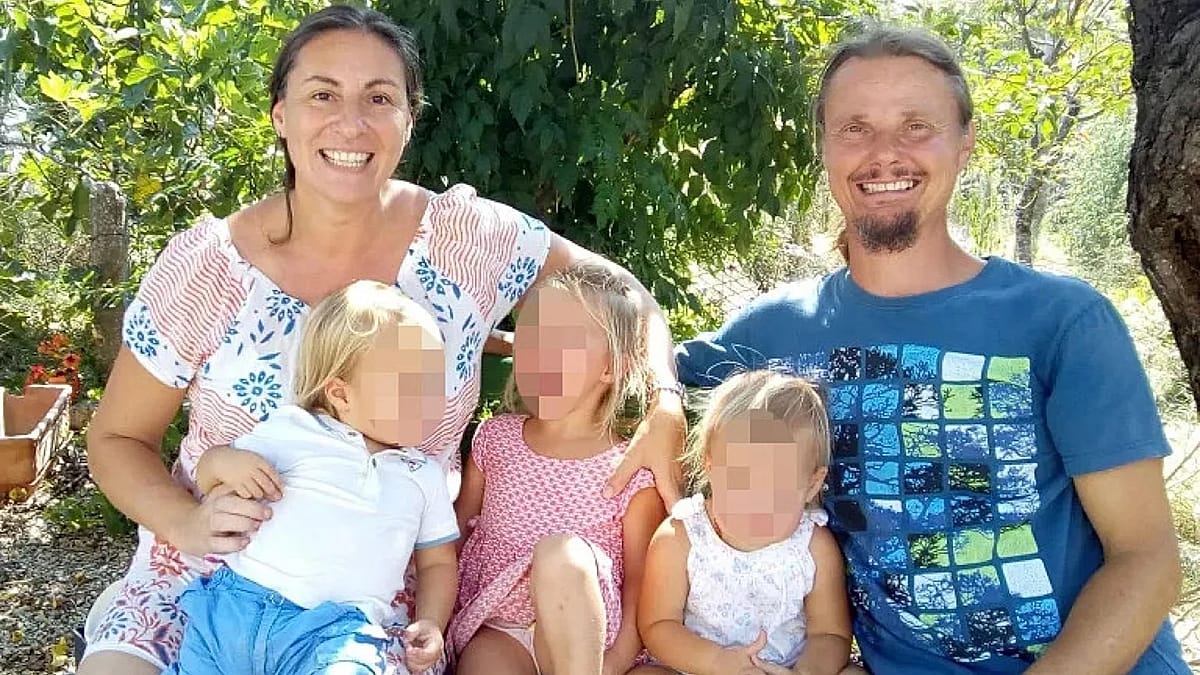
The social worker at the centre of Italy's so-called “family in the woods” controversy has been suspended from practice for 70 days. Veruska D'Angelo, 44, faced a disciplinary hearing before the regional Order of Social Workers in Abruzzo, which found that her conduct had caused “serious harm” to the family she was assigned to assist.
The case revolves around Catherine Birmingham and Nathan Trevallion, a British-Australian couple who lived off-grid near Palmoli, a small town in the central region of Abruzzo. Their three children were removed from their care in 2023 following a ruling by the juvenile court in L'Aquila, which ordered the children to be placed in a protected facility. The decision sparked national debate about the limits of state intervention in family life and the treatment of alternative lifestyles.
Disciplinary proceedings and allegations
The disciplinary action against D'Angelo was initiated after complaints from the regional Order's president and from the couple's former lawyers. The allegations include breaches of professional standards relating to impartiality, respect for diversity, and professional confidentiality, particularly in her interactions with the media. Her management of the professional relationship with the family also came under scrutiny.
The couple's former legal representatives accused D'Angelo of displaying a hostile attitude toward the parents and of failing to maintain the neutrality required of her role. They argued that her assessments may have been coloured by personal bias rather than objective evaluation.
D'Angelo has consistently denied the allegations through her lawyer, who has indicated that an appeal will be lodged. The suspension does not take immediate effect, and she has 60 days to appeal to the national disciplinary council. The written decision will detail which specific breaches of professional ethics the panel found to have occurred.
Reactions and calls for review
Lawyer Simone Pillon, who has represented the family in related proceedings, welcomed the suspension. In a statement, he said the decision confirmed his concerns that the information provided to the juvenile court in L'Aquila had not always been objective, and that assessments of the family's suitability had been influenced by ideological considerations. Pillon called for a review of the handling of the case and for the court to reconsider the children's placement in care.
“Now it is up to the court to acknowledge what has happened and decide on the children's definitive return to their family,” Pillon said.
Antonio Marziale, president of the Observatory on Children's Rights, also welcomed the decision, describing it as an important step toward protecting children's rights and preserving family ties. Marziale stressed the need for impartiality, independence, and careful consideration of the views of those involved in child protection cases, while ensuring that legal safeguards are respected.
The case has drawn attention to the broader challenges facing social services in Italy, where recent legislative changes have also sparked debate about the balance between state authority and family autonomy. While the suspension is a professional sanction, it does not directly affect the custody arrangement, which remains under the jurisdiction of the juvenile court.
Observers note that the ruling could have implications for how social workers across the country approach cases involving unconventional family structures. The case has also resonated beyond Italy, as similar debates about state intervention and parental rights unfold in other European countries.
For now, the family's children remain in the protected facility, and the legal battle over their future continues. The suspension of D'Angelo marks a significant development, but it is unlikely to be the final word in this contentious and emotionally charged case.



