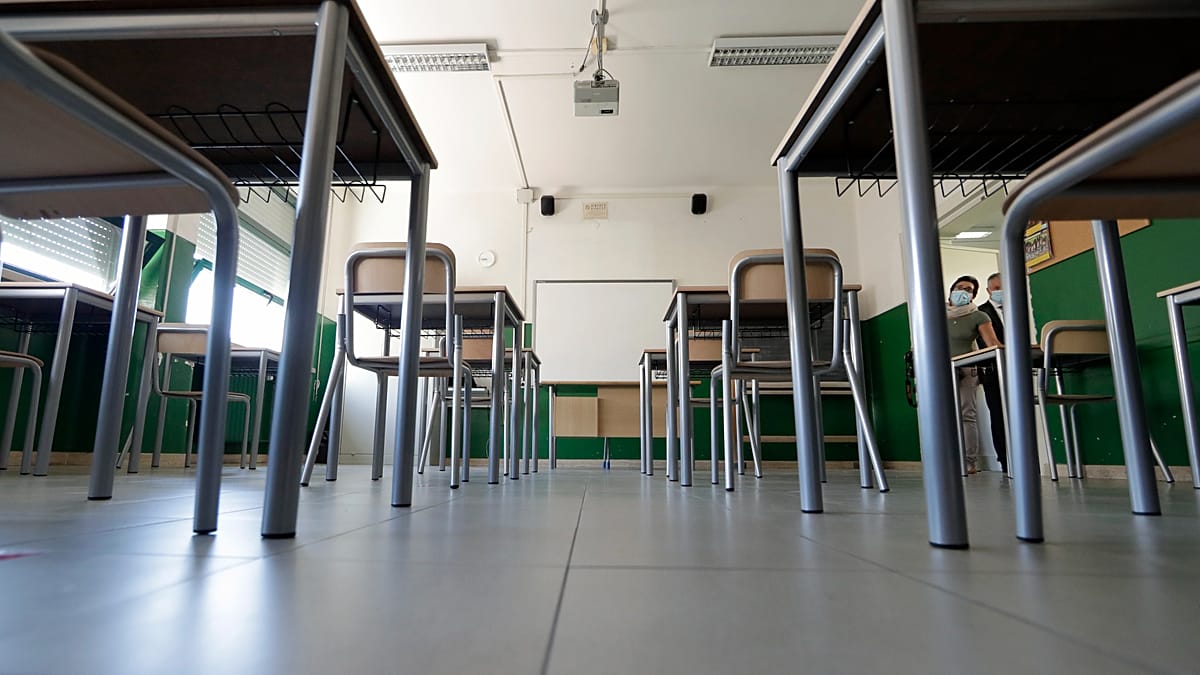
Schools across Italy were thrown into chaos on Wednesday as at least 300 institutions received emailed bomb threats, prompting mass evacuations and a nationwide security response. The messages, sent to headteachers, also contained an explicit threat against Prime Minister Giorgia Meloni, according to the country's education minister.
The email, which began with the menacing line "We have come to annihilate you. We will carry out genocide against the Italians," claimed that a "powerful explosive device" had been placed in the building with a "remote trigger." It further alleged that a bomb had been planted in the engine of the prime minister's car. The message was signed by an individual calling themselves "Mikhail Andropov, leader of the Vilayat of Misoginistan."
Italian Education Minister Giuseppe Valditara confirmed that roughly 300 alerts had been recorded nationwide, describing the scale as evidence of a deliberate strategy. "It is clear that there is a strategy," he said, as police and bomb disposal units conducted thorough checks at schools from Milan to Palermo to ensure the safety of students, teachers, and staff.
The authenticity of the threats has not yet been verified, and no explosives have been found so far. However, the disruption was significant, with thousands of pupils sent home early and parents left anxious about the security of their children.
Pattern of similar threats across Europe
The purported author, "Mikhail Andropov," has been linked to a series of similar bomb threats in recent days. Media outlets in Ireland and Bulgaria received comparable emails, and earlier this week, Dublin media evacuations were triggered by threats ahead of a European Political Community summit. Additionally, bomb threats disrupted flights across Europe as Ryanair and Wizz Air were targeted, suggesting a coordinated campaign of psychological disruption.
Italian Defence Minister Guido Crosetto weighed in on the incident, announcing that he would brief parliament on the situation and broader security concerns. He characterised the bomb alerts as part of a strategy of destabilisation aimed at sowing fear and undermining public confidence in state institutions.
The threats come at a time of heightened security awareness across the continent, with European governments increasingly wary of hybrid tactics that blend cyberattacks, disinformation, and physical threats. While no group has claimed responsibility in a verifiable manner, the use of a pseudonymous figure and the targeting of multiple countries points to a coordinated effort to test the resilience of European security systems.
In Italy, the response has been swift and comprehensive. Police have increased patrols around schools, and the interior ministry has activated protocols for handling mass threats. Local authorities in cities such as Rome, Turin, and Naples have urged calm while investigations continue.
The episode also raises questions about the vulnerability of public institutions to email-based threats. Cybersecurity experts note that such campaigns are relatively cheap to execute but can cause significant disruption, forcing authorities to allocate resources to verify each alert. The Italian government has not yet indicated whether it will introduce new measures to filter or vet such communications.
For now, the priority remains ensuring the safety of the school community. As Valditara emphasised, the government is taking the threats seriously and will not allow such acts to undermine the normal functioning of the education system. The investigation is ongoing, with authorities working to trace the origin of the emails and identify the perpetrator or perpetrators behind the campaign.