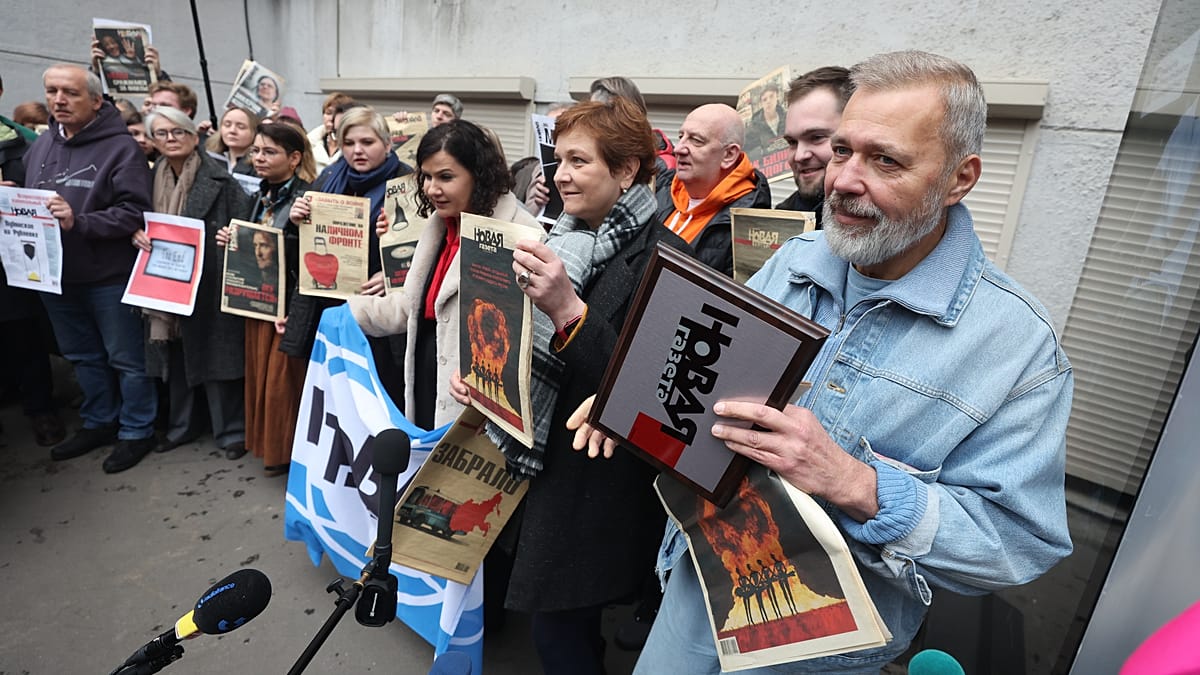
Novaya Gazeta, the last major Russian newspaper openly critical of the Kremlin and its war in Ukraine, has shut down after authorities stripped it of its media registration and dismantled its ability to operate. The paper announced on 30 October that security services and censors had "forced the editorial team to cease its activities."
The closure followed a systematic campaign: the newsroom was ordered to vacate its premises in Moscow's Potapovsky Lane, its reader donation system was shut down, its online resources were blocked, and printing arrangements were terminated after state censors at printing facilities refused to allow publication. The final blow came when the media registration was revoked, making any further operation illegal.
In a farewell statement, the paper said: "Elections and elected bodies of power have in effect been abolished, civil society institutions destroyed, freedom of conscience and human dignity trampled underfoot."
Editor-in-chief Sergei Sokolov held a final editorial meeting attended by staff, founder and Nobel Peace Prize laureate Dmitry Muratov, and journalists from other outlets. Staff packed their belongings and took down from the walls portraits of murdered colleagues, including Anna Politkovskaya, Yuri Shchekochikhin, and Natalya Estemirova.
Muratov: 'The country is run by the FSB'
Muratov described repression in Russia as "overwhelming," noting that even before the full-scale invasion of Ukraine in 2022, hundreds of people had already been convicted under restrictive laws. "This is because the country is not run by parliament, or by local administrations or governors, but by the FSB of the Russian Federation," he said.
In his farewell address, Muratov made several requests: to support Russians opposed to the war, to push for the release of political prisoners, to seek a humanitarian corridor for villages in the former area of Oleshky, and to work to stop Russian attacks on Ukrainian cities. "The light, heat and water in cities in Ukraine could be wiped off the face of the Earth. These cities will be poured into sacks like dust. This madness, this slaughter must be stopped," he said.
Muratov also revealed that more than 400,000 of the newspaper's articles had been archived and were being republished worldwide. Sokolov told those gathered outside the building: "We will go on living, and I am sure that this country, which is going through such hard times, will sooner or later come to its senses. As soon as the first signs of this appear, Novaya Gazeta will return to our readers and colleagues."
The closure drew international condemnation. Reporters Without Borders, Amnesty International, and the UN High Commissioner for Human Rights all denounced the move. The Kremlin dismissed its significance, with spokesman Dmitry Peskov stating that "some media outlets cease to exist and new ones take their place," which he called a "normal process."
Novaya Gazeta was founded in 1993 and became known for its investigative reporting on the Chechen wars, human rights abuses, and corruption. Six of its journalists were murdered over the years. The paper had been designated a "foreign agent" but continued publishing until this final shutdown.
The closure marks a grim milestone for press freedom in Russia, where independent media have been systematically eliminated since the invasion of Ukraine. The fate of Novaya Gazeta is a stark reminder of the shrinking space for dissent, as Russia's legal crackdown extends into courts and family law and public health warnings go unheeded. The paper's legacy, however, lives on through its archives and the example it set for journalism under pressure.