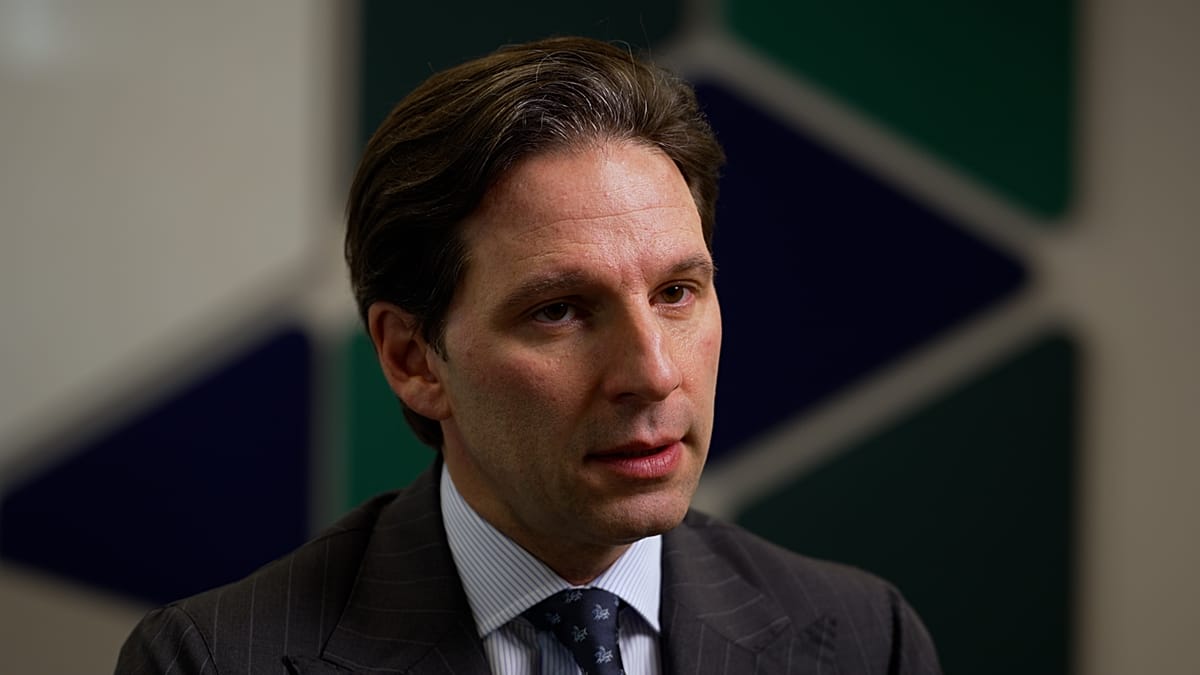
The European Union is moving to strengthen defence cooperation with Qatar and the wider Gulf region, according to the bloc's new ambassador to Doha, Antonino Maggiore. In an interview with Euronews, Maggiore said security is a mutual interest in the current geopolitical climate, and the EU is pursuing two main objectives: linking private defence industries through a new platform and presenting the EU's common defence industry policies to Qatar and the Gulf Cooperation Council (GCC).
Maggiore, who recently began his mandate in Qatar, confirmed that a seminar on defence technology and artificial intelligence will take place in Doha on 3 December. The event aims to create a platform for private-to-private cooperation between European and Qatari defence firms, with potential participation from other GCC countries. "To create a platform for our defence industry to work together with the Qataris counterpart and possibly also from the GCC," he said.
The EU wants to build on existing bilateral defence partnerships that individual member states—such as France, Italy, Spain, and Germany—already have with Qatar. "My personal ambition is how the European Union can add value," Maggiore noted. The seminar will also give the European Commission a chance to outline its plans for a common European defence industry and explore possible partnerships with non-EU countries.
Building on existing ties
Maggiore acknowledged that the EU is debating how to use its next multi-annual financial framework to strengthen defence partnerships with third countries. "There is a debate ongoing in the European Union on how, especially with the new multi-annual financial framework, which is our budget, how we can explore the possibility to strengthen partnership with third-party countries, also as EU, in the defence sector," he explained.
The defence talks come after an EU-GCC summit scheduled for 24 October was postponed due to tensions in the Gulf. Maggiore called the delay a missed opportunity but stressed that both sides remain committed. "I think every crisis brings opportunities," he said. "It's a missed opportunity that we have to postpone, but there is no postponement of the objectives and the urgency of strengthening the relations."
Diplomatic engagement continues, as evidenced by a recent visit to Doha by the EU Special Representative for the Gulf, Luigi Di Maio. Maggiore said the focus should be on concrete cooperation projects.
Support for Qatari mediation
Maggiore praised Qatar's role in mediating between the United States and Iran, saying the EU wants to support Doha's efforts to ease regional tensions. He highlighted a recent phone call between EU foreign policy chief Kaja Kallas and Qatar's Prime Minister Sheikh Mohammed bin Abdulrahman Al Thani.
On the Strait of Hormuz, where shipping restrictions have disrupted global trade, the EU and Qatar share the same position on freedom of navigation. "No fees, no tolls for the freedom of navigation," Maggiore said, referring to the EU's stance.
Regarding Gaza, Maggiore acknowledged divisions among EU member states. "Member states currently have different positions on the crisis in Gaza, and of course this is a challenge for us," he said, while reaffirming the EU's commitment to humanitarian aid and diplomatic efforts.
Economic and connectivity goals
Maggiore also wants to boost economic ties, particularly in transport. European Commissioner for Transport Apostolos Tzitzikostas is expected to visit Doha for the Doha Forum in December to discuss connectivity with Qatar and other Gulf partners. "Connectivity is a pillar, I think, where we can foster and boost our economic ties," he said.
The EU is also working on an initiative called Connect EU, which aims to bring European and Qatari businesses together. Over the next year, Maggiore hopes to advance visa liberalisation for Qatari citizens and negotiations on a strategic partnership agreement. Making travel easier would strengthen people-to-people ties, he said, and the agreement would provide a broader framework for cooperation.
These efforts come as Europe seeks to assert itself in a volatile region. The EU's push for closer defence and economic ties with the Gulf is part of a broader strategy to diversify partnerships and enhance its geopolitical role. As Europe pushes back on Russia's security architecture gambit, building bridges with Doha could prove valuable.
The December seminar in Doha will be a key test of whether the EU can translate its ambitions into concrete cooperation. With the GCC summit postponed, both sides are looking for alternative ways to advance their agenda. The EU's willingness to engage on defence technology and AI signals a new phase in relations, one that could reshape security dynamics in the Gulf.