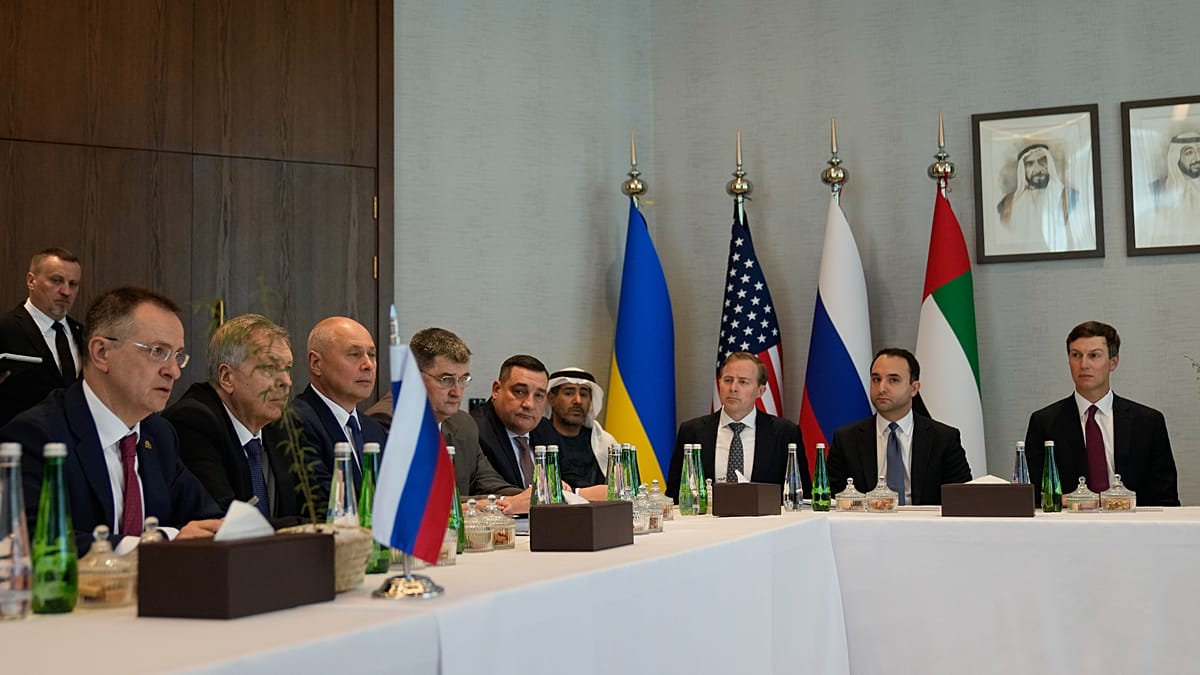
The phrase "security architecture" has become a lightning rod in European capitals, stirring unease that Moscow is using the concept to shift attention from Ukraine and gain a decisive voice in the continent's future. The term has moved to the centre of negotiations aimed at ending Russia's war, after US President Donald Trump floated the idea of a "very big, beautiful agreement" that "might involve all of Europe".
His special envoy, Jared Kushner, followed up with a lengthy social media post outlining principles for a "more stable and predictable security environment" on the continent. But his message conspicuously avoided mentioning that Russia had launched a full-scale invasion of a sovereign, internationally recognised state, instead blaming "decades of mistrust" and "competing security concerns" between Europe and Russia. "For more than 30 years, Europe and Russia have struggled to establish a sustainable security framework," he wrote.
The wording grated on European ears. Officials were quick to point out that it is not Europe but Russia that has undermined the structures built after the Cold War. "We have European security architecture in place," said Kaja Kallas, the EU's High Representative, during a G7 meeting in Paris. "The only one who is breaching that security architecture is Russia. That is why we have to make sure that in those talks there are clear concessions from the Russian side, because otherwise we will just see more of these attacks."
Russia's war on Ukraine has been widely seen as violating a series of foundational agreements: the 1975 Helsinki Accords and the 1990 Paris Charter, which underpin the Organisation for Security and Co-operation in Europe (OSCE); the 1994 Budapest Memorandum, in which Russia pledged not to use force against Ukraine except in self-defence; and the 1997 NATO-Russia Founding Act, which affirms the territorial integrity of all states. Moscow has also faced accusations of war crimes, including the crime of aggression, in flagrant disregard of international law.
Europe's message: restore, don't replace
German Foreign Minister Johann Wadephul echoed Kallas's point, saying: "Europe does not need a new security architecture, as Russia wants us to believe, but rather the simple restoration of the existing security architecture." European Commission President Ursula von der Leyen, speaking in Romania, cautioned that "any meaningful discussions about Europe's security architecture can only be undertaken once a ceasefire in Ukraine has been achieved". She stressed that Europe must be at the table. Polish Foreign Minister Radoslaw Sikorski was blunter: "An arrangement about the future of Ukraine and of Europe above our heads would not just be unwise. It is actually impossible."
The collective pushback comes as Europeans try to restore diplomacy after a turbulent October, when Trump struck a diesel supply deal with Russian President Vladimir Putin, eased longstanding sanctions on Moscow, and launched a bitter attack on Ukrainian President Volodymyr Zelenskyy. The rapid sequence of events revived fears that Trump and Putin might thrash out a secret deal to force Ukraine's capitulation. Trump's promise of a "big, beautiful agreement" encompassing all of Europe only deepened those suspicions.
Putin has never hidden his disdain for NATO, the alliance created after World War II to provide collective defence. In the weeks before the full-scale invasion, Russia issued an ultimatum demanding NATO halt its eastward expansion and withdraw troops from member states that joined after 1997. The demands were rejected outright. Shortly after the war began, Finland and Sweden, two historically neutral countries, applied to join the alliance.
Despite that setback, Putin has not abandoned his goal of "destroying" NATO and dealing with European countries individually, according to Judy Dempsey, a senior fellow at Carnegie Europe. She believes the current talk plays directly into Russia's hands. "This is an attempt by the Kremlin and President Trump to actually bypass NATO and redraw the security architecture of Europe. This is also an attempt to break the link for the transatlantic alliance, the bedrock of which is NATO," Dempsey said. "Trump is doing Putin's bidding. Europeans have to say no to this. We have one architecture: it's called NATO. There's no reason at all to change it. The only reason it's under threat is that Russia is attacking Ukraine at full blast."
European officials involved in the peace process have noticed Russia's keen interest in the security architecture, which they see as a ploy to divert attention from the core issues: a cessation of hostilities and security guarantees for Ukraine. Moscow has repeatedly refused to agree to a ceasefire, even a temporary and targeted one, and has opposed the deployment of Western troops inside Ukraine after the war. Meanwhile, it has intensified airstrikes to freeze Ukrainians ahead of winter.
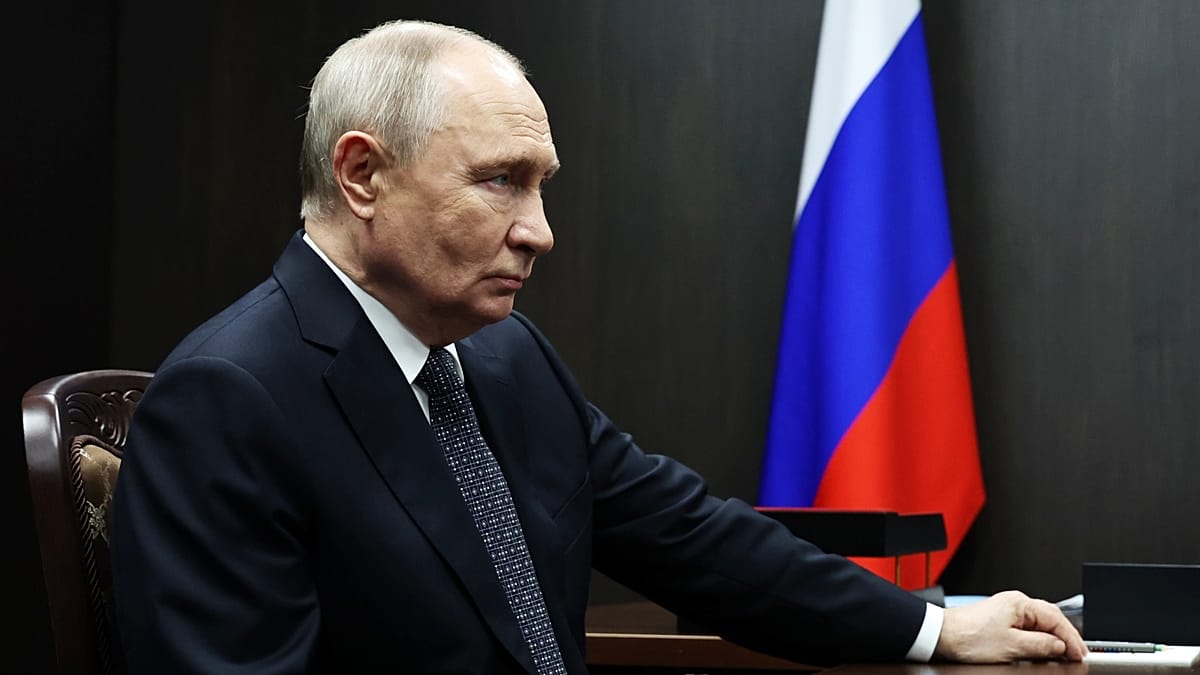
By contrast, Moscow has spoken openly about the broader picture, almost as if Ukraine were a footnote. Putin regularly refers to "the root causes of the conflict", a coded reference to NATO's eastward expansion, and his foreign minister, Sergey Lavrov, has highlighted the need to build a "new security architecture" on the Eurasian continent. For Europeans, this discourse reflects great-power ambitions to expand Russia's sphere of influence and gain decision-making power, including a veto over NATO's future membership, to which it is not entitled.
"Russia is interested in discussing Europe's security architecture because it wants greater leverage over European decisions on Ukraine," said Natia Seskuria, a senior research fellow at the Royal United Services Institute (RUSI). "By broadening the negotiations, Moscow seeks to make Ukraine's future a secondary question within a larger geopolitical bargain."
The debate has also reignited concerns about the EU's role in shaping the continent's security order. Brussels has insisted that any new arrangements must include the Union, not just Washington and Moscow. The EU's rejection of a US-Russia plan to reshape European security without Brussels underscores the stakes. As Poland has urged, Eastern European security concerns cannot be pushed aside in the pursuit of a deal.
For now, the message from European capitals is clear: the existing security architecture, built over decades and anchored in NATO and the OSCE, remains the only legitimate framework. Russia's aggression, not the architecture itself, is the problem. Any discussion of a new order must begin with a ceasefire, respect for Ukraine's sovereignty, and a seat at the table for Europe.