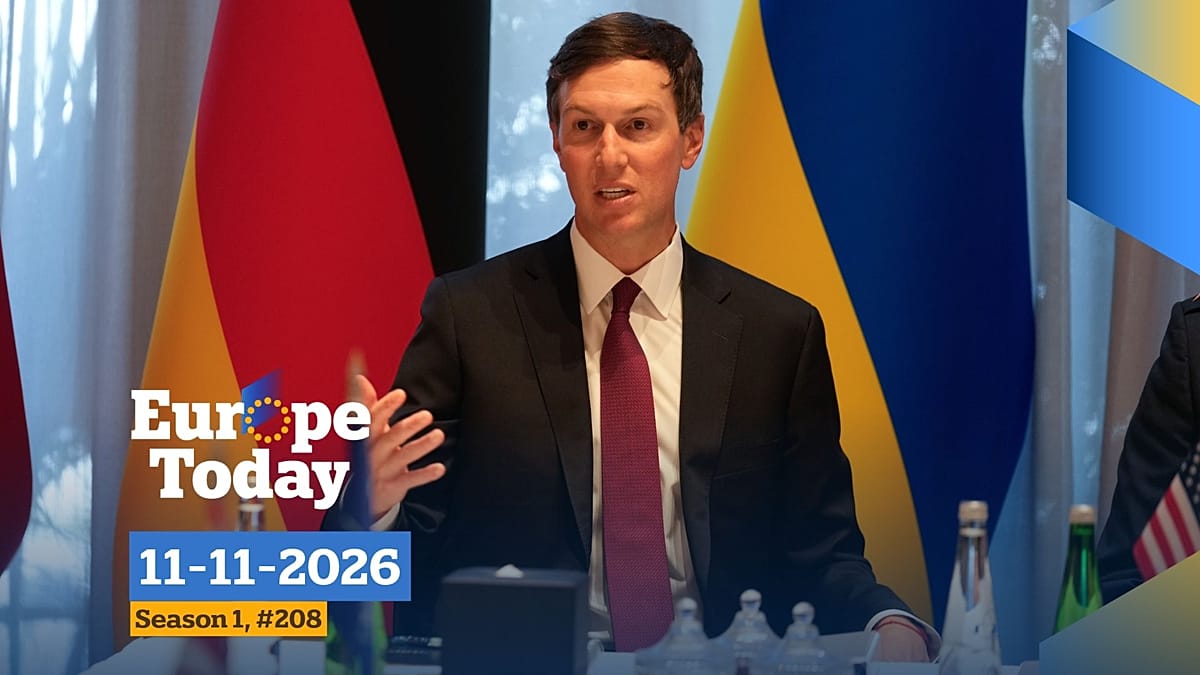
Diplomats from Ukraine, Russia and the United States reconvened in Abu Dhabi on Tuesday for a second day of talks aimed at ending the war in Ukraine. The first round, held on Monday, was described as "constructive" by Kyiv, with prisoner swaps and security guarantees reportedly on the table.
The talks come amid continued attacks in the Black Sea, where ships have been struck and seafarers are missing, and as European leaders debate how to respond to Moscow's demands and Washington's shifting priorities.
What's on the table
According to Toby Gregory, reporting from Abu Dhabi, the agenda includes a potential prisoner exchange, which would be a tangible humanitarian outcome. Security guarantees for Ukraine are also being discussed, though the details remain unclear. Kyiv has long insisted that any lasting peace must include binding security commitments from Western allies.
Sasha Vakulina, a correspondent covering the negotiations, noted that Moscow and Kyiv have not yet moved closer on core territorial issues, but there is "slight flexibility" on some points, according to US officials. The US delegation is led by General Alexus Grynkewich, who is also representing NATO in the talks.
John Stringer, NATO's Deputy Supreme Allied Commander, told Shona Murray that he sees a "genuine chance" for a breakthrough, though he cautioned that the path remains difficult. "The fact that they are talking is significant," he said. "But we need to see concrete steps, not just words."
European leaders are watching closely. Some, like Estonian MEP Riho Terras, are asking whether Europe is doing enough to defend itself against hybrid threats, from cyberattacks to disinformation. Others are debating the financial and political costs of continued support for Ukraine. German Chancellor Friedrich Merz has linked EU budget contributions to unanimous Ukraine funding, a move that has sparked pushback from four member states. Meanwhile, Italy's governing coalition is divided over aid, as reported earlier.
The European Union has pledged €70 million to support the Black Sea region, where commercial shipping remains a target. Angela Skujins, Euronews defence correspondent, explained that the funds are meant to bolster maritime security and protect seafarers, but the situation on the water remains perilous.
Beyond the war, the EU is also grappling with Russia's broader legal and political tactics. Moscow's "unfriendly countries" list now extends into courts and family law, a development that has raised concerns in Brussels and national capitals.
In a separate but symbolic moment, Prince Harry addressed the European Parliament in Strasbourg, alongside Meghan, the Duchess of Sussex. The couple unveiled the "Lost Screen Memorial," featuring photographs of young people whose deaths have been linked to online harms. The visit underscored the EU's growing focus on digital safety and mental health.
As the Abu Dhabi talks continue, the central question remains whether Russia and Ukraine can translate constructive atmospherics into a durable agreement. European officials insist that the continent must have a seat at the table, as a former NATO chief argued. The coming days will test whether that demand is met.