The Italian government is navigating a fresh internal dispute over military support for Ukraine, just as Prime Minister Giorgia Meloni secured Rome a place at the Abu Dhabi peace talks. The thirteenth aid package, presented to the Parliamentary Committee for the Security of the Republic (Copasir) on Tuesday, has hit a procedural snag: Economy Minister Giancarlo Giorgetti of the League has yet to sign the decree, a step required for its approval.
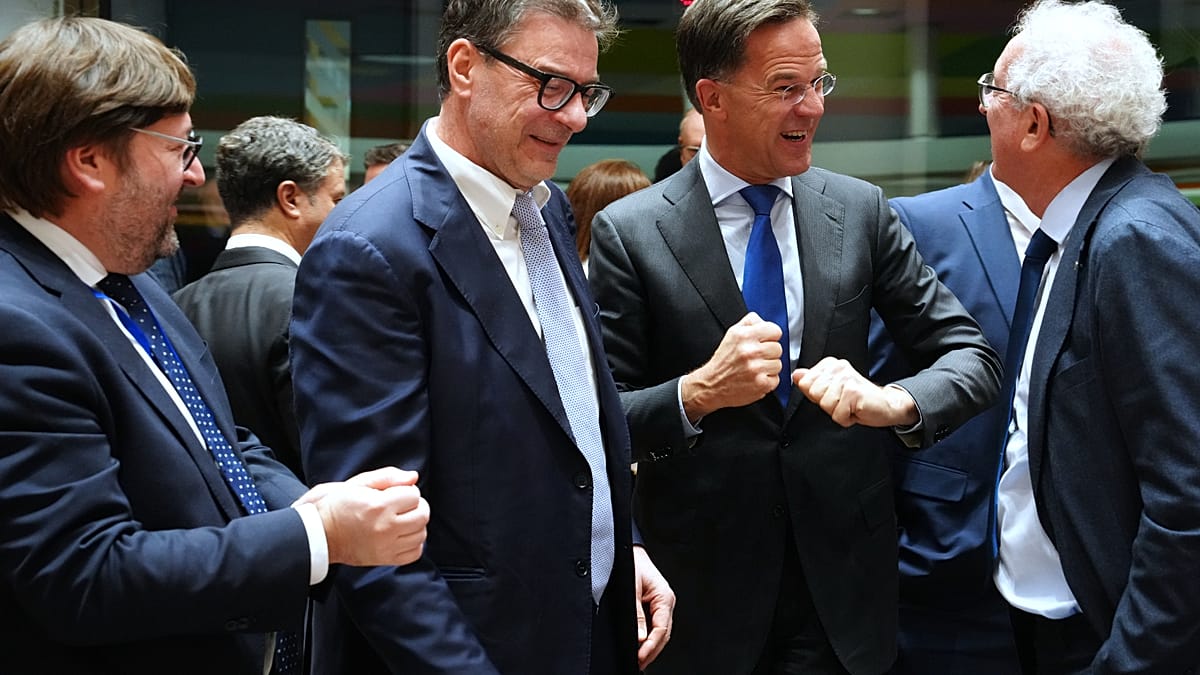
Defence Minister Guido Crosetto and Foreign Minister Antonio Tajani have sought to downplay the delay, attributing it to Giorgetti's absence in Brussels for the Ecofin meeting. Tajani noted that the document is classified and therefore requires a physical signature, ruling out electronic alternatives. Crosetto, in an interview with la Repubblica, expressed confidence that Giorgetti would sign upon his return, while defending the necessity of continued support for Kyiv.
A coalition under strain
The friction is not merely procedural. Deputy Prime Minister Matteo Salvini has repeatedly voiced reservations about military aid to Ukraine, despite Meloni's firm stance, backed by Forza Italia, to support Kyiv "for as long as necessary." The League's congress, which reconfirmed Salvini as secretary, appears to have emboldened hardliners. Senator Claudio Borghi took to X to label the aid package the "decree that does not exist," arguing that without the signatures of all relevant ministers, the measure is void.
Without Giorgetti's signature, the decree cannot be published, stalling not only military supplies but also civilian assistance such as generators. The standoff risks escalating into a full-blown coalition crisis, with potential consequences for the budget session currently underway. A government collapse at this juncture would jeopardize the entire budget plan, a scenario that many in the majority view as catastrophic.
The thirteenth package is expected to include air defence systems, possibly Aster missiles for the Franco-Italian Samp-T batteries already supplied. The exact contents remain classified, as with previous packages.
This internal discord comes as Abu Dhabi hosts talks on Ukraine's future, with European leaders urging a unified stance. Meloni has called for Europe to speak with one voice, a sentiment echoed by sources at Palazzo Chigi: "Europe must speak with a single voice and equip itself with a clear and shared mandate." The EU's participation in these talks has been a point of contention, with some arguing that Europe must earn its place at the table.
The framework decree, introduced by the Draghi government in 2022, has been renewed four times, allowing for the swift dispatch of aid packages. It expires at the end of the year, adding urgency to the current impasse. The last package was sent in late 2025, and the new framework authorizes shipments through 2026.
Analysts suggest that Giorgetti will ultimately sign, given the high stakes. However, the episode underscores the fragility of the centre-right coalition, which has managed to maintain unity on most issues but remains vulnerable on foreign policy. As the budget session progresses, the government's ability to navigate this crisis will be closely watched in Brussels and beyond.
The outcome of the Abu Dhabi talks, where slight flexibility on territory has been reported, could also influence Rome's internal debate. For now, the Italian government walks a tightrope between domestic political pressures and its international commitments.