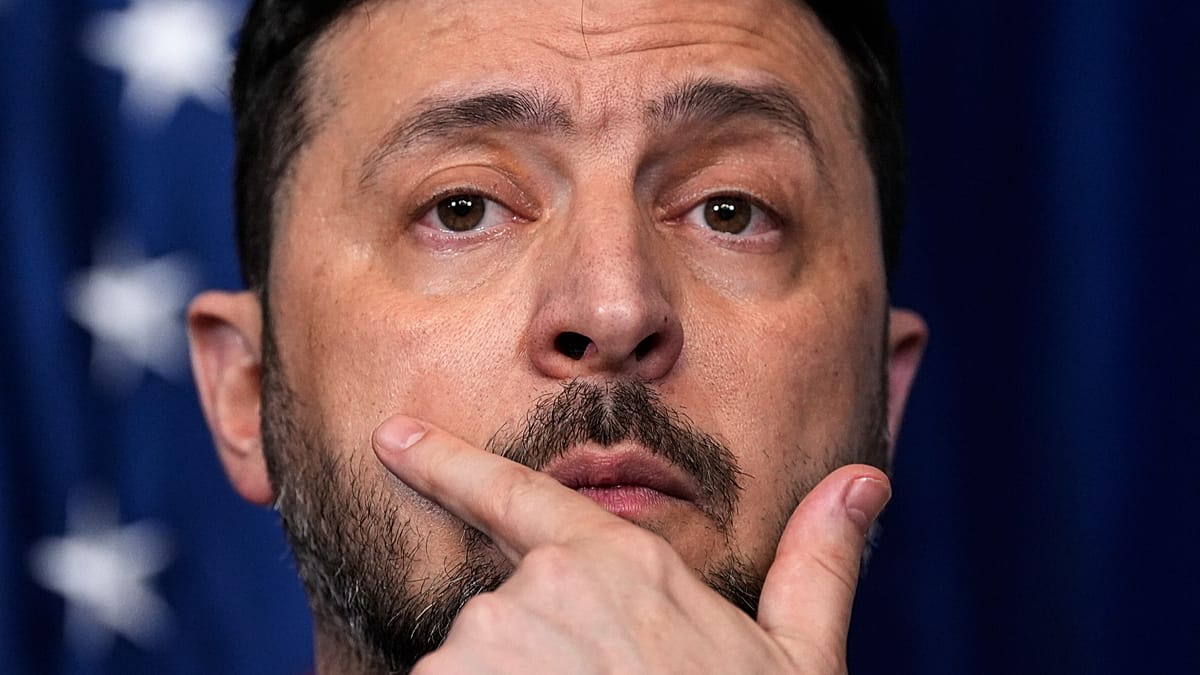
Ukrainian President Volodymyr Zelenskyy arrived in Copenhagen on Tuesday for security talks with Nordic leaders, where Denmark announced a new military aid package worth 4.8 billion kroner (€643 million). The visit came as US-mediated negotiations between Ukraine and Russia opened in Abu Dhabi, underscoring the diplomatic push to end the nearly five-year-old full-scale war.
Danish Foreign Minister Lars Løkke Rasmussen told reporters that Copenhagen would also contribute 150 million kroner (€20 million) to shore up Ukraine's energy infrastructure, which has been repeatedly targeted by Russian strikes. The announcement was made against a backdrop of intensified aerial bombardments on civilian areas, relief centres, and heating plants, according to Danish Prime Minister Mette Frederiksen.
“I am proud to welcome President Zelenskyy and the Nordic leaders to Denmark. The Ukrainians’ fight for a free Ukraine and a free Europe continues,” Frederiksen said in a statement. She added that “almost five years after the full-scale invasion, the rain of bombs targeting civilians, relief centres, and water and heating plants continues. That is why we must stand firm.”
The meeting brought together Swedish Prime Minister Ulf Kristersson, Norway’s Prime Minister Jonas Gahr Støre, and Finland’s Prime Minister Petteri Orpo, all of whom were expected in the Danish capital. The Nordic countries have been among Ukraine’s most steadfast supporters, providing both military hardware and financial assistance since the invasion began in February 2022.
Nordic tensions over Putin call
The visit came just weeks after Zelenskyy travelled to Oslo to meet US envoys. Following that meeting, Støre and Finnish President Alexander Stubb held a 90-minute phone conversation with Russian President Vladimir Putin, a move that drew criticism from Frederiksen. She said the call had not been coordinated with the other Nordic countries, highlighting the delicate balance between dialogue and deterrence in the region.
Stubb described the conversation as “frank and substantive”, but the lack of prior consultation has exposed subtle frictions among the Nordic allies over how to engage with Moscow. The Copenhagen talks aimed to align their positions and reaffirm a united front.
Security was visibly tight in the Danish capital, with a heavy police presence outside the prime minister’s office. Copenhagen police announced that security would be reinforced over the coming days and that drones would be banned over the city until 12 November, reflecting the heightened threat level during the high-profile visit.
Denmark’s latest pledge brings its total military support to Ukraine to more than €7 billion since the start of the war, making it one of the largest donors per capita in Europe. The new package is expected to include air defence systems, artillery ammunition, and training for Ukrainian forces, though details were not fully disclosed.
The timing of the aid announcement is significant, as Ukraine faces a challenging winter with energy infrastructure under constant threat. The €20 million energy support will help repair damaged grids and maintain heating for civilians, a priority for Kyiv and its allies.
The Nordic leaders also discussed broader European security, including the ongoing EU efforts to bolster maritime security in the Black Sea, a region that has become a flashpoint in the conflict. The EU has pledged €50 million for a maritime security hub in Romania and Bulgaria, a move that complements the Nordic support.
As the war grinds on, the Nordic countries remain committed to Ukraine’s defence, but the episode over the Putin call shows that even the closest allies can have differing views on how to handle the Kremlin. The Copenhagen meeting was an attempt to bridge those differences and present a cohesive strategy.
For now, the message from the Danish capital is clear: support for Ukraine will not waver, even as diplomatic channels open in Abu Dhabi. The coming weeks will test whether those talks can translate into a durable ceasefire, but the Nordic leaders made it clear that military aid will continue as long as needed.