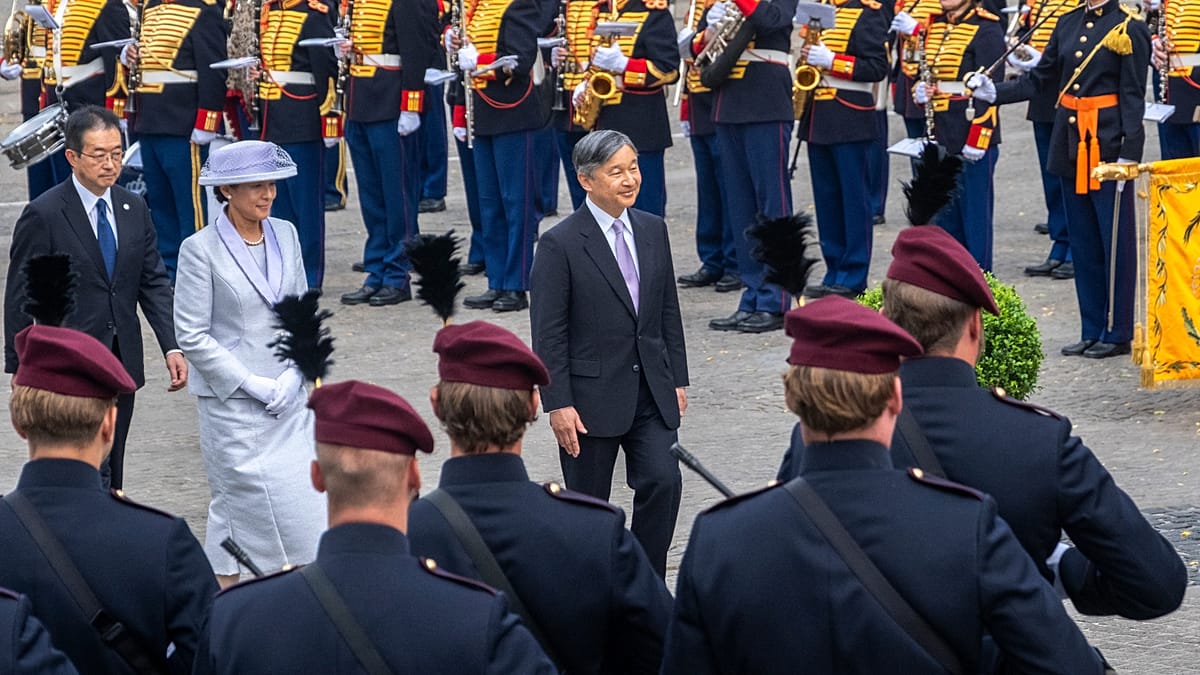
Japan’s Emperor Naruhito and Empress Masako touched down in Amsterdam on 17 June, beginning a state visit that underscores one of Europe’s oldest continuous diplomatic relationships. The Netherlands and Japan first established formal trade links in 1609, when the Dutch East India Company (VOC) set up a trading post on the island of Hirado. That connection, which later moved to Dejima in Nagasaki Bay, remained Japan’s only window to the West during the country’s period of self-imposed isolation (sakoku) from the 1630s until the mid-19th century.
A Legacy of Exchange and Innovation
The current visit is more than a ceremonial nod to history. It reflects a modern partnership that spans trade, science, and culture. The Netherlands is Japan’s third-largest trading partner within the European Union, with bilateral trade in goods exceeding €20 billion annually. Dutch companies such as Philips, Shell, and Unilever have deep roots in Japan, while Japanese firms like Toyota, Mitsubishi, and Sony maintain significant operations in the Netherlands, often using the country as a gateway to the European single market.
Emperor Naruhito, who studied at Oxford and has a personal interest in water management, is expected to tour Dutch flood-control infrastructure. The Netherlands is a global leader in water engineering, and Japan, which faces frequent typhoons and tsunamis, has long sought Dutch expertise. The visit also includes a stop at the Peace Palace in The Hague, home to the International Court of Justice, and a meeting with King Willem-Alexander and Queen Máxima at the Royal Palace in Amsterdam.
Cultural programming is a key component. The emperor and empress will attend a performance of traditional Japanese gagaku court music at the Concertgebouw, alongside Dutch classical works. This mirrors a broader trend of cultural diplomacy: earlier this year, Brussels hosted the Amaterasu stage production celebrating 160 years of Belgium-Japan ties, showing how European capitals increasingly use soft power to strengthen bilateral bonds.
Strategic Context in a Changing World
The visit also takes place against a backdrop of shifting geopolitical alignments. Both Japan and the Netherlands are staunch allies of the United States and members of the G7. Tokyo has been deepening its engagement with Europe, signing an Economic Partnership Agreement with the EU in 2019 and a Strategic Partnership Agreement in 2020. The Netherlands, as a founding member of the EU and host to key international institutions, is a natural partner for Japan’s strategy of diversifying its diplomatic and economic relationships beyond Asia.
Water management, green energy, and semiconductor technology are emerging as priority areas for cooperation. The Netherlands is home to ASML, the world’s leading supplier of photolithography machines for chipmaking, and Japan’s semiconductor industry is a major customer. Both countries are also investing heavily in hydrogen and offshore wind energy, sectors where Dutch and Japanese companies are collaborating on pilot projects in the North Sea.
Emperor Naruhito’s visit is the first by a Japanese emperor to the Netherlands since his father, Emperor Emeritus Akihito, came in 2000. It is also the first state visit by a Japanese monarch since the COVID-19 pandemic, lending it additional symbolic weight. The Dutch government has framed the trip as a reaffirmation of shared values: rule of law, open trade, and commitment to multilateralism.
For the Japanese imperial family, such visits are rare and carefully choreographed. Naruhito ascended the Chrysanthemum Throne in 2019, and his foreign travel has been limited. The Netherlands was chosen partly because of the emperor’s academic background—he studied water transport history at Oxford—and because of the deep historical resonance between the two nations.
Local media in the Netherlands have covered the visit extensively, with newspapers like NRC Handelsblad and De Volkskrant running features on the shared history of Dutch and Japanese porcelain, painting, and botanical exchange. The Royal Netherlands Academy of Arts and Sciences has organized a symposium on the influence of Dutch medicine and science on Japan’s modernization during the Edo period.
As the emperor and empress continue their itinerary, which includes a visit to the Keukenhof tulip gardens and a stop at the port of Rotterdam, the message from The Hague and Tokyo is clear: four centuries of ties are not just a historical curiosity but a foundation for future collaboration in a rapidly evolving world.