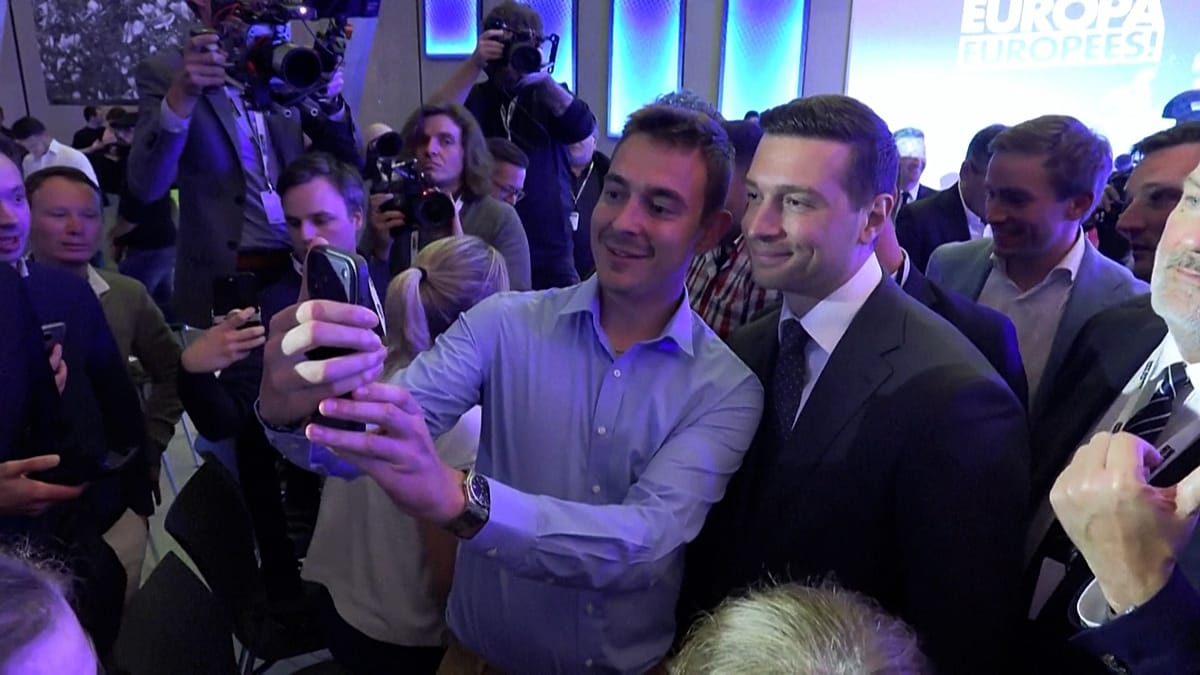
On 11 June, Brussels became the latest stop in Jordan Bardella's European outreach campaign. The French far-right leader, who heads the Rassemblement National, met with representatives of the Flemish nationalist party Vlaams Belang to discuss closer cooperation on migration policy. The visit underscores a broader effort by Europe's nationalist right to coordinate ahead of the next European Parliament elections.
Bardella, a Member of the European Parliament and lead candidate for his party in the 2024 EU elections, has been touring European capitals to build alliances. In Brussels, he met with Vlaams Belang leader Tom Van Grieken and other party officials. The two parties share a common platform of stricter border controls, reduced immigration, and opposition to EU asylum reforms.
Migration Policy at the Forefront
During the meeting, Bardella emphasized the need for a unified approach among like-minded parties to push back against what he called the EU's "open-door" migration policies. "We must coordinate our efforts to protect our national identities and security," he said. Vlaams Belang has long advocated for Flemish independence and a hard line on immigration, making it a natural partner for the French far right.
The visit comes amid heightened tensions over migration in Europe. Several member states, including Italy and Poland, have called for tougher measures. Bardella's outreach aims to create a bloc of nationalist parties that can influence EU policy from within the European Parliament.
However, not everyone in Brussels welcomed Bardella. A protest organized by anti-fascist groups and civil society organizations gathered outside the meeting venue. Demonstrators chanted slogans against racism and far-right politics, holding signs that read "No to hate" and "Refugees welcome." Police maintained a visible presence but reported no major incidents.
Bardella's visit also highlights the growing ties between French and Flemish nationalists. Vlaams Belang has seen a resurgence in recent years, winning 12% of the vote in the 2019 federal elections. The party is part of the Identity and Democracy group in the European Parliament, which also includes the Rassemblement National and other far-right parties.
This is not the first time Bardella has traveled to build alliances. Earlier this year, he visited Rome to meet with Italy's Matteo Salvini and in Warsaw with Poland's Law and Justice party. The strategy is clear: to create a network of nationalist parties that can challenge the pro-European mainstream.
The Brussels meeting also touched on economic issues, including energy policy and the EU's Green Deal. Both parties are skeptical of ambitious climate targets, arguing they harm industry and increase costs for citizens. Bardella and Van Grieken agreed to coordinate their positions in the European Parliament on upcoming legislation.
Critics argue that such alliances threaten European unity and democratic values. "These parties are trying to undermine the EU from within," said a spokesperson for the European Anti-Fascist Network. "Their policies are based on fear and division."
Despite the protests, Bardella's visit was seen as a success by his party. The Rassemblement National is polling strongly ahead of the 2024 European elections, and Bardella is positioning himself as a key figure in the far-right movement. His outreach to Vlaams Belang is part of a broader effort to consolidate support across the continent.
For Brussels, the visit was a reminder of the city's role as a hub for both EU institutions and political activism. The Belgian capital has seen mass protests in recent months over various issues, and Bardella's presence added to the political tensions.
As Europe's far-right parties continue to gain ground, Bardella's tour is likely to continue. The next stop could be Budapest, where Hungarian Prime Minister Viktor Orbán has also hosted far-right leaders. Orbán recently returned to Brussels for a far-right gathering, signaling the growing coordination among nationalist forces.
The outcome of these alliances remains to be seen, but one thing is clear: the far right is no longer a fringe phenomenon in Europe. It is a force that is actively shaping the political landscape, from Paris to Brussels and beyond.