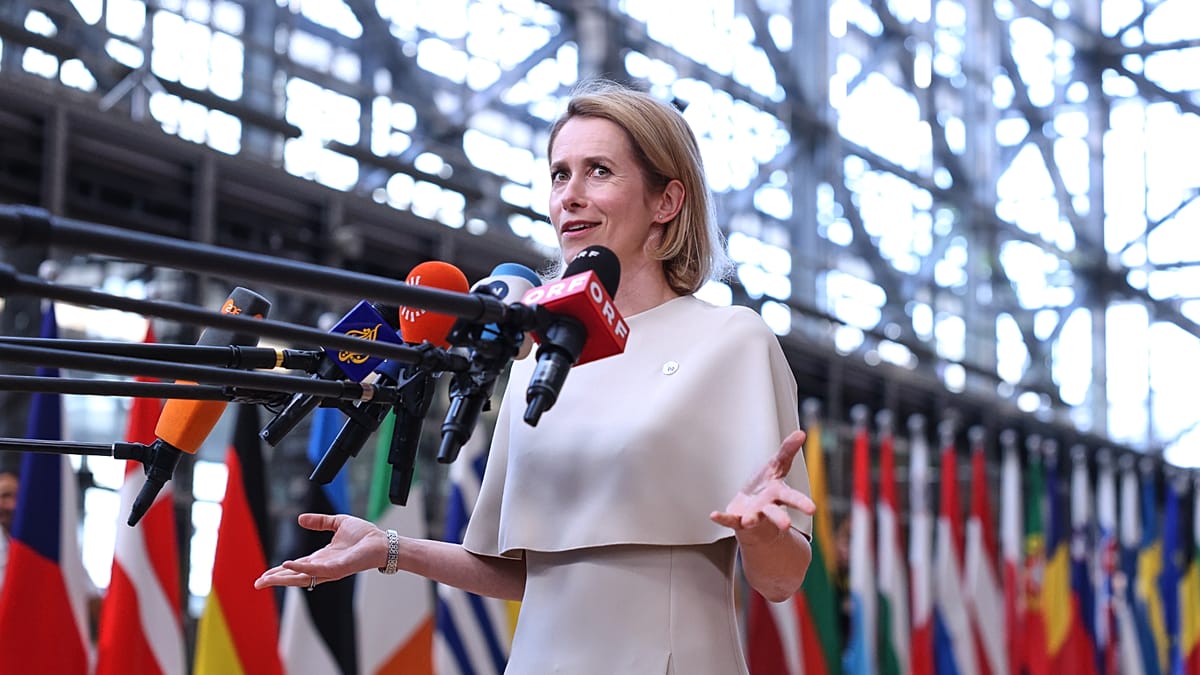
A diplomatic confrontation between the European Union's top diplomat, Kaja Kallas, and Israel has laid bare the fractures among EU member states over how to handle the Israeli-Palestinian conflict. The row erupted after media reports claimed Kallas, during a trip to Mexico last month, privately compared Israel's treatment of Palestinians to South Africa's apartheid regime.
At the European Council summit in Brussels, leaders offered sharply divergent responses. German Chancellor Friedrich Merz distanced himself from the alleged remarks. "I don't share this characterisation. We need to talk about this at some point, but I don't share this characterisation at all," Merz said on the margins of the summit.
Slovenia's Prime Minister Janez Janša was similarly dismissive. He said he did not believe Israel was practising apartheid and that he had not heard Kallas make such a statement, but if she did, she was wrong. By contrast, Irish Prime Minister Micheál Martin, a frequent critic of Israeli policy, defended Kallas unequivocally. "It's unacceptable. Kaja Kallas is the High Representative of the European Union," Martin said, implicitly condemning Israel's decision to cut contact.
Israel's Response and Kallas's Silence
Israel's Foreign Minister Gideon Sa'ar announced that he had "no choice but to sever all contact with Ms Kallas, until she retracts the blood libel she hurled at the only Jewish state." Kallas has neither confirmed nor denied making the remarks. Instead, she has called for continued dialogue and engagement as the basis for diplomacy. "We don't always see eye to eye with the Israelis. For example, regarding the violent settlers and expansion of settlements in the West Bank, we have been very critical," she said, noting that such settlements make a two-state solution very difficult to pursue.
The incident underscores the EU's internal struggle between member states that advocate a tougher stance on Israel and those that oppose confrontation. At the last meeting of EU foreign affairs ministers, 20 member states asked the European Commission to propose options for trade restrictions against Israeli settlements in the occupied Palestinian territories. The Commission, however, has been sceptical, noting the lack of a qualified majority in the Council of the EU to suspend the association agreement with Israel—a far more significant step blocked by Germany and Italy.
Estonian Prime Minister Kristen Michal, Kallas's compatriot, struck a conciliatory tone. "I hope this will be resolved between friends," he said, adding that Europe was Israel's best friend and stood up for its interests. The row also comes amid reports of a potential overhaul of Kallas's diplomatic branch, adding to the pressure on her. "I can't fight the shadows all the time," Kallas remarked.
The episode highlights the broader challenge the EU faces in crafting a unified foreign policy on the Middle East, especially as the bloc grapples with related crises such as the ceasefire between Israel and Hezbollah and the ongoing humanitarian situation in Lebanon, where Israeli warnings have sparked mass evacuations. The EU's ability to mediate and maintain credibility as a diplomatic actor is at stake, as member states remain divided between those who see Israel as a key partner and those who demand accountability for its actions in the occupied territories.