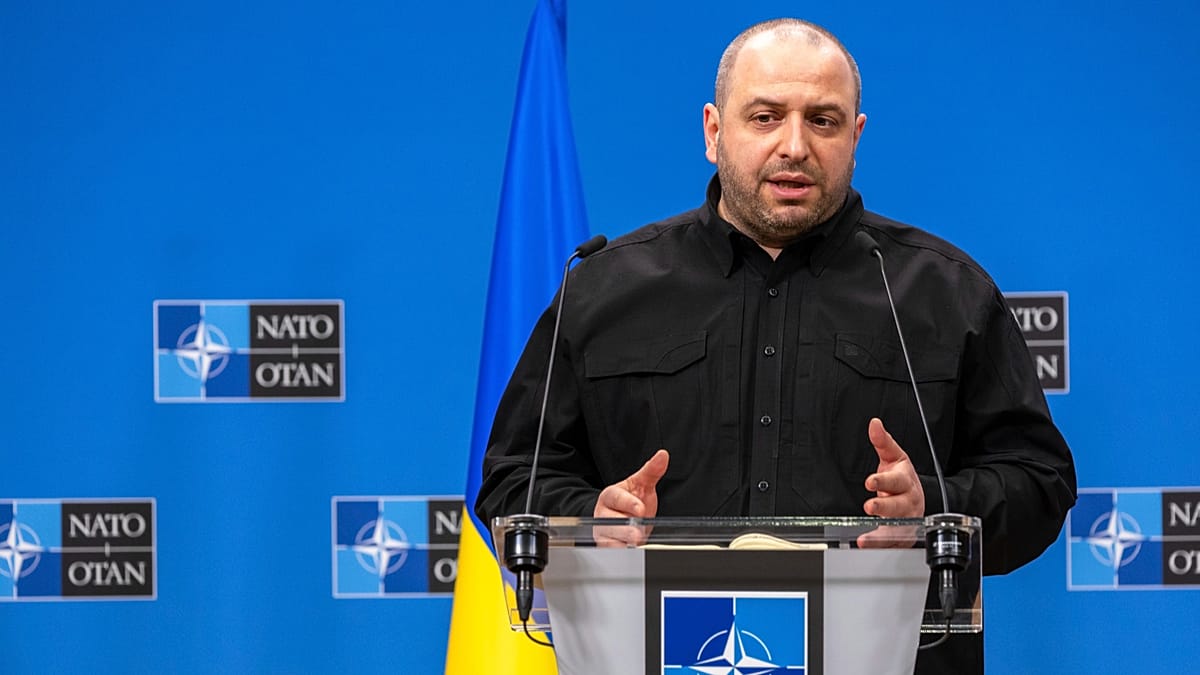
In a continued wartime government overhaul, President Volodymyr Zelenskyy has appointed Rustem Umerov, a central figure in Kyiv's peace negotiations, as the new head of Ukraine's Foreign Intelligence Service. The appointment, announced on 3 August, fills a vacancy that had persisted since winter, though it has drawn less public attention than the turmoil at the defense ministry, which has been without a full-time minister for over two weeks.
Umerov, who previously served as secretary of Ukraine's National Security and Defence Council, will retain his role in the US-led peace process, according to Zelenskyy. Speaking at an event with diplomats on Monday, the president said Umerov would also continue coordinating the Drone Deal initiative with foreign partners, including in the Middle East. "He has greater capacity to deal with these issues simultaneously — diplomacy, defence, and the negotiations process with the US and some other partners," Zelenskyy explained.
Ihor Klymenko, the former interior minister, will replace Umerov as secretary of the National Security and Defence Council. These changes are part of a broader reshuffle initiated in July, which has triggered a political and military crisis that shows no signs of abating.
Protests intensify in Kyiv
The dismissal of Mykhailo Fedorov, the former defense minister, has sparked nationwide street protests. On 31 July, organizers claimed Kyiv witnessed "the largest protest since the Revolution of Dignity" in 2014, with thousands gathering to demand his reinstatement. Demonstrators have remained defiant even during air raid alerts, with chants of "We stand and we will keep standing" echoing through the streets.
Dmytro Koziatynskyi, a war veteran and prominent protest leader, has called on Zelenskyy to "give Mykhailo (Fedorov) a year to carry out the reforms, and then make decisions based on the results." He warned that "frustration and anger are building up in society, and it's currently completely unclear how such a disoriented state will enter the promised harsh winter." Koziatynskyi urged the president to "end the protests by bringing Fedorov back to the Ministry of Defence," fulfilling the last of the protesters' original demands.
The political crisis comes at a critical juncture for Ukraine, as it navigates a fragile geopolitical landscape. Zelenskyy's recent meeting with President Trump at the White House underscored the importance of maintaining strong international support. Meanwhile, the reshuffle has raised questions about the stability of Ukraine's wartime leadership, with some analysts drawing parallels to broader European concerns about governance during conflict.
The Foreign Intelligence Service's prolonged lack of a permanent chief had been a quiet concern, but the defense ministry's vacancy has become a flashpoint. The protests reflect deeper societal anxieties about the direction of the war effort and the government's ability to manage the challenges ahead. As winter approaches, the pressure on Zelenskyy to resolve the crisis is mounting, both domestically and among European allies who watch Ukraine's resilience with keen interest.
Umerov's dual role in intelligence and diplomacy signals an attempt to streamline decision-making, but it remains to be seen whether this will appease protesters. The appointment also highlights the intertwining of military and diplomatic efforts, a reality that has defined Ukraine's struggle since the full-scale invasion. With the UK's commitment to a new drone factory and other international pledges, the need for coherent leadership is more urgent than ever.
As the standoff continues, the international community watches closely. The outcome of this political crisis could shape Ukraine's ability to sustain its defense and negotiate effectively. For now, the streets of Kyiv remain a barometer of public sentiment, and the government's next moves will be scrutinized both at home and abroad.