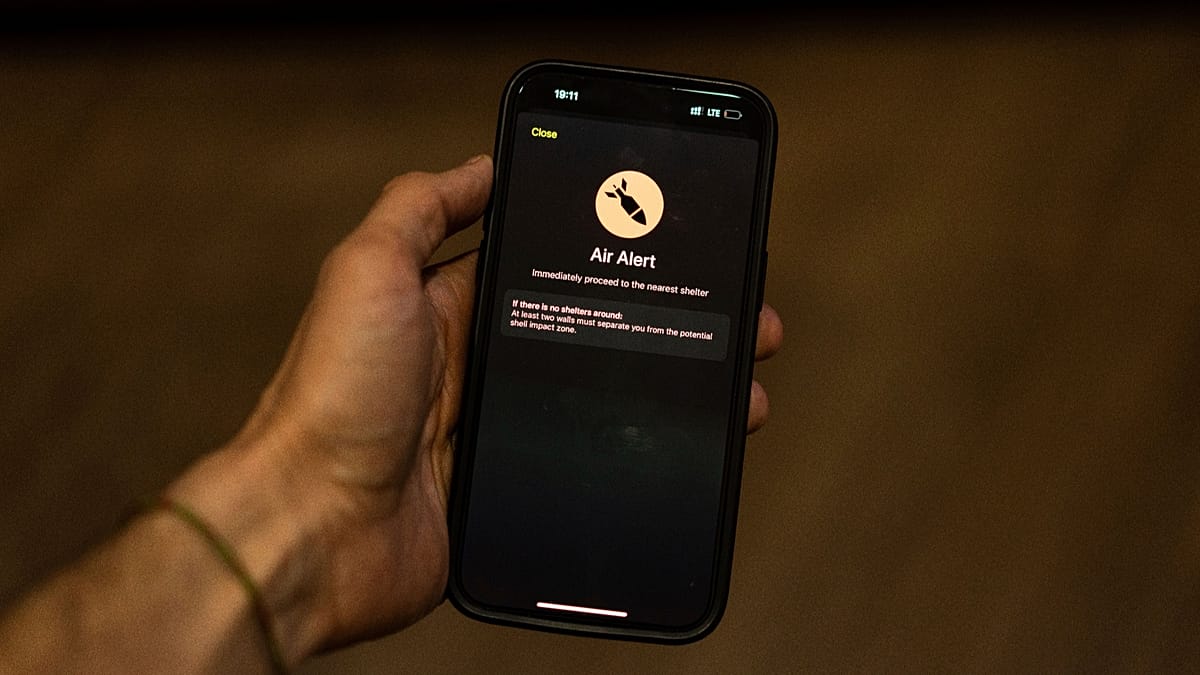
KYIV — Ukraine and Russia both reported cyberattacks on their public warning applications over the weekend, as the brief ceasefire that had allowed humanitarian evacuations in the southern Kherson region expired without an extension.
Ukraine's air force said on Sunday that the Air Alarm app, widely used to alert civilians to incoming strikes, had probably been subjected to hostile interference. Users received baseless notifications of a radiation threat, prompting officials to issue an urgent clarification.
“There is no radiation threat,” the air force said in a statement, while urging citizens to rely on official channels. The head of Ukraine's Centre for Strategic Communications, SPRAVDI, blamed Russian hackers for the incident.
Hours later, Russia's emergencies ministry announced that its own warning app had come under a “massive cyberattack,” with attackers posting false information. The ministry said its teams were working to restore normal service, but did not immediately attribute the attack to any specific actor.
The parallel disruptions came as the longest truce of the war — limited to the eastern Kherson region — ended on Sunday. Kyiv said Moscow had refused an offer to extend the pause, which had begun on Tuesday and was brokered by US First Lady Melania Trump. The ceasefire had enabled a humanitarian mission to the Russian-occupied city of Oleshky, where Red Cross volunteers evacuated residents with disabilities.
Dmytro Lubinets, Ukraine's Parliament Commissioner for Human Rights, confirmed the truce had ended, calling it “an important step in our joint humanitarian efforts” with Russia. The pause had allowed evacuations to begin in Oleshky, but its expiry raises concerns for those still trapped in the city.
Cyberattacks as a tool of war
The app hacks underscore how cyber operations have become a routine part of the conflict, targeting civilian infrastructure and sowing confusion. Ukraine has repeatedly accused Russia of launching cyberattacks against its critical systems, while Moscow has made similar allegations against Kyiv.
Kherson regional governor Oleksandr Prokudin warned residents to remain vigilant after the ceasefire ended and to “respond immediately to warnings about Russian attacks.” The region has been a flashpoint throughout the war, with both sides trading strikes.
On Sunday, Russia and Ukraine exchanged attacks. Moscow said a drone had struck an “industrial enterprise” east of the capital, while Ukrainian media reported that Kyiv had targeted the Kstovo oil refinery. Ukraine has consistently struck Russian oil and gas infrastructure, framing it as retaliation for Russian attacks on Ukrainian energy facilities.
The strikes come as Washington presses Kyiv to halt such attacks, with US President Donald Trump linking them to rising diesel prices — a claim analysts attribute more directly to the ongoing Iran war. In an interview with Fox News on Sunday, Ukrainian President Volodymyr Zelenskyy said he had told Trump: “If you want us not to attack Russia's refineries, they have not to attack our energy system.” He added, “Another alternative, give us Patriot missiles.”
US-mediated talks between Russia and Ukraine are expected to resume this month, after being frozen since the joint US-Israeli strikes on Iran in February. The brief Oleshky truce had offered a rare glimpse of cooperation, but former Ukrainian Prime Minister warns it is unlikely to lead to a broader ceasefire.
Meanwhile, the European Union has been accelerating its support for Ukraine, with a €45bn package moving forward as Kyiv faces a funding gap. The bloc's continued engagement remains crucial as the war enters its fifth year.
The cyberattacks on the alert apps highlight the fragility of civilian safety systems in wartime. For residents in Kherson and beyond, the apps are a lifeline, and their compromise risks both panic and desensitisation. As the truce fades, the region braces for renewed hostilities, with the digital front proving as contested as the physical one.