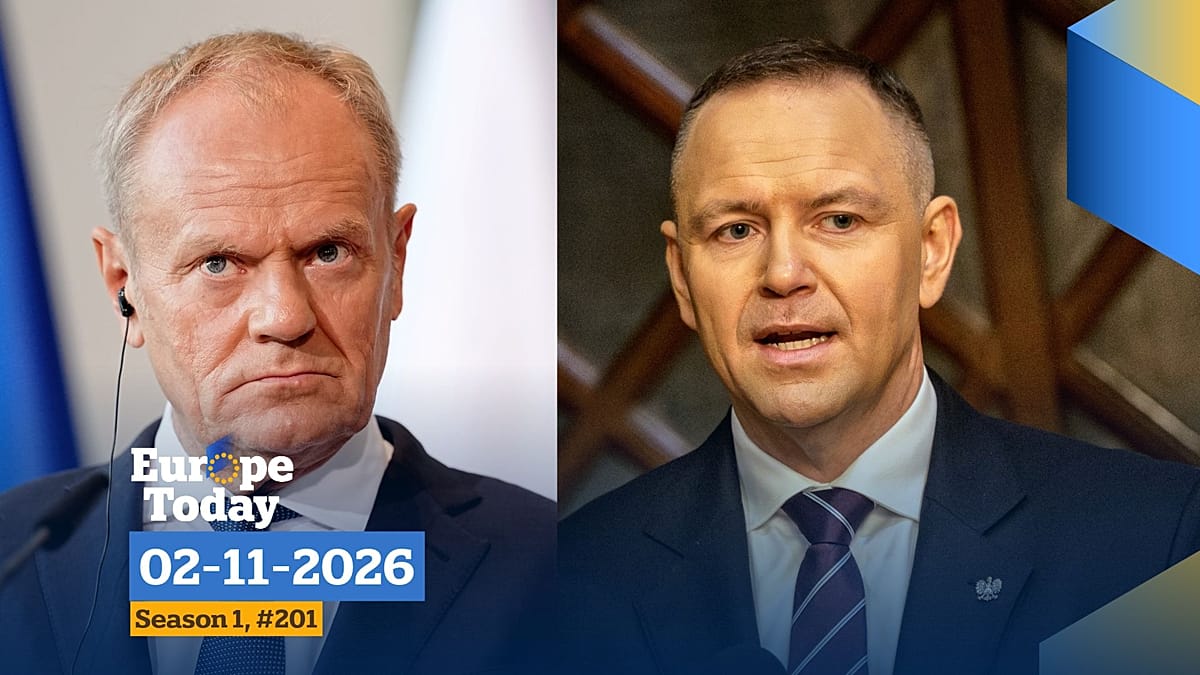
Warsaw was the scene of high political drama on Wednesday as President Karol Nawrocki walked into the Constitutional Tribunal to demand the return of its suspended conservative chief judge, directly challenging the government of Prime Minister Donald Tusk. The unprecedented personal intervention came as riot police used force against demonstrators outside the court, underscoring the depth of a crisis that has paralysed one of Poland's key judicial institutions.
A clash of two visions for the judiciary
The standoff began when the Tusk government, which took office last year, moved to replace judges it considers illegitimate appointees of the previous Law and Justice (PiS) administration. The government argues that the tribunal, stacked with PiS loyalists, has lost its independence and must be reformed to restore public trust. In response, the tribunal's president, Julia Przyłębska, has refused to step aside, and the body has continued to issue rulings that the government deems invalid.
President Nawrocki, a PiS ally, has sided with the tribunal's old guard. His decision to appear in person at the court was a symbolic act of defiance, aimed at rallying conservative support and pressuring the government to back down. Speaking to reporters after the visit, he said: "The Constitutional Tribunal is the guardian of the constitution. No government has the right to subjugate it."
The government, however, sees things differently. Michał Wawrykiewicz, a Member of the European Parliament from Tusk's Civic Platform, told Europe Today that the tribunal had been "captured" by PiS and that its rulings were "politically motivated." He insisted that the government's actions were necessary to "restore the rule of law in Poland," a sentiment echoed by Brussels, which has long criticised the previous government's judicial reforms.
The president's gamble
President Nawrocki's intervention is a high-risk strategy. By physically entering the tribunal, he has escalated a conflict that could lead to a constitutional impasse. His adviser, Marcin Przydacz, defended the move, arguing that the president was fulfilling his constitutional duty to protect the judiciary. "The president is the guarantor of the constitution," Przydacz said. "He cannot stand idly by while the government dismantles the legal order."
The scenes outside the court were tense. Riot police formed cordons as protesters, some waving Polish flags, clashed with officers. Several people were detained. The violence has raised concerns about the stability of Poland's democracy, which has been under scrutiny since PiS's attempts to bring the judiciary under political control.
The crisis has also drawn international attention. French far-right leader Marine Le Pen recently waded into the dispute, drawing a sharp rebuke from Warsaw for her comments supporting the tribunal's old guard. The European Commission has urged both sides to find a solution that respects the rule of law, but so far there is little sign of compromise.
What's at stake
The outcome of this standoff will shape Poland's judicial landscape for years to come. If the government succeeds in replacing the tribunal's leadership, it could pave the way for a broader overhaul of the judiciary, which PiS had packed with loyalists during its eight years in power. But if the president and the tribunal hold firm, Poland could face a prolonged period of legal uncertainty, with courts issuing conflicting rulings and the government refusing to implement them.
For ordinary Poles, the crisis is more than a political battle. It affects everything from business contracts to family law, as courts struggle to function amid the chaos. The government has vowed no compromise, while the president shows no signs of backing down. The standoff is likely to dominate Polish politics for months, with potential consequences for the country's standing in the European Union.
As the situation unfolds, the eyes of Europe are on Warsaw. The crisis is not just about Poland; it is a test of whether the EU can enforce its fundamental values among member states. The European Commission has already launched infringement procedures against Poland over its judicial reforms, and the current escalation could lead to further sanctions, including the withholding of EU funds.
For now, both sides are digging in. The president has called on the government to respect the tribunal's independence, while the government insists that the tribunal's current composition is illegitimate. With no dialogue in sight, the crisis seems set to deepen, leaving Poland's legal system in limbo and its democracy under strain.