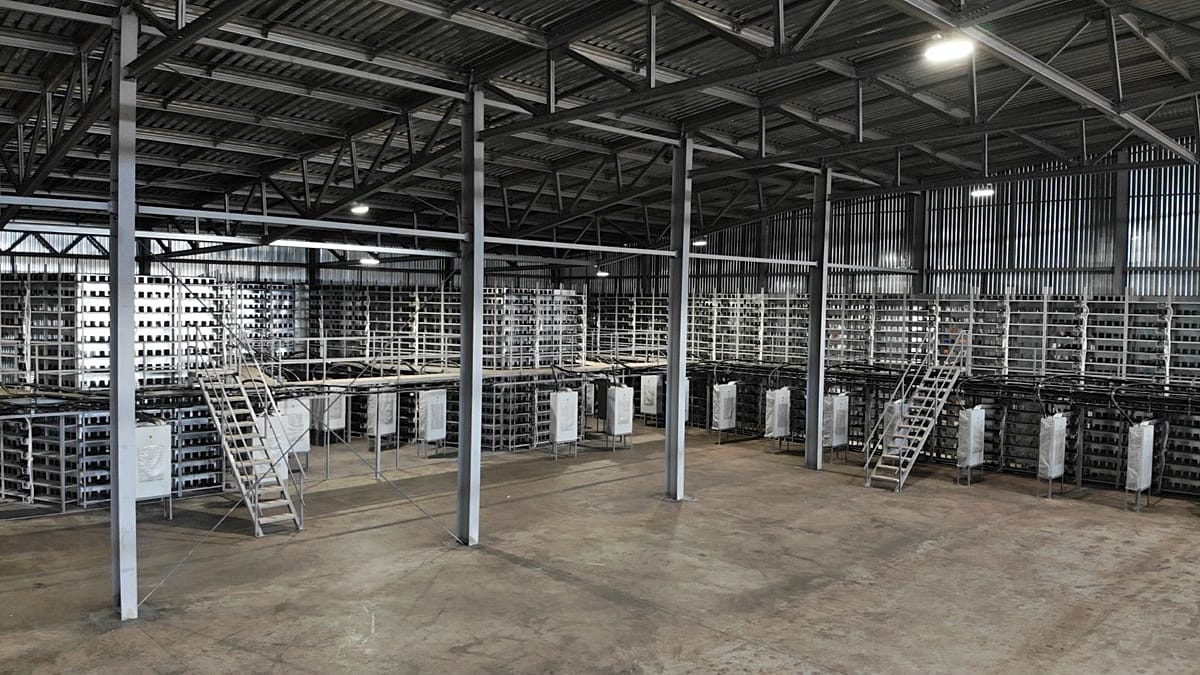
Five years ago, Kazakhstan emerged as one of the world's leading crypto mining hubs, drawing operators with cheap energy and a welcoming regulatory climate. But the boom quickly turned sour: electricity demand surged, the ageing grid buckled, and the government's response—tightening rules and cutting power—sent most miners packing or underground.
Now Astana is trying to lure them back. In a bid to revive the industry, the government has signed a decree offering tax breaks and legal certainty to citizens who declare their cryptocurrency holdings and move them onto regulated domestic platforms. The move is part of a broader effort to integrate digital assets into the national economy.
Tax holiday for declared holdings
Under the new rules, private investors will be exempt from personal income tax on profits from digital asset transactions for three years, provided the assets are not linked to fraud, money laundering, or unlicensed crypto services. The measure is designed to encourage holders to bring their assets out of the shadows and onto licensed exchanges.
The decree also addresses the energy question that triggered the earlier crisis. Miners will be allowed to use associated gas from oil fields—gas that is not required for state use—to generate electricity for their operations, reducing their reliance on the national grid.
Nurkhat Kushimov, general manager of Binance Kazakhstan, called the tax incentive the most important element of the decree. “This is a strong incentive for users to choose regulated jurisdictions and platforms operating within them,” he told Euronews. “This approach makes working in a licensed environment more attractive, fosters trust in the market and creates the conditions for its further development.”
Bakhytzhan Kenzhebayev, chairman of Kazakhstan’s Association of Fintech, AI and Crypto Industry, agreed that the tax break removes a key uncertainty for private investors—namely, when and on what basis a tax obligation arises. But he cautioned that the measure alone is not enough. “Users choose a platform not based on the tax rate, but on a combination of factors: how easy it is to deposit and withdraw the local currency, the liquidity, and how clear the rules are,” he said. “For a licensed participant, the predictability of the rule is more valuable than the benefit itself.”
Daniyar Mubarakov, president of Kazakhstan’s Blockchain and Digital Mining Association, welcomed the government’s support but questioned how long it would last. “For certain categories of entrepreneurs, preferential tax regimes mean not only a reduction in taxes in the current period, but also a possible several-fold increase in taxes in the future due to increased volumes,” he said.
Vice Minister of AI and Digital Development Gizzat Baitursynov said his department is already working on a proposal for a simplified tax regime to follow the three-year exemption. He added that officials are also considering cancelling tax audits for private investors covering the previous three years.
A global trend
Kazakhstan is not alone in trying to attract crypto assets back home. The UAE, Hong Kong, and Singapore have all introduced similar tax incentives alongside clear licensing and banking access, generating additional revenue. Experts say the approach is becoming a global trend.
According to the Astana International Financial Centre (AIFC), Kazakhstan’s financial regulator, Kazakh citizens hold approximately 1 million crypto wallets—nearly four times the number of users registered on authorised local exchanges, which stood at 256,900 in March. The AIFC, modelled on Dubai’s DIFC, has served as the country’s sandbox for financial innovation and is the regulatory home for digital asset companies.
The scale of the underground economy is significant. During the mining boom, some operators went to extreme lengths to hide their electricity consumption, disguising mining farms as vegetable storage facilities, greenhouses, or AI data centres at abandoned Soviet-era industrial sites. At its peak, crypto mining consumed an estimated 8% of Kazakhstan’s total electricity output.
Kazakhstan never outright banned crypto mining, keeping its options open. The new decree is a clear signal that Astana wants to harness the industry’s potential—but this time on its own terms. As the country shifts from oil to manufacturing, digital assets could play a role in diversifying the economy. Whether the incentives are enough to bring the billions back remains to be seen.