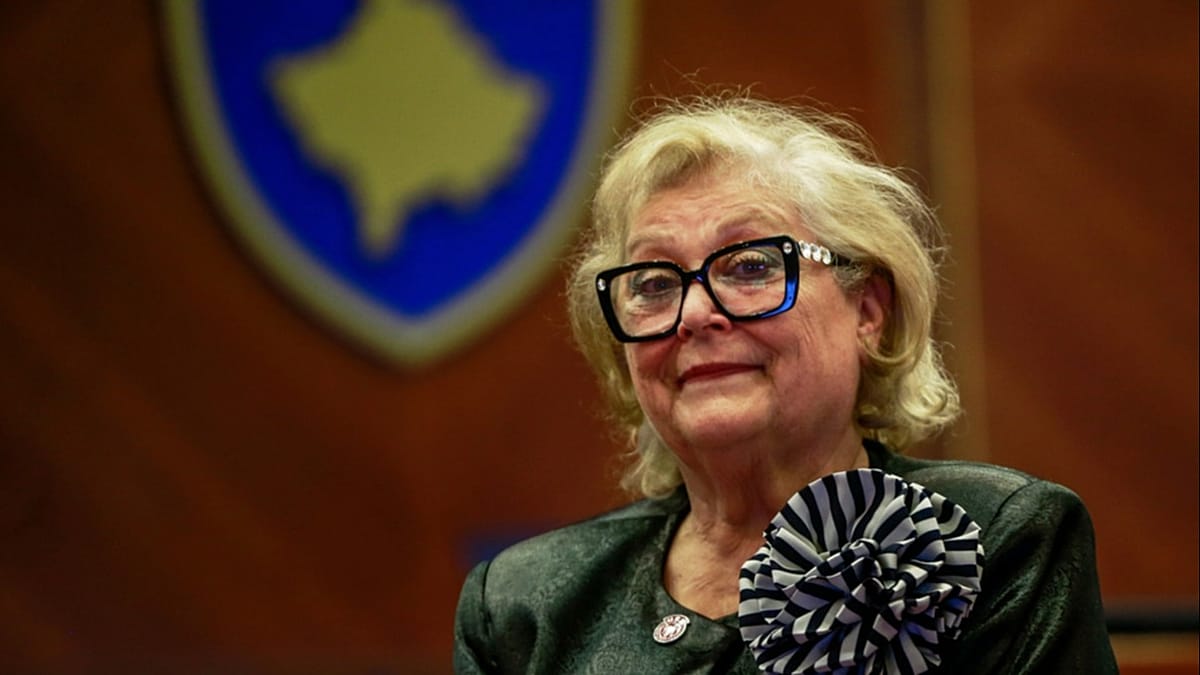
In a marathon session that stretched past midnight, Kosovo's parliament elected economist and academic Justina Shiroka Pula as the country's new president, narrowly beating a constitutional deadline that would have triggered a snap election. The vote, held on Tuesday, brought an end to more than 19 months of legislative paralysis that had already forced two early parliamentary elections.
Pula, who recently served as president of the Academy of Sciences and Arts of Kosovo, secured 81 votes in the 120-seat assembly. She was a last-minute consensus candidate backed by the ruling Self-Determination movement (Vetëvendosje) and the largest opposition party, the Democratic Party of Kosovo (PDK). Her election makes her the third woman to hold the largely ceremonial post since Kosovo declared independence from Serbia in 2008.
A vote shadowed by protests and a court ruling
The extraordinary session took place against a backdrop of mass demonstrations. Thousands of protesters had gathered outside the parliament building in Pristina, demanding that lawmakers pass a law to curb the powers of the Specialist Chambers, a special court in The Hague that investigates and prosecutes war crimes allegedly committed by the Kosovo Liberation Army (KLA) during the 1998-99 conflict.
Just before Pula's election, parliament approved that law, which now awaits her signature to become binding. The court has been a flashpoint in Kosovo since it convicted four former KLA commanders—including ex-president Hashim Thaçi—of war crimes in a verdict handed down two weeks ago. They received prison sentences ranging from 13 to 25 years.
Kosovo's political establishment and much of the public have denounced the verdicts as unjust, arguing that the KLA fought a legitimate war against Serbian oppression. Many fear the ruling tarnishes the country's independence struggle. More than 13,000 people, mostly ethnic Albanians, were killed during the conflict, and around one million were displaced.
In her first address after taking the oath, Pula struck a conciliatory tone: “Today, I accept with great honour and full responsibility the duty of President of the Republic of Kosovo. This mandate does not belong to one person alone, it belongs to our citizens, our institutions, and the state for which many generations have sacrificed.”
While the presidency is largely symbolic, the office holder plays a significant role in foreign policy and serves as commander-in-chief of the armed forces. Pula's endorsement of the law limiting the Hague court's powers is seen as a crucial step in implementing the will of the protesters and the political class.
The election ends a period of uncertainty that had raised concerns among Kosovo's international allies, including the European Union and the United States. The new president will need to balance domestic expectations with the need to maintain Kosovo's credibility on the world stage, particularly as it seeks further integration into Euro-Atlantic structures.
Analysts note that Pula's academic background and lack of direct political baggage may help her navigate the delicate situation. However, the underlying tensions over the court's rulings and the broader relationship with Serbia remain unresolved. The law limiting the court's powers could strain ties with The Hague and international partners who support the tribunal's work.
For now, the immediate crisis has been averted. Kosovo has a president, and the parliamentary deadlock has been broken. But the deeper questions about justice, memory, and sovereignty that have haunted the country since the war are far from settled.