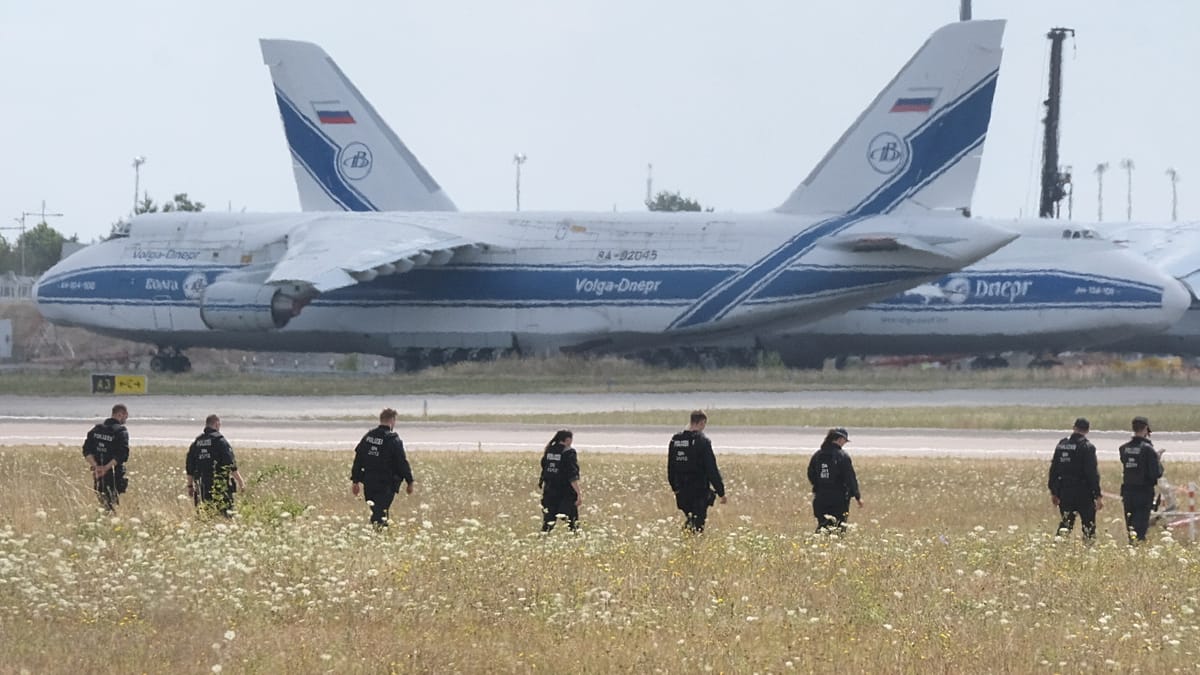
Brussels woke up to a sharper sense of confrontation this morning. Germany's formal conclusion that the Kremlin was behind an attempted drone strike on Leipzig airport has triggered a wave of condemnation across European capitals and a promise of tougher action from both the EU and NATO.
German Interior Minister Alexander Dobrindt announced fresh sanctions on Moscow, including tighter entry rules for Russian nationals, and raised the country's threat level from “general” to “high”. “Let me be very clear: we are not at war. But we are the target of hybrid attacks on a daily basis,” he said on Tuesday.
NATO Secretary-General Mark Rutte called the evidence against Russia “clear” and said the Alliance would bolster its ability to deter and defend against “malign actions like those seen in Leipzig”. European Commission President Ursula von der Leyen promised a “clear response” and is due to meet Rutte later today to discuss closer cooperation between the EU and NATO on countering hybrid threats.
Solidarity with Berlin has poured in from across the continent. Polish Prime Minister Donald Tusk insisted Europe would “not be intimidated”, while Italian Prime Minister Giorgia Meloni vowed a “united response”. The incident marks the first time the EU has so directly pointed the finger at Moscow for a hybrid attack, following a series of suspected Russian operations in recent years, including exploding parcels at a German depot and an arson attempt at a Vilnius Ikea store.
Escalation fears and diplomatic manoeuvres
The Leipzig episode comes amid mounting speculation that President Putin may be considering moving from hybrid warfare to more direct confrontation. NATO and EU officials are pushing back against that narrative, but reports that CIA chief John Ratcliffe made a secret trip to Moscow to dissuade Putin from escalating against the Baltic states have added to the unease.
The developments are set to dominate the informal meeting of EU foreign ministers in Ireland today. High Representative Kaja Kallas says the bloc is preparing “the most far-reaching sanctions” against Moscow yet, with a draft list of over 1,600 companies and individuals under discussion. The number is likely to grow in light of Berlin's announcement.
Support for Ukraine is also high on the agenda. Member states are scrambling to provide Kyiv with the air defence systems it urgently needs to counter Russia's intensifying ballistic missile strikes. Kallas admitted there is “no concrete success” yet in persuading Greece and Spain to donate their Patriot interceptors.
Ukrainian President Volodymyr Zelenskyy issued a stark warning last night: “Russian airspace will effectively be closing” due to Ukrainian drone operations. He stressed that Kyiv does not threaten civilian aviation, but said airlines and insurers using Russian airports must reckon with the growing presence of Ukrainian drones. “Russian skies are becoming completely dangerous,” he said.
The escalating costs of the war are straining the EU's financial commitments. Russia's relentless drone attacks are rapidly increasing Ukraine's material needs, casting doubt on whether the EU's €90 billion loan will last until the end of 2027 as originally planned. Ukraine's Ministry of Defence faces a €23 billion deficit. The European Commission is reluctant to reopen the debate so soon after approving the loan, with spokesperson Paula Pinho saying the focus remains on the ambitious disbursement plan of €45 billion this year and €45 billion next year.
Today's informal meeting will also address reform of the bloc's foreign policy, which global turbulence has put under unprecedented strain. A group of 11 countries has signed a letter demanding an end to “obstructive” vetoes by moving from unanimity to qualified majority voting. “We must ensure that this culture of consensus fosters common action rather than preventing it – otherwise we will have legitimacy but no strength,” the signatories write.
Meanwhile, EU Trade Commissioner Maroš Šefčovič has told Euronews that Beijing must deliver “concrete results” by an October deadline or face “harsher measures” from the EU, as Brussels rushes to rein in China's record trade surplus with the bloc, which currently stands at €359.8 billion.