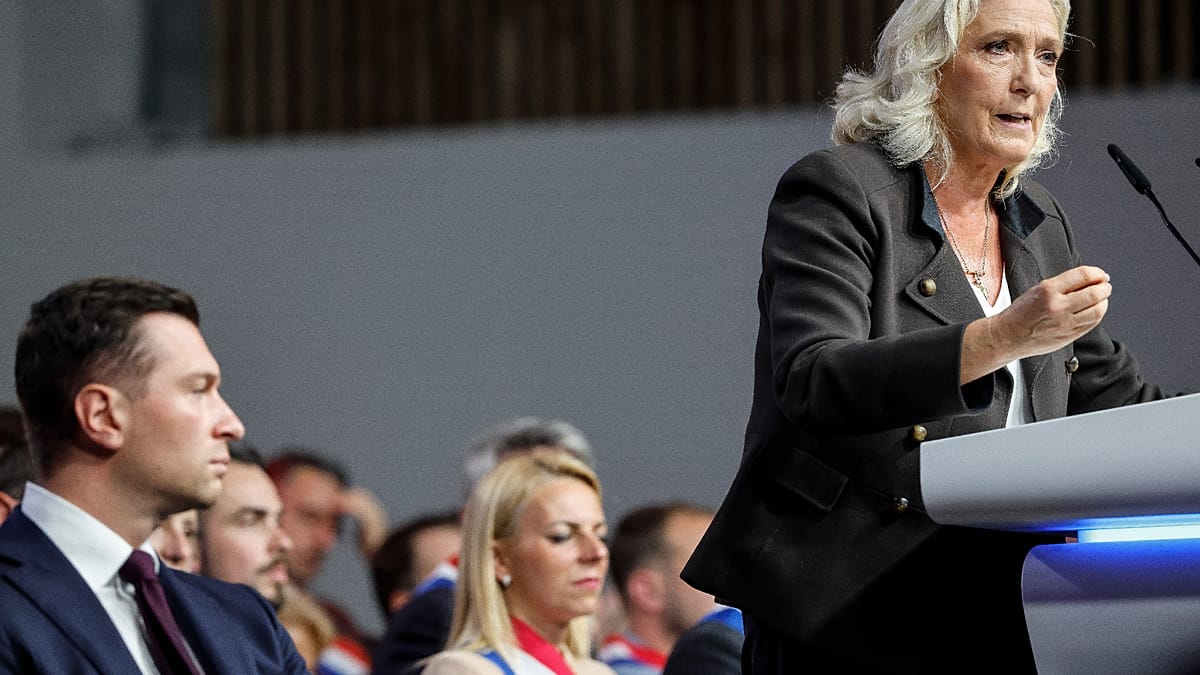
Marine Le Pen, leader of the far-right National Rally, is campaigning for the French presidency on a platform that would fundamentally alter France's relationship with the European Union. Her proposals include capping France's net contribution to the EU budget and halting financial support for Ukraine, setting the stage for a potential confrontation between Paris and Brussels.
Speaking to reporters in Brussels on Wednesday, Le Pen reiterated her pledge to end French funding for Ukraine, citing the "perilous" state of France's public finances. She suggested that, if elected, France could sustain such aid for only six months. "This funding will stop, and it is a matter of honesty to tell [President Volodymyr Zelenskyy] the truth," she told Euronews.
Zelenskyy responded sharply in an interview with the Financial Times on Thursday. "The price to pay is not as high as the value of people's lives," he said, adding that Le Pen "is not fully familiar with certain details." He also suggested that, should she become president, she would benefit from access to "the most powerful European system that works," pointing to Ukraine's battlefield experience as a potential asset for European defence.
Le Pen has also called for an end to EU sanctions against Russia, while maintaining that France could continue training Ukrainian troops and supplying military equipment. Her stance aligns with that of US President Donald Trump and contrasts with Italian Prime Minister Giorgia Meloni, who has consistently backed Kyiv. In a speech to the Italian Senate on Wednesday, Meloni defended Ukraine's right to self-defence, stating: "Supporting Ukraine is not an alternative to peace, it's what makes it possible. The peace we want is one that is sustainable, just and also safeguards Europe and our interests."
Beyond bilateral aid: France's broader role
Elie Tenenbaum, director of the French Institute of International Relations' Centre for Security Studies, noted that France's support for Ukraine extends well beyond direct aid. "It is primarily diplomatic," he told Euronews, highlighting France's leadership in initiatives such as the Coalition of the Willing, launched with the UK, and other mechanisms that "help keep Ukraine afloat." These include the €90 billion Ukraine Support Loan, whose disbursement depends on political backing from major countries, including France.
Tenenbaum warned that cuts to EU-level funding would have a more significant impact on Ukraine than reductions in bilateral aid. "If France were not only to stop providing bilateral aid and contributing to the EU budget, but also to actively oppose these kinds of mechanisms, then the entire framework of European assistance to Ukraine would be put at risk," he said.
According to the Kiel Institute, France has committed approximately €27 billion to Ukraine since Russia's full-scale invasion in February 2022, including €7.9 billion in bilateral aid and €19 billion through EU mechanisms. Germany remains Europe's largest donor in absolute terms, with pledges exceeding €50 billion, while Denmark and Estonia lead relative to GDP.
Budget caps and EU relations
Le Pen's party has proposed capping France's net EU budget contribution at €5 billion annually, down from the current €8 billion, according to French Senate figures. This would reverse the trend of increasing contributions under President Emmanuel Macron, who has supported a more ambitious EU budget and new own resources. France, despite being a net contributor, receives substantial CAP funding for its farmers.
Eulalia Rubio, a senior research fellow at the Jacques Delors Institute, described Le Pen's proposals as reflecting a "lack of understanding" of EU institutions. "Spending varies slightly every year, so you can't say, 'We're only going to pay €5 billion every year from now on'," she commented. She warned that if France overcame legal obstacles to cutting its contributions, other member states would have to make up the shortfall—a contentious prospect given France's status as the largest recipient of farming subsidies.
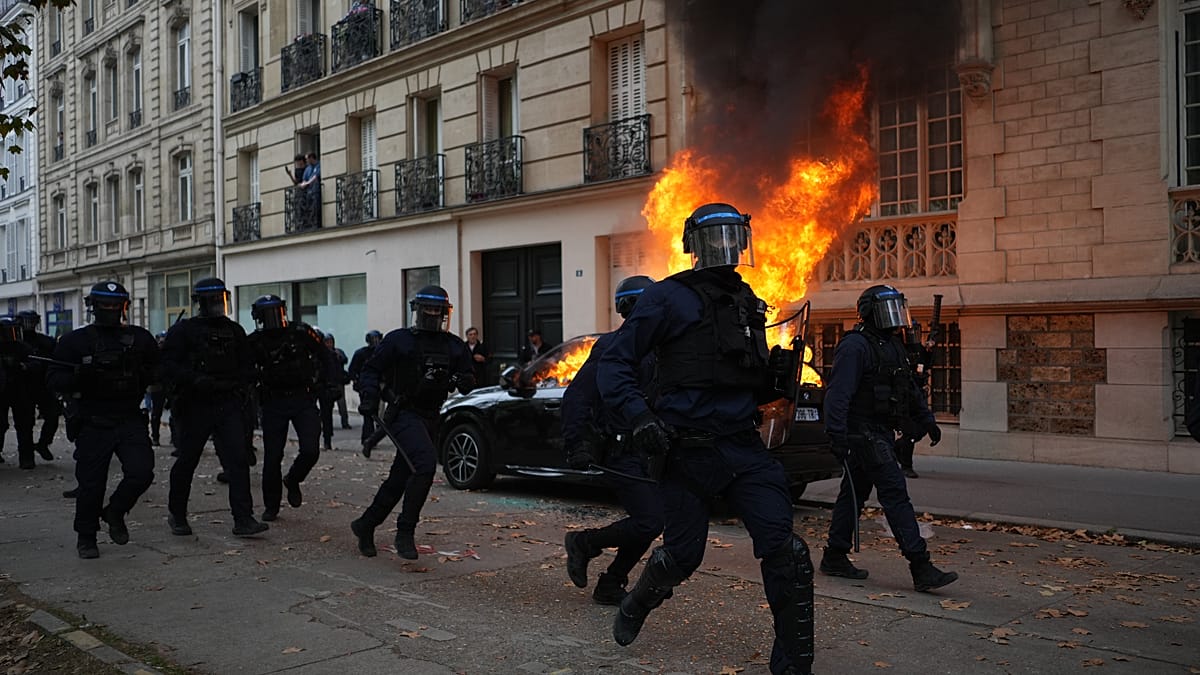
On Wednesday, the French National Assembly rejected a National Rally proposal to unilaterally reduce contributions for 2027, instead backing the government's planned level. Thierry Chopin, an adjunct professor at Sorbonne University, said a National Rally victory could mark a break with France's traditional role as a driving force within the EU, including its promotion of European sovereignty and strategic autonomy. The party's platform also includes tighter immigration controls and measures to address the cost-of-living crisis, as protests over living costs loom.
Le Pen's stance on Ukraine and the EU budget has already drawn comparisons to her challenge to Zelenskyy to debate, and her potential election could complicate ongoing EU budget negotiations. With the presidential election six months away, her proposals are set to remain a central issue in the campaign.