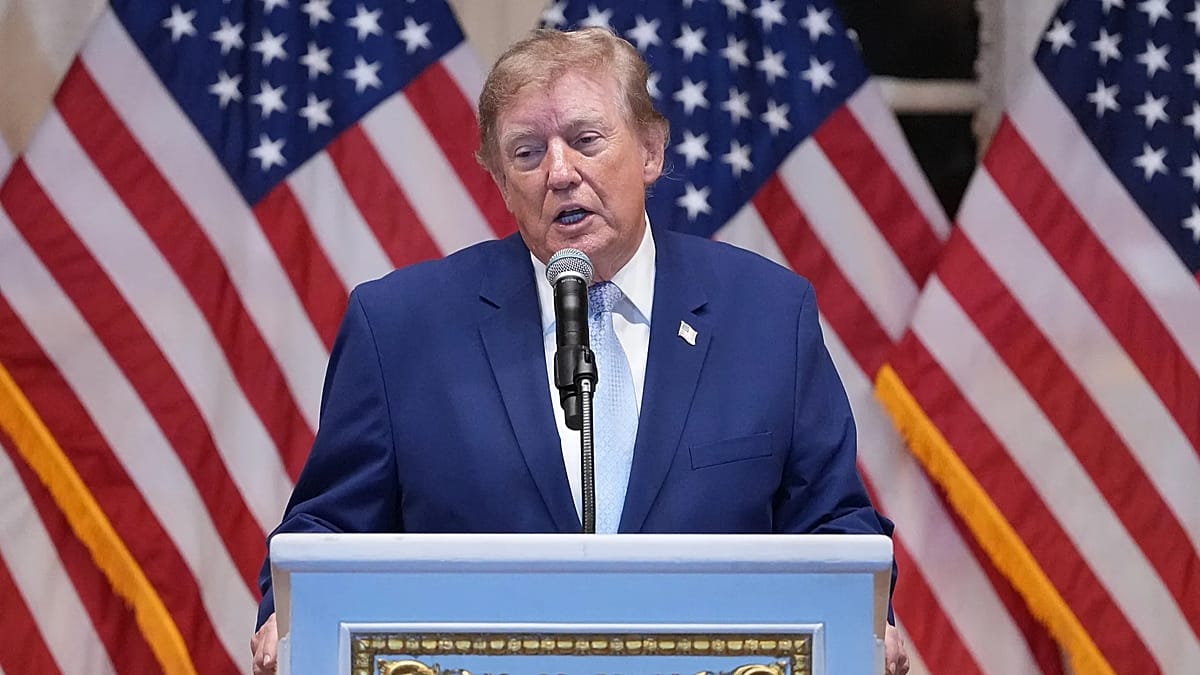
US President Donald Trump has signed an executive order to suspend a new package of sanctions and tariffs on Russia, just before it was due to take effect. In a notification to Congress, Trump said the waiver was in the US national interest, a decision that has sent ripples through European capitals already grappling with the war in Ukraine.
The suspended measures stem from the "Lindsey O. Graham Sanctioning Russia and Iran Act of 2026," which Trump signed into law in September. Named after the late US Senator Lindsey Graham, a vocal advocate of tough action against Moscow, the legislation targeted Russian government and military officials, major banks, and vessels in Russia's shadow fleet. It also provided for duties on Russian goods and on products from countries that continue to buy Russian oil and gas.
The decision to put the sanctions on hold comes as Trump has increasingly criticised Ukrainian President Volodymyr Zelenskyy. It also follows a controversial announcement earlier this month, as Trump gears up for the US midterm elections, of a deal with Russian President Vladimir Putin for Russia to release large volumes of diesel into global markets to bring down fuel prices.
"It was agreed that Russia will immediately supply over 300,000 Tons of Diesel Fuel to the American and Global Marketplace, another 500,000 Tons during the month of November, and 1,000,000 Tons immediately thereafter," Trump wrote on his Truth Social account. "Additionally, based on the condition of their Diesel Refineries, Russia will then deliver, within a short period of time, 3,000,000 Tons of Diesel Fuel."
The move has drawn sharp criticism from European leaders and lawmakers, who see it as a dangerous concession to Moscow at a time when Russia continues to strike Ukrainian regions. A Latvian MEP has described the diesel deal as driven by "dubious motives," echoing concerns that Washington is prioritising domestic fuel prices over transatlantic solidarity.
Zelenskyy in Brussels
The Ukrainian leader has been in Brussels this week, meeting with European leaders to discuss the ongoing war. Taking questions from the media on Friday, Zelenskyy was asked whether he felt he had been made a "scapegoat" for Trump's "own problems" ahead of November's midterms. He gave a wry smile and said: "This is my answer."
Addressing the US-Russia diesel deal, Zelenskyy added that Ukraine "can’t accept diesel deals, because gas deals will come next." His remarks come as EU leaders close ranks behind Zelenskyy amid the deepening rift with Washington.
The suspension of sanctions raises questions about the future of the transatlantic alliance's united front against Moscow. European officials have repeatedly stressed the importance of maintaining pressure on the Kremlin, and many are wary of any unilateral US move that could undermine that effort. The decision also comes as Putin expropriates more European firms in Russia, adding to the economic strain on European businesses.
Analysts note that the waiver is not a full repeal of the sanctions regime, but it signals a potential shift in US policy. The move could also affect European energy markets, as the promised diesel flows may alter global fuel prices and competition. Some European diplomats have privately expressed concern that the deal could be a prelude to broader US-Russia rapprochement, which could leave Europe exposed.
For now, the immediate impact is on the ground in Ukraine, where the war continues to take a heavy toll. Zelenskyy's visit to Brussels underscored the urgency of European support, but the US waiver has cast a shadow over those efforts. As one EU official put it, "We are watching closely, and we will not let our guard down."