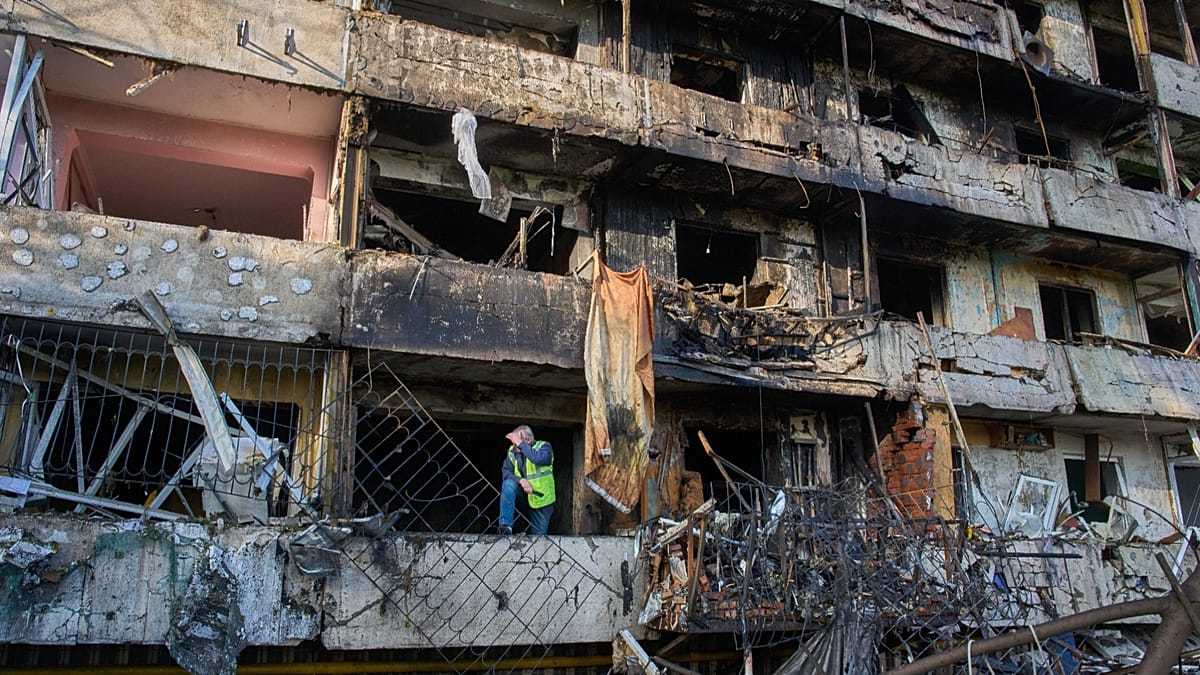
Russian forces launched a fresh wave of aerial attacks across nine Ukrainian regions on Friday, knocking out power for hundreds of thousands of households and damaging residential buildings. At least 15 people were wounded, according to Ukrainian officials, as civilian casualties from Moscow's full-scale invasion continue to climb.
The strikes, which hit civilian infrastructure and homes, underscore the Kremlin's strategy of targeting Ukraine's energy grid ahead of winter. This annual campaign aims to break civilian morale by cutting off heating and running water, a tactic that has become a grim fixture of the war.
The latest bombardment comes at a precarious moment for Ukraine. A public spat between President Volodymyr Zelenskyy and US President Donald Trump this week has raised fears that Washington may further reduce its support, leaving Kyiv more exposed to Russian air power as temperatures drop.
Winter blackouts and missile stockpiles
Ukrainian officials have warned that Russia is stockpiling ballistic missiles for intensified attacks in the coming months. On Thursday, Kyiv suspended a brief truce on energy-related targets, saying Moscow had ignored it despite Trump's call for a ceasefire.
The UN human rights office in Kyiv reported that at least 328 civilians were killed and 2,105 wounded in September, an 85% increase compared with the same month last year. The first two weeks of October have already seen dozens of civilian deaths, including children, according to Danielle Bell, head of the UN office. “The first two weeks of October were among the deadliest periods for civilians in years,” she said.
Russia's attacks are not limited to the power grid. Apartment blocks, public transport, cargo ships, data centres, and food stores have all been targeted, inflicting a heavy toll on everyday life across Ukraine.
Zelenskyy and Trump trade barbs
The tension between Kyiv and Washington escalated on Thursday when Zelenskyy said he felt betrayed by the American president, while Trump openly expressed his dislike for the Ukrainian leader. The exchange has cast doubt on the future of US military aid, particularly the Patriot missile systems that Ukraine desperately needs to counter Russian ballistic missiles.
Zelenskyy also complained about a breakdown in Western intelligence sharing and sudden restrictions on the use of Starshield, SpaceX's military-grade satellite service that underpins Ukraine's drone operations and military communications. He further criticised Trump's diesel deal with Russia, which undercuts international sanctions aimed at isolating Moscow.
Arriving at an EU summit in Brussels on Friday, Zelenskyy thanked the 27-nation bloc for its support, calling them “real leaders.” He told reporters, “We want to end this war as quickly as possible. We don't see now signals from the Russian side that they are ready for this, to end this war. That's why we have to prepare for the winter.”
European leaders at the summit closed ranks behind Zelenskyy, vowing to maintain support for Ukraine and urging Washington to pressure Putin. The show of unity in Brussels contrasts with the growing rift across the Atlantic.
Meanwhile, the political fallout from the Trump–Zelenskyy feud is rippling through European capitals. Some far-right figures, such as Marine Le Pen in France, have challenged Zelenskyy and vowed to cut aid, while Baltic leaders have voiced alarm over Trump's dealings with Moscow. A Latvian MEP recently suggested that Trump's Russian diesel deal was driven by dubious motives.
As winter approaches, Ukraine faces the dual challenge of defending its skies and maintaining the support of its Western allies. The coming weeks will test whether Europe can fill the gap if Washington's commitment wavers further.