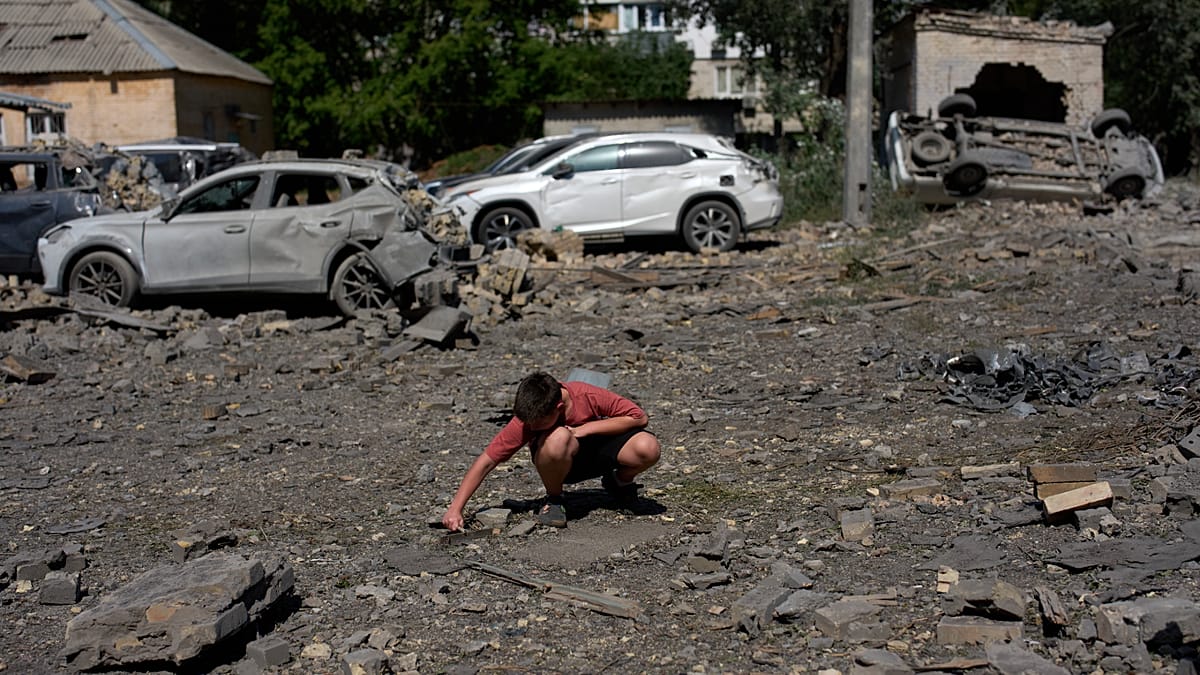
In the grey light of Thursday morning, residents of Kyiv's Solomianskyi district returned to streets littered with shattered glass, twisted metal and personal belongings. A Russian overnight barrage of ballistic and cruise missiles, accompanied by swarms of drones, had torn through this residential neighbourhood, leaving a trail of destruction that residents are only now beginning to comprehend.
Emergency crews worked through the day, sifting through rubble and debris, while local people gathered what they could salvage from damaged apartments. The attack, which struck in the early hours, is part of a renewed Russian campaign against Ukrainian cities, one that has intensified as winter approaches.
A city on edge
Kyiv has become accustomed to air raid sirens, but the scale and precision of this latest strike have shaken many. In Solomianskyi, a district known for its mix of Soviet-era blocks and newer developments, the damage is visible from several blocks away. Windows have been blown out, balconies are hanging precariously, and cars are crushed under fallen masonry.
"We heard the explosions and then everything went dark," said Olena, a resident who asked to be identified only by her first name. "We ran to the basement. When we came out, our home was gone." Her words echo the sentiments of many who now face the daunting task of rebuilding their lives.
The attack comes at a critical juncture for Ukraine. Just days ago, the European Union approved a €6.1 billion package for Ukraine's air defences, a move that Kyiv hopes will bolster its ability to counter such strikes. But the gap between promise and delivery remains a source of frustration.
Ukrainian officials have repeatedly called for more advanced systems, including Patriot and SAMP/T batteries, to protect major cities. The need is urgent: each barrage tests the limits of existing defences, and the cost of failure is measured in lives and homes.
In the aftermath, residents have been sharing information about temporary shelters and aid distribution points. Local volunteers have set up stations offering hot food, blankets and medical supplies. The sense of solidarity is palpable, but so is the exhaustion.
"We are tired, but we cannot give up," said Mykola, a retired engineer who was helping to clear debris. "This is our home. We will rebuild, as we have done before."
The strike on Solomianskyi is not an isolated incident. Across Ukraine, cities like Kryvyi Rih have also been hit, with rescue operations continuing after attacks that killed two people. The pattern is familiar: Russian forces target civilian infrastructure, hoping to break Ukrainian morale.
But the resolve of Kyiv's residents appears unshaken. As the day wore on, many returned to their damaged homes to begin the slow process of cleaning up. Others queued at mobile phone charging stations, trying to contact relatives and arrange temporary accommodation.
The international community has condemned the attack, with Western leaders reaffirming their support for Ukraine. However, for those sifting through the wreckage, words are not enough. They want tangible action, particularly in the form of air defence systems that can intercept the very missiles that turned their neighbourhood into a war zone.
As dusk fell on Thursday, the sounds of construction and repair mingled with the occasional drone of a surveillance aircraft overhead. The city is bruised, but it is not broken. In Solomianskyi, the lights are coming back on, one apartment at a time.