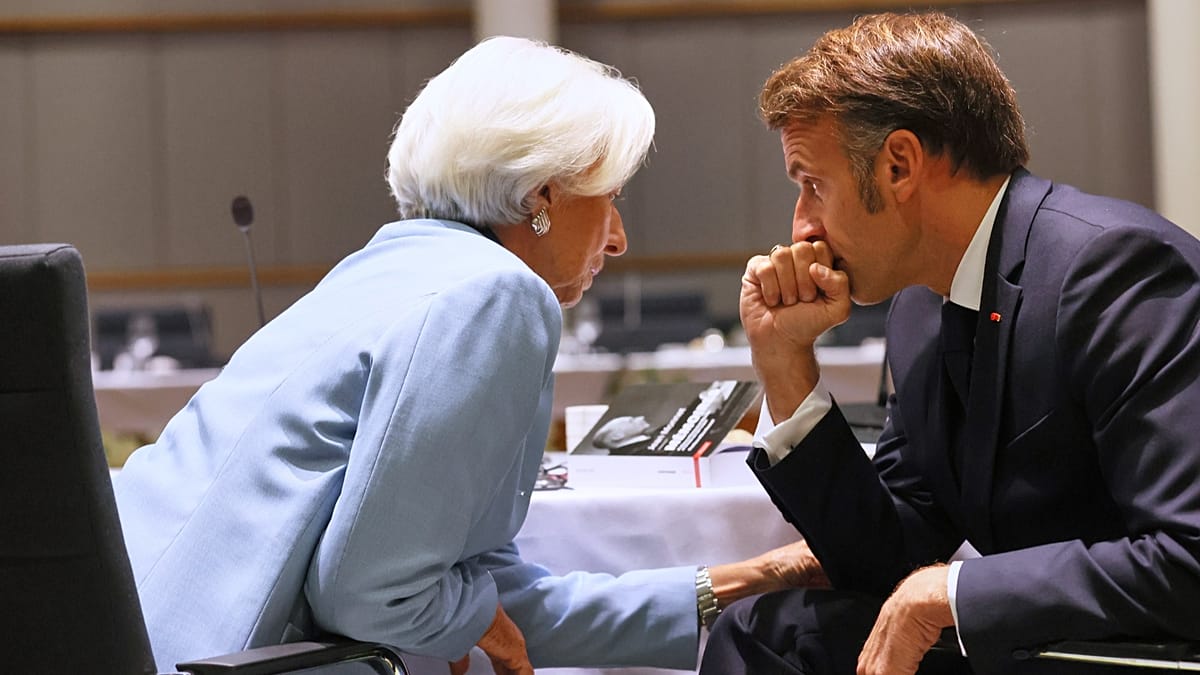
European Central Bank President Christine Lagarde has indicated she is considering an early departure from her role to engage in France's upcoming presidential election, a move that could reshape the political and economic discourse in both Paris and Frankfurt. In an interview with the French daily Les Échos on Thursday, Lagarde said she is weighing how to contribute to the electoral debate without standing as a candidate herself.
“I believe that a European voice needs to be heard in the French presidential debate,” Lagarde told the newspaper, adding that such a role could lead her to leave the ECB before her term ends in 2027. She did not specify what form her participation might take, but stressed her desire to shape the conversation around France's economic direction and its place in Europe.
France's Fragmented Political Landscape
France is set to hold its next presidential election in April 2027, against a backdrop of deep political fragmentation. The National Assembly remains hung, with no stable majority, making it difficult for successive governments to pass key legislation. This instability has left the country grappling with high public debt and limited fiscal room for investment in critical sectors such as defence and artificial intelligence, lagging behind other European partners.
More than 30 candidates have already expressed interest in running. On the far right, the National Rally—currently leading in polls—is expected to field either Marine Le Pen, if her conviction for misuse of EU funds is overturned on appeal, or Jordan Bardella. The political uncertainty has heightened concerns about France's ability to address its economic challenges and maintain its influence within the European Union.
“France must play a decisive role in the economic future of our continent,” Lagarde said. “And without this European environment and anchoring, our economic prospects would, at the very least, be unclear.”
Lagarde's potential early exit from the ECB would mark a significant shift for the institution, which she has led since 2019. Her departure could trigger a succession race among Europe's top economic policymakers, with implications for monetary policy and the eurozone's response to ongoing challenges, including inflation and sluggish growth.
Her comments come as France faces mounting pressure to reform its economy, particularly in light of recent climate-related events. The country's vulnerability to extreme weather was underscored by a June heatwave that was linked to a nearly 30% rise in deaths, with the Paris region hit hardest, as reported by European Pulse. Such events strain public finances and highlight the need for resilient investment strategies.
Lagarde's potential involvement in the French election debate also raises questions about the ECB's independence. While central bank governors often refrain from engaging in national politics, Lagarde's background as a former French finance minister and her long-standing political ties suggest she may see her role as a bridge between European institutions and national policy debates.
Observers note that her intervention could influence the campaign's focus on European integration, fiscal discipline, and the future of the euro. With France's economic position weakening relative to Germany and other EU members, Lagarde's voice could help steer the conversation toward collective solutions.
As the 2027 election approaches, the interplay between national politics and European governance will remain a critical theme. Lagarde's decision—whether to stay at the ECB or to step into the French political arena—will be closely watched in Brussels, Berlin, and beyond.