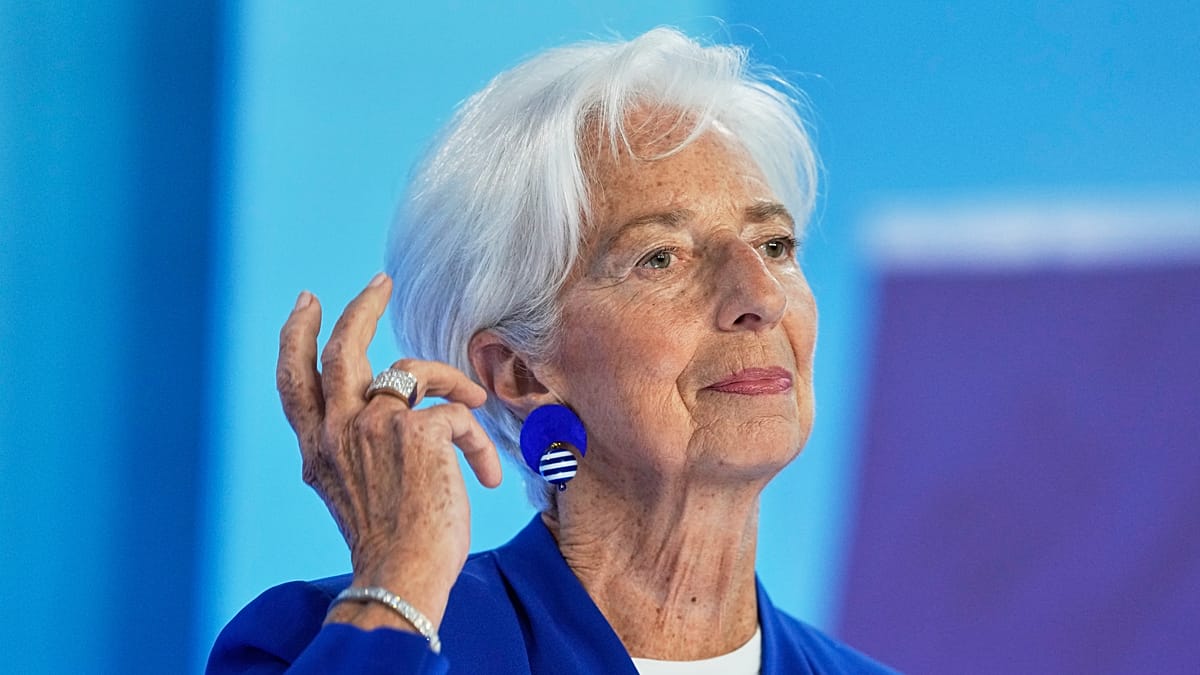
Christine Lagarde used the opening of the European Central Bank's annual forum in Sintra, Portugal, on Monday to declare that the era of unconventional monetary policy is over. After more than a decade dominated by bond purchases, emergency lending, and forward guidance, the ECB is returning to interest rates as its primary instrument for controlling inflation. But the ECB president cautioned that this does not mean the task has become simpler.
"Monetary policy has gone back to basics," Lagarde said, adding that returning to conventional tools "does not mean a return to the same idealised past." The message was clear: the playbook has changed, and the bank must adapt to a more volatile global economy.
What 'Back to Basics' Means for the ECB
For most of the past 13 years, the ECB relied on tools that no central banker would call normal. It bought government bonds on a vast scale, offered cheap multi-year loans to banks, built instruments to prevent the eurozone from fragmenting, and leaned heavily on forward guidance—the practice of telling markets in advance what it planned to do. When inflation surged after Russia's invasion of Ukraine, the ECB also delivered the fastest tightening cycle in its history, raising rates in increments of 75 basis points. Lagarde's message was that those extraordinary measures belong to a different chapter.
The shift reflects not only a different inflation environment but also a more resilient euro area. Over the past decade, Europe has strengthened banking supervision, introduced new resolution rules for failing lenders, and built common fiscal tools such as the European Stability Mechanism and NextGenerationEU. Lagarde pointed to inflation expectations that remain anchored around the ECB's 2% target and to the energy transition, which is gradually reducing Europe's exposure to fossil-fuel price shocks. Countries including Portugal, Spain, and France are increasingly generating electricity independently of natural gas prices, making the economy more resilient than during previous energy crises.
"By making the economy more resilient to shocks, this framework has reduced the need for unconventional or forceful policy responses," Lagarde said.
A More Unpredictable World
If the ECB's toolkit has become simpler, Lagarde suggested the world around it has become anything but. Today's shocks tend to come from the supply side, pushing prices higher rather than weakening demand. Unlike past crises, those events can escalate rapidly and reverse just as quickly, making it harder to judge whether inflationary pressures will prove temporary or persistent. She highlighted last year's US tariffs as an example: many economic models predicted the euro would weaken against the dollar, yet the opposite happened as investors reassessed the role of US assets in the global financial system. At the same time, European governments responded with higher defence spending, offsetting part of the economic drag from weaker trade.
The conflict in the Middle East offered another illustration. Oil prices climbed close to $120 a barrel in March before falling back to around $72 following last week's interim peace agreement, a reminder of how quickly the inflation outlook can change.
Why Lagarde Insists June's Hike Was Not 'Insurance'
Lagarde also rejected suggestions that the ECB's decision to raise interest rates in June was simply an "insurance hike." She said policymakers raised rates because the data pointed to a genuine inflation problem, with both headline and core inflation expected to remain stronger than previously anticipated. ECB projections showed inflation returning to the 2% target only in late 2027, and only if monetary policy tightened further. Holding rates steady, she argued, would have left inflation above target throughout both 2027 and 2028.
No More Promises on Rates
She was equally clear that the bank is not telling markets what comes next. "Forward guidance is not in the cards," she said, nor is certainty about the path ahead. In its place she put what she called framework guidance: making clear not what the bank will do, but how it will decide. The ECB's reaction function rests on three things: the inflation outlook, underlying inflation dynamics, and the strength with which policy feeds through the economy. Because markets now understand that function, she suggested, financial conditions start adjusting to fresh data before the Governing Council even meets. Rates tightened in March as the energy shock fed through, well ahead of the June decision. "The markets did the work for us," she said.
The broader message from Sintra was that the ECB no longer wants investors guessing its next move. It wants them to understand how policymakers will react to new data in a world where certainty has become rare. For now, with June's hike framed as robust rather than precautionary, the bar for the next move is simple: let the data decide.
This new approach comes as the ECB faces stubborn inflation and a complex global landscape. In a related development, the Fed's Warsh signaled a rate decision in four weeks, highlighting the interconnected challenges for central banks. Meanwhile, Lagarde's push for a capital markets union, as outlined in her recent remarks, remains a key part of her vision for the euro's future resilience.