Lebanese President Joseph Aoun declared on Monday that he is prepared to “do the impossible” to end the ongoing war with Israel, even as Israeli airstrikes continued to pound southern Lebanon and Hezbollah claimed a drone attack on an Israeli military target. The remarks underscore the fragility of a ceasefire that was announced on 17 April but has failed to halt hostilities.
Aoun’s statement came amid a fresh wave of Israeli strikes across southern Lebanon, reported by Lebanon’s state-run National News Agency. The Israeli military also issued evacuation orders for three villages near the border, including one on the outskirts of the coastal city of Tyre. Hezbollah, for its part, said it had launched a drone targeting an Iron Dome platform in a military encampment in northern Israel, describing the attack as a response to Israeli violations of the truce.
Ceasefire in Name Only
The ceasefire, brokered in Washington, was extended for 45 days last week after a third round of talks between Lebanese and Israeli representatives. Hezbollah, which is not a party to the negotiations and opposes them, has continued to engage militarily. The agreement has been repeatedly violated by both sides, with each accusing the other of breaching its terms.
“The framework that Lebanon has set for the negotiations consists of an Israeli withdrawal, a ceasefire, the deployment of the army along the border, the return of the displaced, and economic aid,” Aoun said in a statement. “My duty, based on my position and my responsibility, is to do the impossible, and to choose what is least costly, in order to stop the war against Lebanon and its people.”
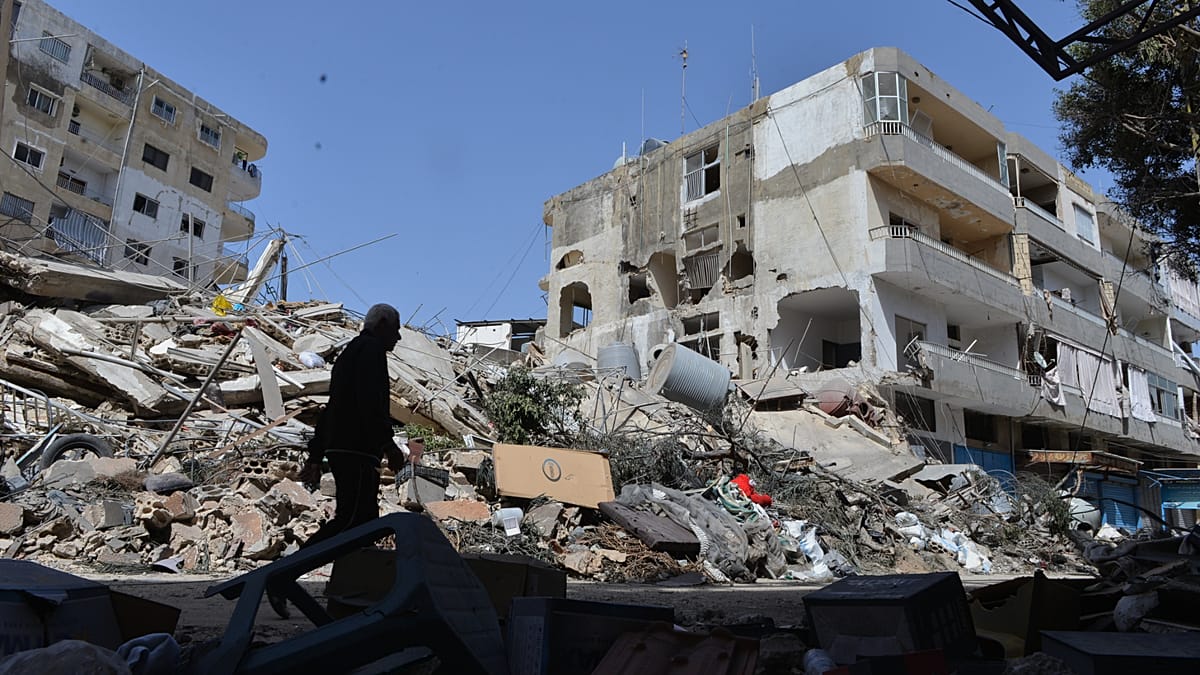
Israeli forces have occupied parts of southern Lebanon within a self-declared “yellow line” that runs roughly 10 kilometres north of the border. They have carried out large-scale demolitions in the area but insist they have no territorial ambitions. On Sunday, Israeli strikes killed seven people in Lebanon, including a member of the Palestinian Islamic Jihad group in the northeast, far from the border region.
According to the Lebanese health ministry, the death toll from Israeli strikes since the start of the war on 2 March has reached 3,020. Among the dead are 211 individuals aged 18 and under and 116 healthcare workers. The figures highlight the severe human cost of the conflict, which has also displaced tens of thousands of civilians on both sides of the border.
The European Union has repeatedly called for a sustainable ceasefire and the full implementation of UN Security Council Resolution 1701, which ended the 2006 war between Israel and Hezbollah. However, the current violence has exposed the limits of diplomatic efforts. The 45-day extension of the ceasefire has done little to stem the bloodshed.
For European observers, the conflict carries broader implications. The instability along Israel’s northern border risks drawing in regional powers and further destabilising the Eastern Mediterranean. EU member states, including France and Italy, have troops in the UNIFIL peacekeeping force in southern Lebanon, and any escalation could endanger their personnel. Moreover, the humanitarian toll—particularly the high number of child casualties—has sparked outrage in European capitals.
Aoun’s vow to “do the impossible” reflects the limited options available to Lebanon’s government, which is grappling with a severe economic crisis and a political system paralysed by sectarian divisions. Hezbollah’s military capabilities remain formidable, and the group shows no sign of disarming, as demanded by UN resolutions. Lebanese MP: No Real Ceasefire Exists as Hezbollah Disarmament Looms captures the deep scepticism among local politicians about the prospects for peace.
As the violence grinds on, the international community faces a familiar dilemma: how to enforce a ceasefire that neither side fully respects. For now, Aoun’s words ring hollow against the sound of explosions in the south.