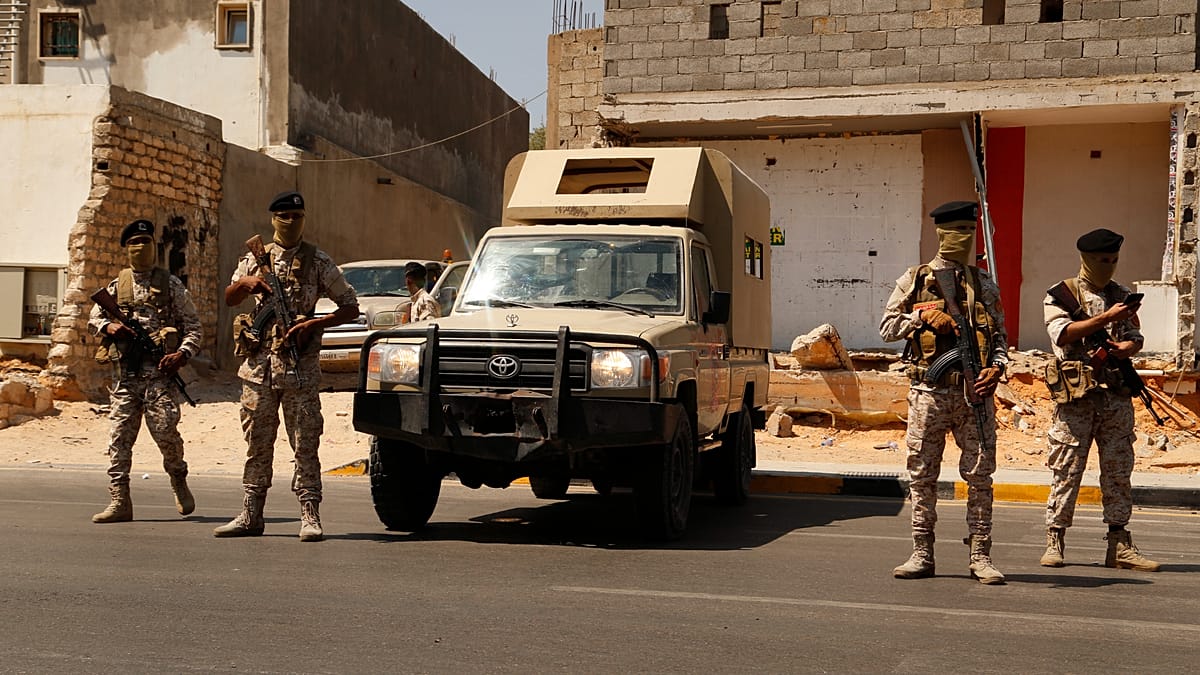
Security forces in the western Libyan city of Zawiya announced on Friday the start of a large-scale operation after heavy armed clashes erupted near the Zawiya oil refinery, one of the country's most critical energy installations. The Zawiya Security Directorate and the Joint Security Room stated that the operation, based on warrants from the prosecutor's office, includes raids, arrests, and searches targeting individuals involved in criminal gangs, murder, kidnapping, extortion, drug trafficking, people smuggling, and weapons trade.
The fighting, which began before dawn and continued sporadically, involved heavy weapons and spread to residential neighborhoods adjacent to the refinery. Residents reported bursts of gunfire and explosions across the city. The Emergency Medicine and Support Centre urged civilians to stay indoors and only venture out if absolutely necessary.
Refinery Shutdown and European Energy Implications
The National Oil Corporation and the Zawiya Oil Refining Company confirmed that operations at the refinery have been halted as a precaution after shells landed in sensitive operational areas. The port was cleared of tankers to protect lives and infrastructure and to limit environmental risks. Despite the shutdown, fuel supplies to the capital Tripoli and surrounding areas have not been affected, according to the National Oil Corporation.
Zawiya's refinery is one of Libya's largest, with significant production capacity feeding domestic markets and connected to vital supply networks. The city is also a transit point for irregular migrants heading toward Europe's southern shores. The instability in Zawiya is a reminder of the broader challenges facing Libya's energy sector, which has seen a recovery in production this year, averaging about 1.43 million barrels per day in April and May 2026—the highest in over a decade. Libyan authorities aim to raise output to 1.6 million barrels per day by the end of 2026, with ambitions to reach 2 million barrels per day in the coming years, restoring the country's role in the global oil market. European countries, particularly Italy, France, and Germany, have historically been the main destinations for Libyan crude, accounting for nearly 85% of exports.
The current escalation comes amid a complex political landscape, with Libya divided between the internationally recognized Government of National Unity in Tripoli and a parallel government in the east backed by the parliament. International efforts to hold elections and unify state institutions remain stalled. The security situation in Zawiya has been fragile for years, with sporadic clashes between armed groups vying for control of the lucrative fuel trafficking and smuggling routes into neighboring Tunisia.
This latest incident highlights the persistent volatility in Libya's oil-rich regions and the potential risks to European energy security. As European leaders seek to diversify energy sources and reduce dependence on unstable regions, the situation in Zawiya serves as a cautionary tale. For more on how Europe is rethinking its security and energy strategies, see our analysis on European Leaders Seek New Security Order as US Disengagement Looms.
The National Oil Corporation has emphasized that its teams are working to contain the situation and prevent further damage. No official confirmation has been given on the identity of the groups involved, but local sources indicate the clashes are between rival armed factions competing for influence in the city. The shutdown of the refinery, while precautionary, underscores the fragility of Libya's energy infrastructure and its vulnerability to local conflicts.
In a related development, the Zawiya Oil Refining Company confirmed that shells reached sensitive operational areas, prompting the complete shutdown and port clearance. Technical teams are monitoring the situation to prevent any environmental damage. The incident has not yet affected fuel supplies to Tripoli, but the long-term impact on production and exports remains uncertain.
Libya's oil sector has shown resilience despite political turmoil, with production levels approaching pre-2011 figures. The country's crude output averaged about 1.6 million barrels per day before the 2011 revolution, with a target of 2 million barrels per day by 2012. The recent recovery, aided by a unified national budget agreement in April 2026, has boosted hopes for stability. However, the clashes in Zawiya serve as a stark reminder that security challenges persist.
For European readers, the situation in Zawiya is not just a distant conflict but a direct concern for energy markets and migration flows. The city's role as a hub for irregular migration to Europe adds another layer of complexity. As the security operation unfolds, the international community will be watching closely to see if the Libyan authorities can restore order and protect critical infrastructure.