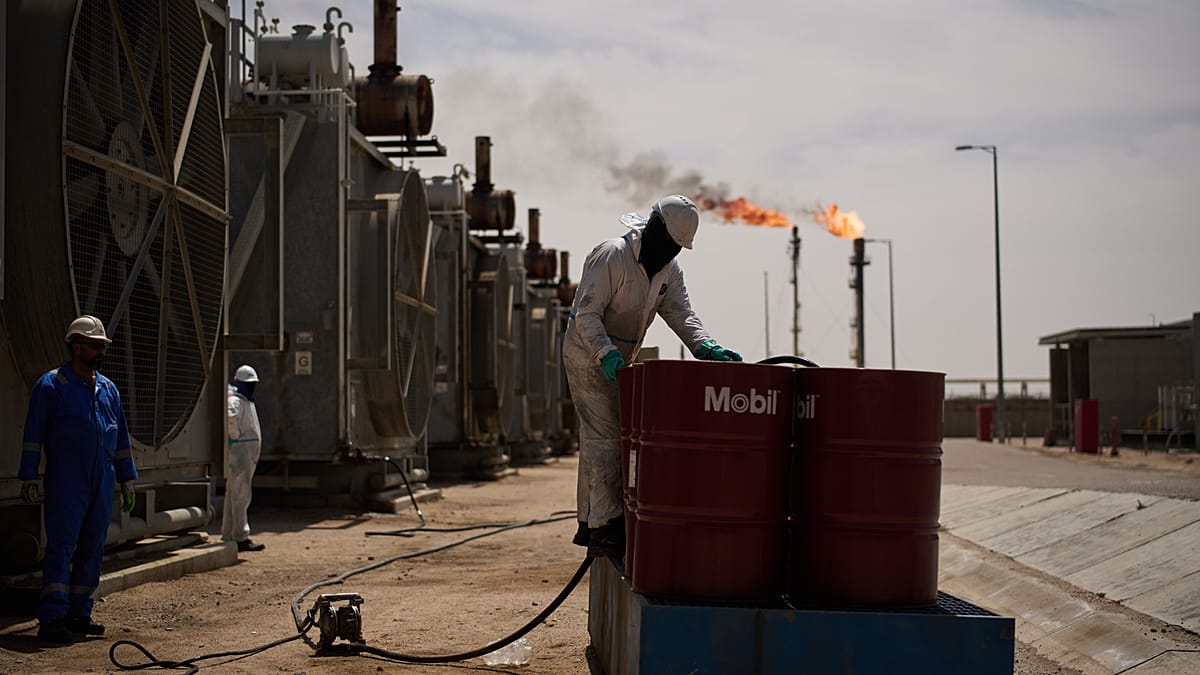
The Iraqi Ministry of Oil has announced the discovery of a substantial oil field in the southern province of Najaf, near the border with Saudi Arabia. Initial estimates suggest the Qurnain block contains reserves exceeding 8.8 billion barrels of light crude, marking one of the most significant finds in the country's energy sector in recent years.
The Qurnain block, located approximately 180 kilometres from Baghdad, spans 8,773 square kilometres along the Iraqi-Saudi frontier. Drilling at the Shams-11 exploration well has already yielded an initial production capacity of 3,248 barrels per day, with the ministry confirming the presence of high-quality light crude oil.
The contract to develop, explore, and produce oil from the block was signed on 17 October 2024 with China's ZhenHua Oil, which operates through its subsidiary Qurnain Petroleum Limited. During an official meeting between Iraqi Oil Minister Hayan Abdul Ghani and ZhenHua representatives, the company presented a rapid investment plan aimed at accelerating the field's development and moving it to commercial production as quickly as possible.
Strategic Implications Amid Regional Turmoil
The announcement comes at a critical juncture for Iraq's energy sector. Before the escalation of tensions in the Middle East, Iraq produced approximately 4.5 million barrels of oil per day, making it the third-largest producer in OPEC. Exports stood at around 3.5 million barrels daily, with roughly 90 percent transiting through the Strait of Hormuz.
However, the ongoing crisis in the region has severely disrupted this vital corridor. According to official data from the Ministry of Oil, Iraq's exports fell to just 18.6 million barrels in March, generating revenues of $1.96 billion (€1.77 billion). This represents a decline of approximately 71 percent in revenue terms compared to February, when Iraq exported more than 99 million barrels and earned $6.81 billion (€6.15 billion).
The disruption has prompted Baghdad to accelerate a strategic pipeline project linking Basra province in the south with Haditha in Anbar province, near the Syrian border. The planned pipeline would have an export capacity of 2.5 million barrels per day, offering an alternative route that bypasses the Strait of Hormuz entirely.
For European energy markets, the situation remains precarious. The EU Climate Chief has called for a radical energy shift as the third oil shock in decades bites, while Brussels is weighing suspending methane penalties to shield energy supply. The disruption has also hit global shipping, with Maersk reporting a 99 percent plunge in Q1 profit as freight rates weigh and Hormuz disruption looms.
Iraq's proven oil reserves, estimated at 145 billion barrels by the US Energy Information Administration, represent about 17 percent of total Middle Eastern reserves and roughly 9 percent of global reserves. The new discovery could further bolster these figures, though the immediate challenge remains getting oil to market.
The involvement of ZhenHua Oil underscores China's deepening energy ties with Iraq. The Chinese company has committed to advanced drilling techniques to improve exploration and production efficiency, reflecting Beijing's strategic interest in securing long-term energy supplies from the region.
As the Strait of Hormuz crisis continues, Iraq's ability to develop alternative export routes and bring new fields online will be closely watched by European capitals and energy markets alike. The country's position as a major OPEC producer and its proximity to both the Gulf and potential overland routes make it a key player in the evolving energy landscape.