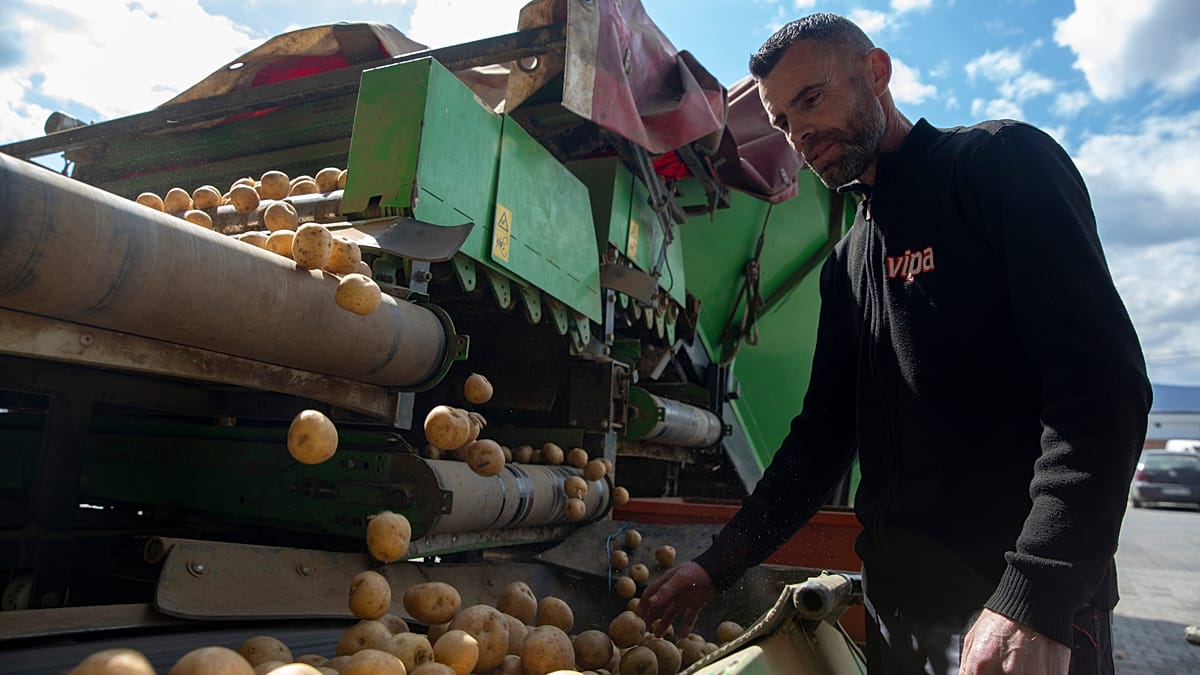
Potato contracts for difference (CFDs) have surged roughly 705% since 21 April, with the benchmark price per hundred kilograms climbing from about €2.11 to €18.50. The spike, however, masks a stark disconnect: Europe's physical potato market is currently awash with surplus, and farmgate prices remain depressed.
The rally is almost entirely speculative, tied to fears over the escalating conflict in Iran. Traders are betting that disruptions to key shipping lanes and fertiliser supplies will soon tighten potato availability, even as storage facilities across Belgium, the Netherlands, France, and Germany groan under excess stock.
Oversupply vs. Financial Fever
After two seasons of shortages and high prices, European farmers expanded planting areas significantly. Favorable weather then delivered bumper harvests, creating a glut that processors and exporters have struggled to absorb. As a result, some lower-quality potatoes destined for animal feed or industrial use have traded at negative prices, with growers effectively paying to have surplus removed.
The €18.50 benchmark refers to “free-buy” potatoes sold on the open market, not those covered by fixed-price contracts. Even at that level, many producers consider it unsustainable given rising costs for fuel, fertiliser, storage, and electricity.
“The contrast between weak physical prices and sharp movements in financial benchmarks reflects the difference between commodity trading markets and the real agricultural supply chain,” said a market analyst in Brussels. Financial markets can react strongly to volatility, expectations about future harvests, weather risks, or export demand, even while current physical inventories remain excessive.
Iran War and the Fertiliser Factor
The conflict in the Middle East has severely hindered exports of essential chemicals and minerals required for industrial farming. Potatoes are a nutrient-intensive crop, and the sudden lack of affordable fertiliser has direct implications for future yields. According to the UN, roughly a third of the world's fertilisers—including urea, potash, ammonia, and phosphates—normally pass through the Strait of Hormuz, which is now effectively blocked.
In response to these rising costs and uncertainty, traders are repricing futures contracts, no longer prioritising the current reality of oversupply. The move in potato CFDs highlights an anxious market attempting to price the several and encompassing economic effects of the Iran war.
For European consumers, this does not yet translate into a massive increase in the cost of a basic dietary staple. But the volatility signals that the continent's food supply chains remain vulnerable to geopolitical shocks far beyond its borders.
Meanwhile, other disruptions continue to ripple across Europe. The Druzhba pipeline restart has unblocked an EU loan for Ukraine after a three-month halt, while German officials warn of a Russian-linked Signal phishing campaign targeting politicians. The broader security landscape remains tense, with Kuwait reopening its airspace after a two-month closure due to the Iran war.