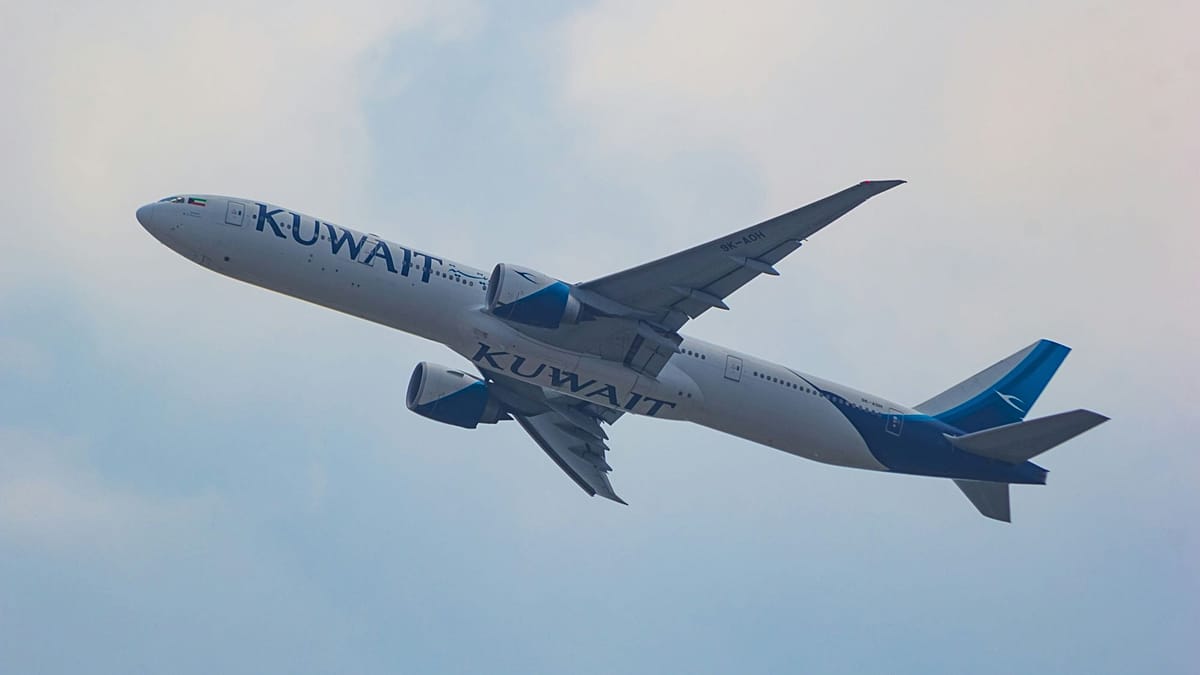
Kuwait has reopened its airspace for the first time since the outbreak of the Iran war, with commercial flights set to resume on Sunday 26 April. The decision, announced by the country's civil aviation authority via the Kuwait News Agency, follows a two-month closure triggered by the US-Israel attack on Iran.
The airspace reopened on the evening of Thursday 24 April, but passenger flights will only restart two days later as part of a phased plan to gradually restore normal operations at Kuwait International Airport. The airport had been hit by multiple drone strikes in recent weeks, targeting Terminal 1, the under-construction Terminal 2, and fuel storage tanks. The gradual reopening allows for necessary maintenance and repairs.
Phased Return and Regional Context
Flag carrier Kuwait Airways and low-cost airline Jazeera Airways, which have been operating out of Dammam in Saudi Arabia—a four- to five-hour drive from Kuwait—will lead the resumption. Both airlines will continue some flights from Dammam while operations normalize. Kuwait Airways plans to restart services to 17 destinations, including London, Istanbul, Mumbai, Cairo, and Manila. Jazeera Airways will initially reopen routes to nine cities: Istanbul, Beirut, Damascus, Dubai, Cairo, Amman, Kochi, Mumbai, and Delhi.
No other airlines have yet announced a return to Kuwait, though foreign carriers were allowed to resume operations earlier this week. Flydubai began flights on 21 April, followed by AirArabia on 22 April, and Oman Air, Royal Jordanian, Tarco Aviation, and US-Bangla Airlines on 23 April. From 26 April, Middle East Airlines will restart, with Himalaya Airlines following on 28 April. Qatar Airways has maintained limited flights since 7 March.
In the United Arab Emirates, flights resumed on 2 March. European carriers including Air France, Lufthansa, KLM, and British Airways have all temporarily suspended services to the region. Emirates, however, has restored nearly 80% of its operations out of Dubai, according to flight tracking data from Flightradar24.
Saudi Arabia's airspace has remained open throughout the crisis, though many flights have been delayed or cancelled. Virgin Atlantic recently scrapped its London–Riyadh route, just a year after launch. Oman's airspace is also open, with some cancellations and delays.
The reopening of Kuwait's airspace marks a significant step toward normalizing regional aviation, which has been severely disrupted by the conflict. For European travelers and airlines, the situation underscores the fragility of air travel in the Middle East, as seen in Europe's Jet Fuel Crisis Threatens Summer Flights as Airlines Cut Routes. The crisis has also highlighted geopolitical tensions, with reports of Pentagon Leak Reveals Plan to Suspend Spain from NATO Over Iran War Refusal.
As Kuwait gradually restores its airport operations, the broader implications for European aviation and energy security remain uncertain. The conflict has already disrupted global oil supplies, and the Sustainable Aviation Fuel Emerges as Strategic Shield for European Airlines may become increasingly important for resilience.