Lithuania's parliament has taken a significant step toward removing a constitutional ban on nuclear weapons from its territory, a move that would align the Baltic state with its NATO allies as the alliance debates how to strengthen deterrence against Russia.
The Seimas voted 106-18, with six abstentions, on Tuesday to advance a constitutional amendment that would delete Article 137, which currently prohibits the stationing of weapons of mass destruction and foreign military bases on Lithuanian soil. The amendment still requires a second vote after a three-month waiting period, with at least 94 of the 141 members needed to approve it on both occasions. The final vote is expected on January 12.
“This constitutional amendment would enable Lithuania’s armed forces to participate fully in the planning and exercises of all of NATO’s deterrence measures,” said Viktorija Čmilytė-Nielsen, leader of the Liberal Movement parliamentary group.
Lithuania, which shares borders with Belarus and Russia’s Kaliningrad exclave, is currently the only NATO member in the region with such a constitutional restriction. Supporters argue that the provision has become a legal obstacle to full participation in NATO’s nuclear deterrence arrangements, leaving the country at a disadvantage compared with its neighbours.
“Our neighbouring countries, such as Latvia, Estonia and Poland, have no such restrictions either,” Remigijus Motuzas, chairman of the Seimas Foreign Affairs Committee, said during a parliamentary session in September. “We cannot be less protected than other NATO countries. We must send a signal that Lithuania is a full part of NATO’s nuclear deterrence.”
Urgency in the Baltic region
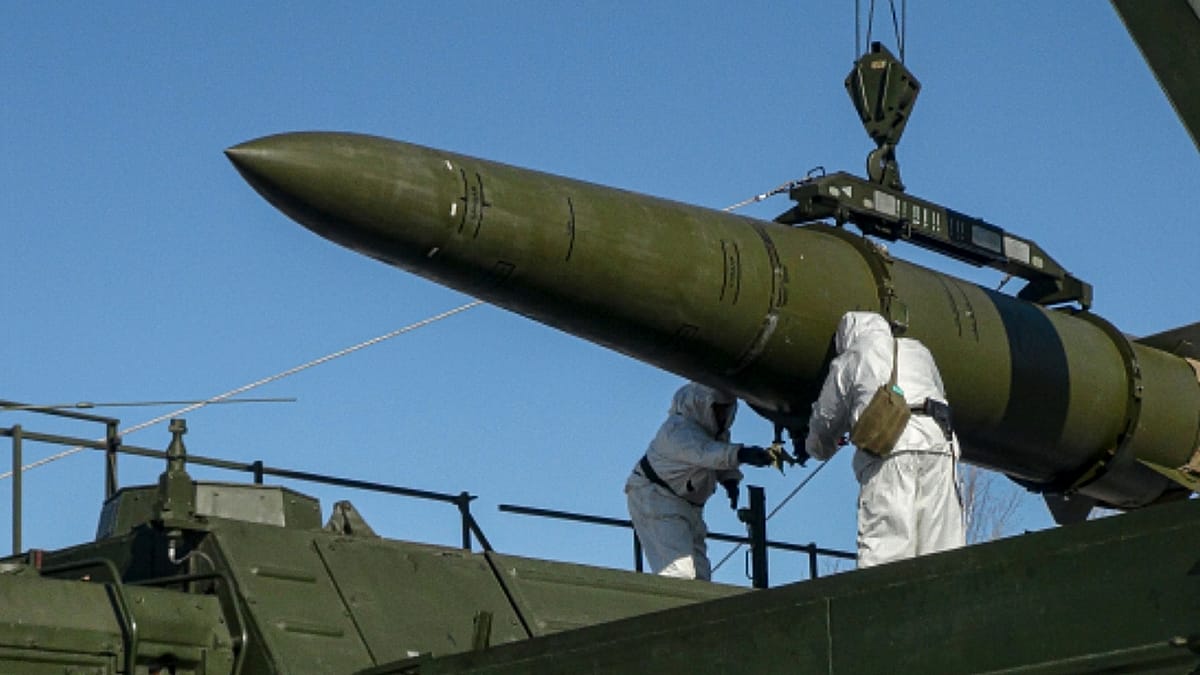
The issue has taken on added urgency for Lithuania, given Russia’s rapid modernisation of its nuclear arsenal and its deployment of nuclear-capable systems in Kaliningrad and Belarus. Motuzas noted that NATO’s nuclear deterrence is part of collective defence, alongside conventional and missile-defence capabilities.
Kremlin spokesperson Dmitry Peskov said on Tuesday that Lithuania’s move, alongside broader plans to expand US and NATO military infrastructure in the region, risked further escalating tensions, as reported by Reuters. The warning comes amid heightened Russian nuclear rhetoric, including threats of retaliation if NATO were to isolate Kaliningrad.
NATO, for its part, maintains that its nuclear policy remains consistent with its commitments to arms control, disarmament and non-proliferation. The alliance has repeatedly dismissed Russian nuclear threats, with Secretary-General Mark Rutte recently telling Moscow to halt its nuclear rhetoric.
Finland’s precedent
Lithuania is not acting in isolation. Finland, which joined NATO in 2023 after decades of military non-alignment, removed its own statutory prohibition on nuclear weapons earlier this year. In June, the Finnish parliament approved amendments to the Nuclear Energy Act repealing the ban on nuclear explosives, with the legislation entering into force on July 1.
“This historic reform strengthens the security of Finland and of NATO as a whole,” Defence Minister Antti Häkkänen said on X. Helsinki has stressed that the change does not mean Finland intends to acquire or host nuclear weapons, and that NATO has no plans to station them there.
Finland has since joined a French-led initiative aimed at strengthening European security through closer cooperation on nuclear deterrence. French President Emmanuel Macron has proposed what Paris calls “forward deterrence” — closer cooperation with European allies around France’s independent nuclear capabilities. France recently conducted its first submarine test of its new M51.3 nuclear missile, underscoring its commitment to its nuclear arsenal.
For Lithuania, the constitutional change is seen as a necessary step to ensure it is not left behind in NATO’s collective defence planning. As Motuzas put it, “We must send a signal that Lithuania is a full part of NATO’s nuclear deterrence.”