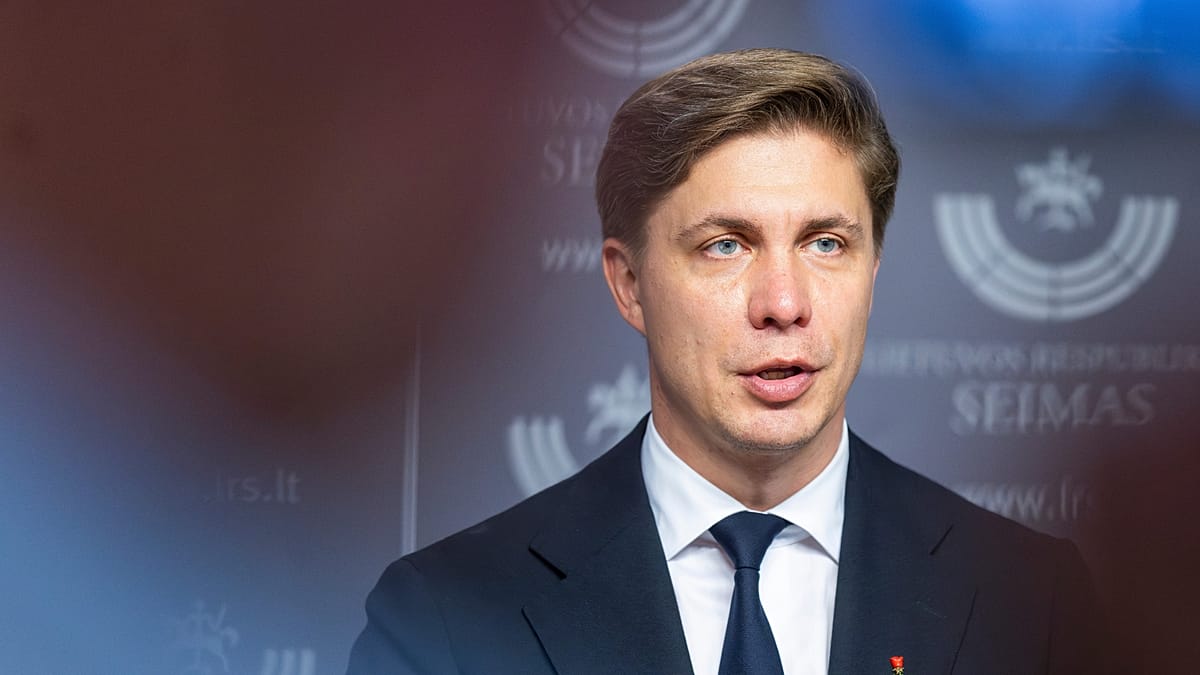
Vilnius — Lithuania's parliament, the Seimas, voted on Tuesday to confirm Mindaugas Sinkevičius as the country's new prime minister, making him the third Social Democrat to lead the government since the party won the 2024 parliamentary election. Sinkevičius, a long-serving municipal politician from the central Lithuanian town of Jonava, replaces Inga Ruginienė, who resigned last week after a reshuffle of the ruling coalition.
"I will strive to be a Prime Minister who unites rather than divides, who listens and is not afraid to make decisions," Sinkevičius told parliamentarians ahead of the vote. The 42-year-old now has 15 days to assemble a cabinet and prepare the government's programme, both of which must be coordinated with President Gitanas Nausėda and approved by the Seimas.
From Jonava to the National Stage
Sinkevičius's political career has been closely tied to Jonava, a municipality of around 30,000 people in central Lithuania. He has served as its mayor, with interruptions, since 2011. In 2016, he briefly held the post of economy minister, leaving office less than a year later after the Social Democrats withdrew from the coalition with the Lithuanian Farmers and Greens Union.
His political trajectory was temporarily derailed after Lithuania's Laisvės TV reported that he had used municipal funds to purchase two televisions and other communications services. The scandal did not prevent his return to local leadership, and he was re-elected mayor of Jonava in 2023.
The new prime minister takes office at a time when Lithuania is deepening its integration with European energy markets. The country, along with Denmark and Portugal, has been a leader in renewable electricity generation, with renewables reaching 46% of the EU's electricity mix. Lithuania's own share has grown significantly, driven by wind and solar investments.
On security, Lithuania has been a vocal advocate for stronger NATO deterrence on its eastern flank. The country recently moved to lift its nuclear weapons ban, following Finland's lead, a sign of shifting strategic thinking in the Baltic region. Sinkevičius will also have to navigate relations with Brussels, where the European Parliament is moving to strip the AfD-led alliance of EU party status, a development that could affect the balance of power in the European Parliament.
The new government's programme is expected to focus on social welfare, energy independence, and support for Ukraine, while maintaining fiscal discipline. Sinkevičius's appointment marks the third change of prime minister since the Social Democrats won the 2024 election, reflecting the volatility of coalition politics in Lithuania.