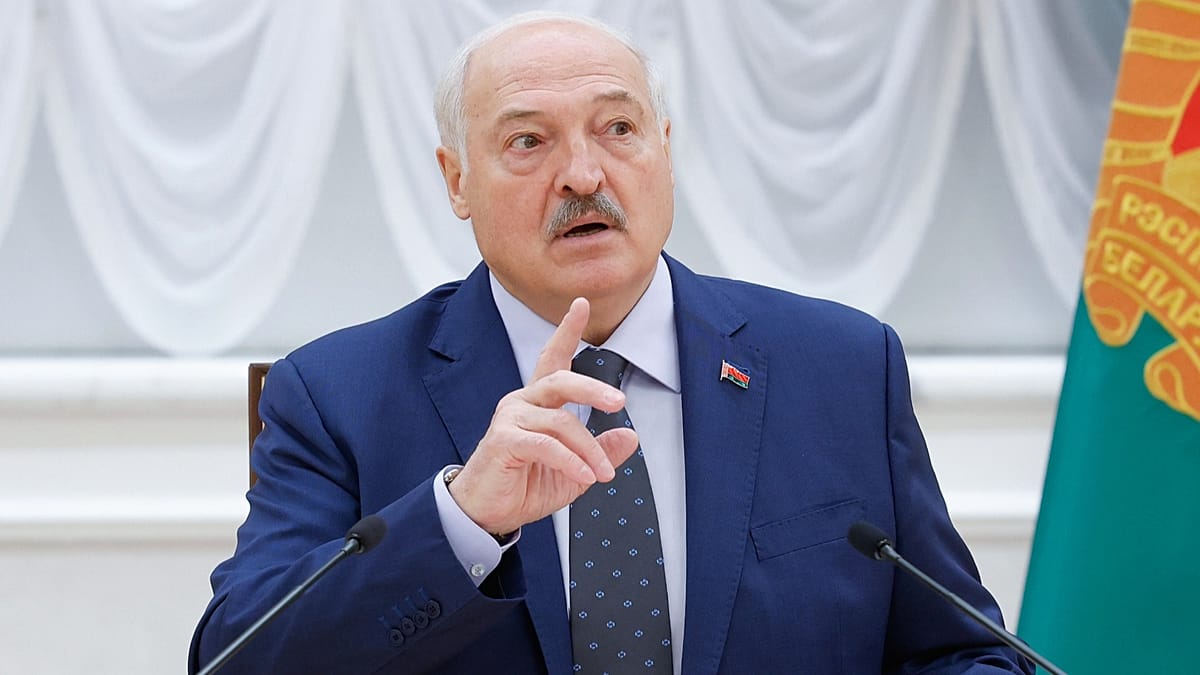
Belarusian President Aliaksandr Lukashenka has publicly questioned the historical logic behind Russia's territorial claims on Ukraine, suggesting that if medieval precedents were applied consistently, Russia itself would belong to Mongolia. In an interview with the French magazine Le Point, Lukashenka pointed out that Russian principalities were under Mongol domination from the 13th to the late 15th century, and that invoking distant history to justify modern borders is a slippery slope.
“And today to say that these lands are Russian and have been since time immemorial… At some point they were Russian. But if you look more deeply, Russian lands themselves were once Mongol-Tatar, remember? Then we should hand over the whole of Russia to whom, Mongolia?” Lukashenka said.
The Belarusian leader traced the origins of East Slavic statehood to Kyivan Rus', which flourished in the 11th and 12th centuries in what is now Ukraine. He argued that later historical periods cannot be used to legitimise claims on independent states that emerged from the collapse of the Soviet Union.
Lukashenka then appeared to soften his remarks, insisting that Russian President Vladimir Putin “perfectly understands this” and does not dispute the existence of the Ukrainian people or their statehood. He claimed Putin is simply “misinterpreted” by the international community, and reiterated Minsk's alignment with Moscow on the need for “a common future for the peoples of the region.”
A familiar argument, turned on its head
Putin's narrative that Ukraine is “primordially Russian” has been a cornerstone of Kremlin rhetoric since his 2021 essay “On the Historical Unity of Russians and Ukrainians.” On the eve of the full-scale invasion in February 2022, he invoked these claims to deny Ukraine's legitimacy as an independent state, framing the war as a correction of historical injustice.
Historians and international observers have long dismissed such arguments as selective and ahistorical. Lukashenka's remarks echo a 2024 social media post by former Mongolian President Tsakhiagiin Elbegdorj, who shared a 1471 “Mongolian historical map” after Putin gave US conservative journalist Tucker Carlson a lengthy history lesson. Elbegdorj wrote: “Don't worry. We are a peaceful and free nation.”
Lukashenka's comments come as Belarus remains a key military ally of Moscow, having allowed Russian forces to use its territory to launch part of the invasion of Ukraine, including the failed advance on Kyiv from the north. Minsk has stopped short of committing its own troops to the war, but the country's dependence on Russian support has deepened since the disputed 2020 presidential election, which triggered mass protests and a violent crackdown.
The EU and Western governments refused to recognise the election result, and thousands of protesters were arrested. Opposition figures were imprisoned or forced into exile. Lukashenka, who has ruled Belarus since 1994, is Europe's longest-serving leader, and his political survival has been closely tied to Kremlin backing.
While Lukashenka's latest remarks may seem surprising given his alliance with Putin, they reflect a pragmatic recognition that historical arguments can cut both ways. His suggestion that Russia should be “returned to Mongolia” is a pointed reminder that the Kremlin's use of history is highly selective, and that the same logic could be applied to Russia's own past.
As the war in Ukraine continues, with Russian drones killing civilians and crippling Ukraine's power grid, Lukashenka's comments are unlikely to shift Moscow's position. But they add a rare note of dissent from within the Kremlin's inner circle, even if delivered with characteristic ambiguity.
For now, Belarus remains a staging ground for Russian military operations, and Lukashenka's balancing act between loyalty and self-preservation continues. His interview with Le Point may be seen as an attempt to signal to the West that he is not merely a puppet, while still avoiding a direct break with Moscow.



