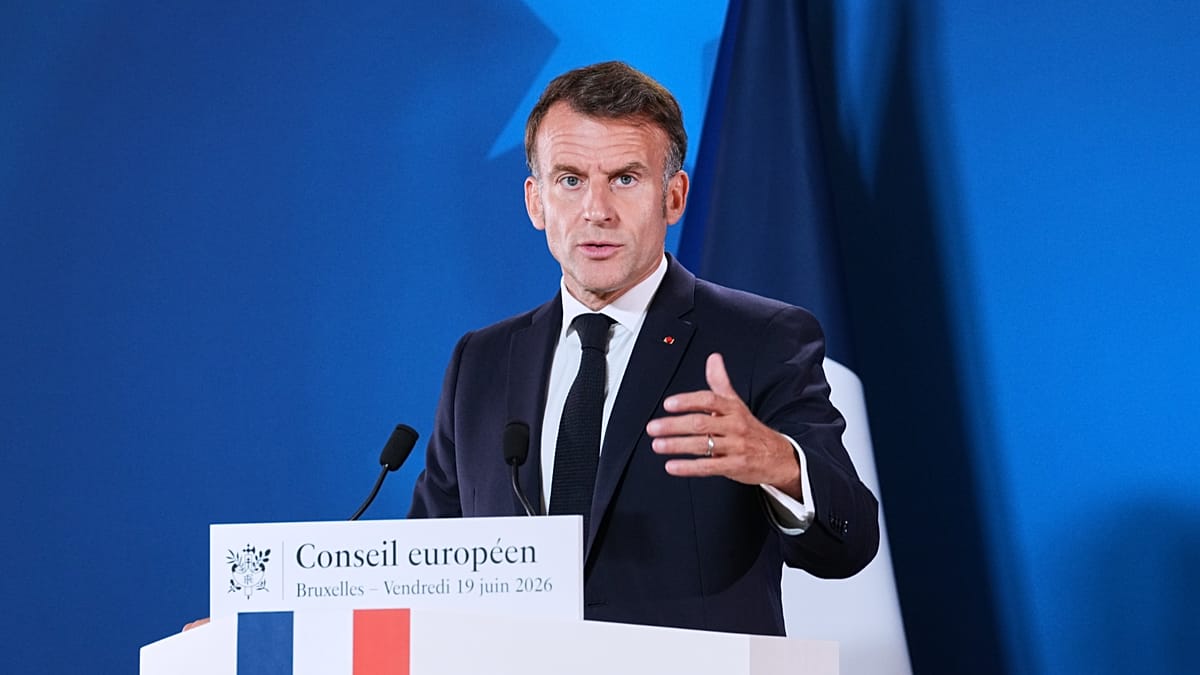
French President Emmanuel Macron and Spanish Prime Minister Pedro Sánchez have delivered a sharp rebuke to the growing push within the European Union to establish deportation camps for rejected asylum seekers outside the bloc. Speaking after a summit in Brussels on Friday, both leaders argued that the so-called return hubs contradict the fundamental values on which the EU was built and are unlikely to achieve their stated goals.
Nineteen EU member states, led by Denmark and Italy, signed a joint declaration calling for the “full use” of a recently approved EU law that permits the construction of return hubs in third countries. The coalition wants to “move forward with solutions based in third countries as soon as possible,” but Macron and Sánchez are determined to block the initiative.
A Clash of Visions for Europe
“I am not sure that this is our Europe. I don't know if these are the fundamental principles on which our Europe was built,” Macron said at the end of the summit. “And I don't think it's effective, either. The proof is that I have not seen anyone make it work so far.” He was referring to Italy's migration centres in Albania, which have fallen short of expected targets.
Macron drew a clear red line: France supports tougher laws to curb irregular arrivals but opposes the physical transfer of migrants to countries where they have never set foot. That possibility, long considered taboo, is now allowed under the revamped Return Regulation, described as the “strictest-ever” migration law. The EU Parliament approved the sweeping migration law earlier this year, enabling such measures.
“There is a question, in fact, around these famous return hubs in third countries. France does not support this policy. We are in favour of a more effective return policy. But first of all, I have never seen a return hub in a third country operate,” Macron continued. He mocked the jargonistic term “innovative solutions” that proponents often use, challenging the notion that host countries would respect human rights in exchange for financial incentives.
“I am a big supporter of innovation in my country,” he said, noting he would later attend the Vivatech festival in Paris. “But I am always very careful when talking about innovation in values and human rights. Allow me to have that reservation.”
Sánchez echoed these concerns, calling the deportation camps an “absolutely inefficient” and “worthless” response to irregular migration. “It's a mirage, if you will, that it will simply waste economic resources, and Europe doesn't have many,” the Spanish prime minister said. “Secondly, it sends a wrong message to those countries of origin and transit with which we should be collaborating, cooperating and showing empathy towards.”
Macron insisted he would not allow EU funds to be used for building the camps, which are “neither effective nor do they correspond with our principles.” He warned of reputational damage: “Sometimes, we hear one or the other (country) advocate policies with the African continent, so good luck defending our credibility on these continents by explaining that we will use the money for investments to build return hubs on their continents.”
The rift highlights a deepening divide within the EU over migration policy. While the EU Migration Pact introduced flexible contributions instead of fines for refusing migrants, the return hub proposal remains a flashpoint. For now, France and Spain are standing firm against what they see as a misguided and un-European approach.