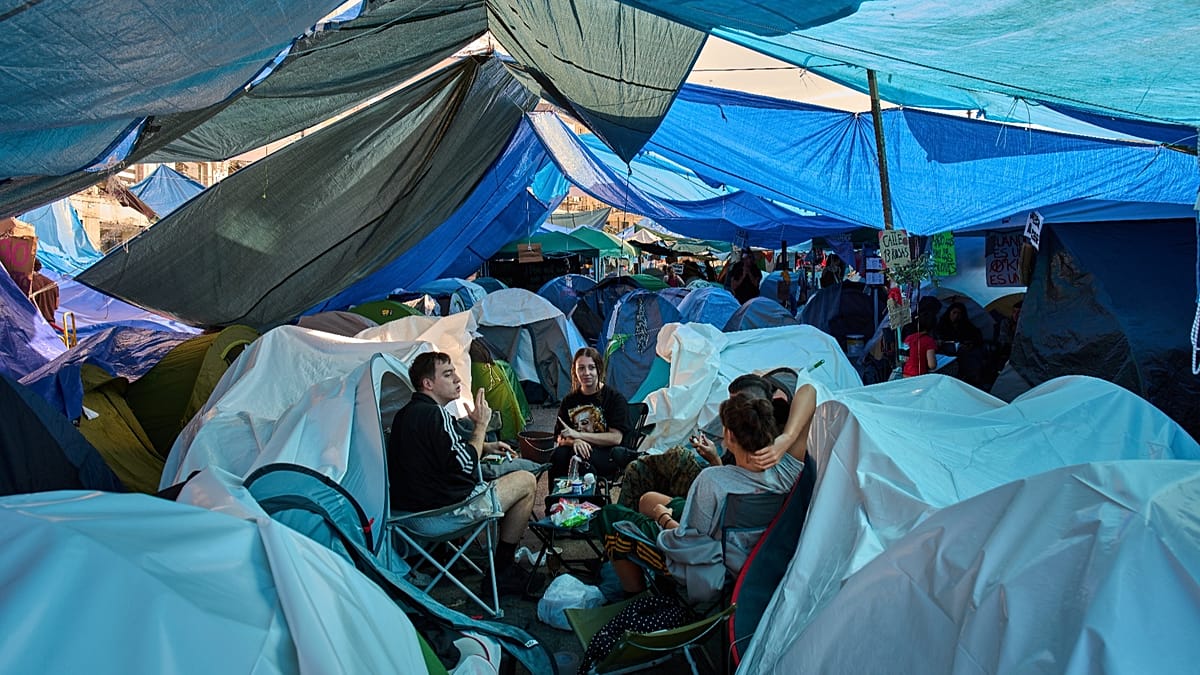
Madrid's municipal authorities confirmed on Tuesday that police had dismantled the protest encampment in Puerta del Sol, the capital's central square, which had been occupied for over a month by activists demanding stronger tenant protections and affordable housing.
The operation, which began late Monday night and continued into Tuesday morning, involved 220 national police officers and 180 municipal officers, supported by firefighters and social services. City officials said the evacuation was carried out "without incident or episodes of violence," with 334 people removed from the site and two arrests made.
Organisers of the protest, however, described the action as "a violent police operation" in a post on Telegram, claiming that several participants were injured. By early Tuesday, the square was cordoned off and cleaning crews were at work, according to journalists on the scene.
Origins of the protest
The camp was established on 26 September following the eviction of Maricarmen Abascal, an 87-year-old pensioner who had lived in her Madrid apartment for seven decades. The property had been acquired by a real estate firm that raised her rent by 275% to €2,650 per month, according to the Tenants Union. Abascal was hospitalised after the eviction and died on 7 October, sparking outrage and demonstrations across Spain.
Tens of thousands of people took to the streets in cities including Barcelona, Valencia, and Seville, calling for rent controls and stronger legal protections for tenants. The Puerta del Sol camp grew into a makeshift community with a canteen, a medical tent, and meeting spaces, becoming a symbol of the broader housing crisis.
The eviction of the camp comes amid a wider wave of social unrest across Europe over housing costs and economic pressures. In Germany, youth protests in Frankfurt escalated into riots, while France has seen repeated demonstrations over living costs. The housing burden is a continent-wide issue, as data shows many Europeans spend over 40% of their income on housing.
Spain's housing market under strain
The protest movement reflects a deepening affordability crisis in Spain. According to the National Statistics Institute (INE), the Housing Price Index rose 12.2% year-on-year in the second quarter of 2026, with second-hand homes up 12.9% and new builds up 7.4%. Rents are also climbing: the average advertised rent reached €15.1 per square metre in August 2026, a 5.8% increase from a year earlier, according to the property portal Idealista.
For many households, housing costs now consume a disproportionate share of income. INE data from 2024 shows that 28.1% of renters at market rates spent more than 40% of their disposable income on housing, compared with an EU average of 19.2%. This disparity has fuelled demands for policy changes, including rent caps and increased social housing.
The dismantling of the camp is unlikely to quell the broader movement. Activists have vowed to continue their campaign, and the memory of Maricarmen Abascal has become a rallying point. A memorial of flowers and candles was placed in the square after her death, and similar tributes have appeared in other cities.
Madrid's city government, led by the conservative Popular Party, has defended the eviction as necessary to restore public order and ensure the square's availability for all citizens. Critics, however, argue that the authorities are ignoring the root causes of the crisis and criminalising peaceful protest.
As the housing debate intensifies across Europe, the events in Madrid highlight the growing tension between citizens' demands for affordable living and the responses of local authorities. The coming months will test whether Spain's political leaders can deliver meaningful reforms or face continued unrest.