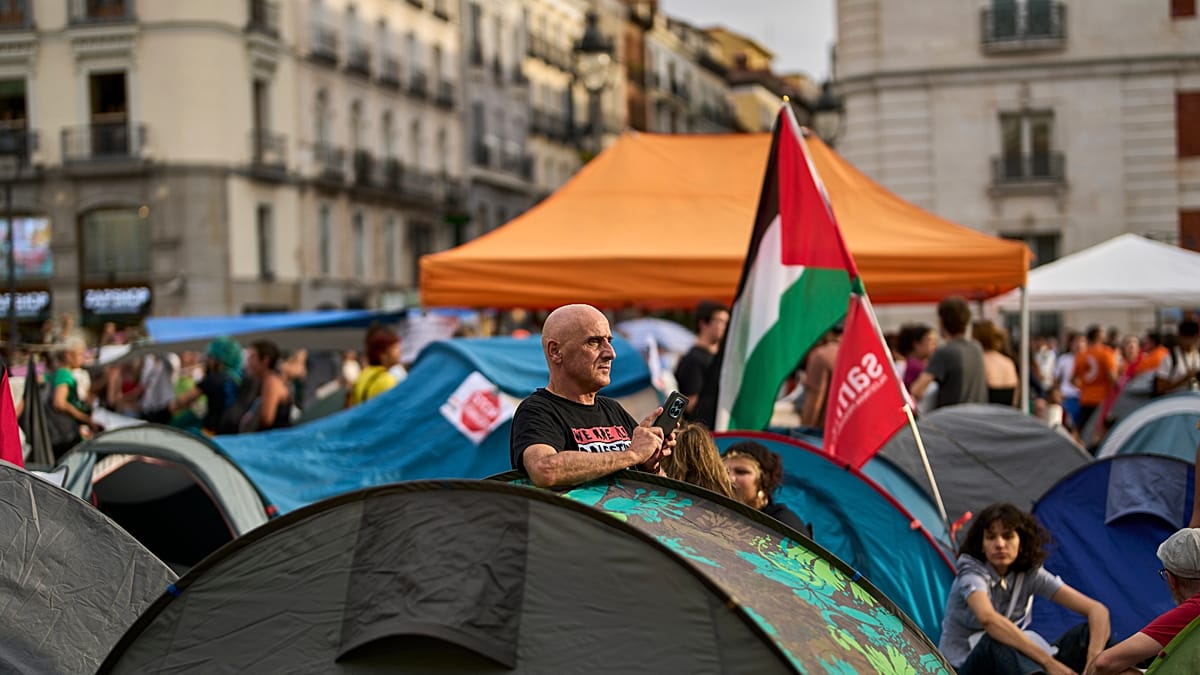
For a second consecutive night, tents have dotted Madrid's Puerta del Sol as protesters dig in to demand urgent action on Spain's housing crisis. The encampment, which began after the eviction of 87-year-old Maricarmen from her lifelong home last week, has turned the capital's most iconic square into a visible symbol of discontent.
Demonstrators argue that the proliferation of short-term tourist rentals and the aggressive buying sprees of investment funds are squeezing out ordinary residents. In cities like Madrid and Barcelona, rental prices have climbed by double digits over the past year, pushing many families to the brink. The eviction of Maricarmen, whose case has resonated across the country, became a flashpoint for broader frustrations.
From eviction to encampment
The protest began as a vigil outside Maricarmen's home in the working-class district of Tetuán, where police carried out the eviction on 12 March. Within hours, activists moved to Puerta del Sol, setting up tents and demanding that the government of Prime Minister Pedro Sánchez take concrete measures. By the second day, the camp had grown, with dozens of tents and a steady stream of supporters bringing food and supplies.
"We are here because housing has become a luxury that ordinary people can no longer afford," said Lucía Fernández, a 34-year-old teacher who joined the protest. "Maricarmen's story is the story of thousands of elderly Spaniards who are being thrown out of their homes so that investors can make a profit."
The protest has drawn comparisons to the 15-M movement that occupied Puerta del Sol in 2011, though the current focus is narrower: housing. Organizers have called for rent controls, a freeze on evictions of vulnerable people, and a crackdown on unlicensed tourist apartments. They have also demanded that the government declare housing a fundamental right, enshrined in law.
Political pressure mounts
The encampment has put the spotlight on Sánchez, who has pledged a new housing decree in response to the crisis. However, critics say the measures proposed so far are insufficient. The conservative opposition, led by the Partido Popular, has accused the government of stoking tensions, while left-wing parties like Podemos have pushed for more radical action.
Spain's housing crisis is not unique. Across Europe, from Lisbon to Berlin, cities are grappling with the impact of tourism and financial speculation on residential markets. In Germany, a discount supermarket's housing project on Sylt has highlighted similar tensions between affordability and exclusivity. The European Union has begun to address the issue, but member states retain primary responsibility for housing policy.
In Madrid, the protest has also reignited debates about the balance between tourism and residents' rights. The city welcomed over 10 million visitors last year, and platforms like Airbnb have made it lucrative for landlords to switch from long-term to short-term rentals. According to a recent study, the number of tourist apartments in Madrid has increased by 30% since 2019, while the supply of traditional rentals has shrunk.
"Tourism is vital for our economy, but it cannot come at the cost of driving out the people who make this city vibrant," said Javier Ruiz, a urban planner who attended the protest. "We need a regulatory framework that protects residents, not just investors."
Solidarity across Spain
The Madrid camp has inspired solidarity actions in other cities. In Granada, protests have swelled in support of Maricarmen, and similar gatherings are planned in Seville, Valencia, and Bilbao. The movement has also drawn attention to the plight of other vulnerable groups, including young people who cannot afford to leave their parents' homes and migrants facing precarious living conditions.
As the sun set over Puerta del Sol on the second day, the atmosphere remained determined but peaceful. Organizers have vowed to stay until the government responds with concrete commitments. "We are not going to move until they hear us," said Fernández. "Housing is a right, not a commodity."
The standoff in Madrid is a stark reminder that the housing crisis is not just an economic issue but a social and political one. With European elections on the horizon, parties across the spectrum are watching closely. How Sánchez handles this moment could shape his political future and set a precedent for how other European governments respond to similar pressures.