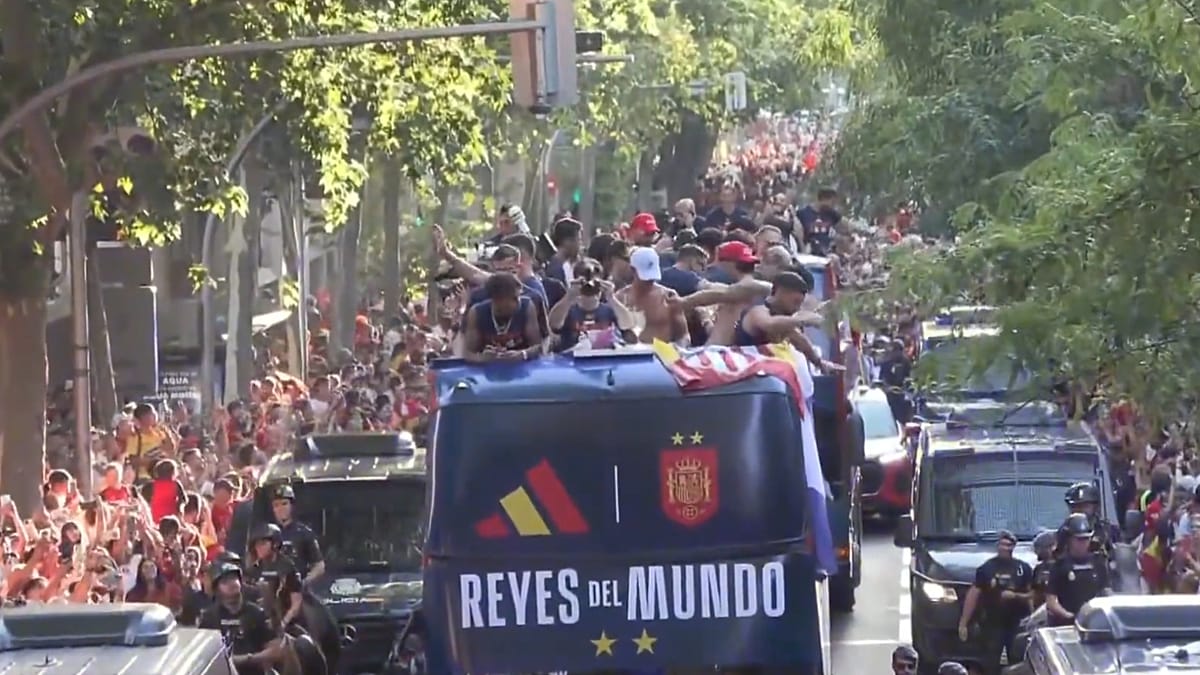
On Monday, Madrid transformed into a sea of red and white as over a million fans turned out to celebrate Spain's national football team, La Roja, following their World Cup triumph. The victory parade, which began in the late afternoon, saw the players travel through the city center on an open-top bus, waving to crowds that packed the streets, Metro stations, and every vantage point along the route.
A Historic Homecoming
The team arrived at Adolfo Suárez Madrid-Barajas Airport on an Iberia flight from the United States, where they had secured the title with an extra-time victory over Argentina. This marks Spain's second World Cup win, the first since 2010, and the first time the squad has set foot on Spanish soil since the final. After a brief rest with their families, the players embarked on a parade that culminated at Cibeles Square, the traditional site for major sporting celebrations in the capital.
According to the Government Delegation, more than one million people lined the parade route. Supporters chanted “España, España” and held mobile phones aloft to capture the moment as the players lifted the trophy and waved to the crowd. The atmosphere was electric, with the tension of the final replaced by pure joy and a collective desire to celebrate a new world title.
Royal and Political Tributes
Earlier in the day, the team was received at Zarzuela Palace by King Felipe VI, Queen Letizia, Princess Leonor, and Infanta Sofía. During the ceremony, the players broke into the traditional chant of “Campeones, campeones” before posing for the official photograph. The King hailed the victory as an “epic triumph” and thanked the team for returning Spain to the summit of world football. He also dismissed criticism the team had faced during the tournament, insisting that nothing could overshadow “the joy of bringing the trophy home”.
Prime Minister Pedro Sánchez welcomed the team to the Moncloa Palace, thanking the players and coaching staff for their efforts and the quality of football they displayed throughout the tournament. He urged them to dream of another title in 2030, saying, “Why not believe that, as the saying goes, good things come in threes?”
Broader Context and Controversy
The celebrations come amid a backdrop of political and economic discussions. Spain's World Cup win is expected to provide a €4 billion economic boost, though analysts caution that the effect may be fleeting. The victory also carries political undertones, as explored in our analysis of the political subplot surrounding the team's success.
Meanwhile, FIFA has opened disciplinary proceedings against Argentina over incidents involving several players and a member of the coaching staff during the World Cup final. The outcome of those proceedings remains pending.
For now, Madrid is focused on celebration. The parade route, lined with thousands of supporters, turned the city into a vibrant display of national pride. As the bus made its way through the streets, the players waved, sang, and held the trophy high, marking a historic day for Spanish football and for the continent.