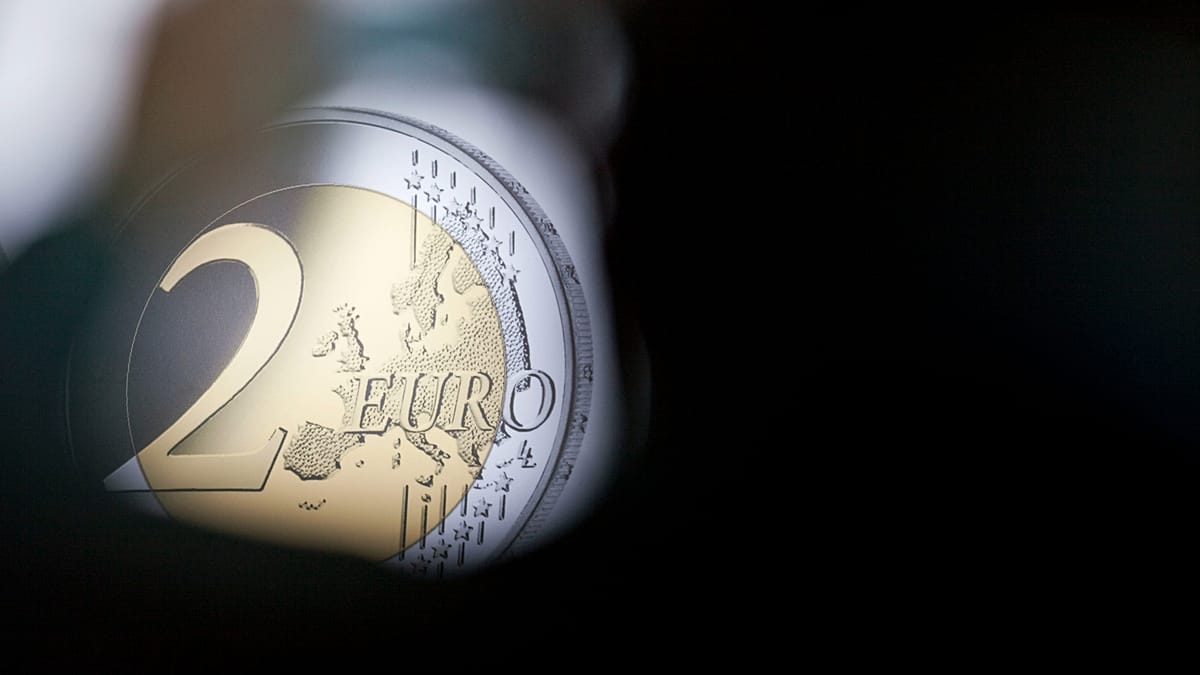
Most Europeans rarely give their small change a second glance. But for a select few, a 2-euro coin can be worth far more than its face value—sometimes hundreds or even thousands of euros. Collectors pay a premium for rare commemorative editions and striking minting errors, turning pocket change into a potential windfall.
The Grace Kelly coin: a collector's dream
One of the most famous examples is a 2-euro commemorative coin issued by Monaco in 2007 to mark the 25th anniversary of the death of Princess Grace, formerly Hollywood actress Grace Kelly. The European Central Bank records a mintage of just 20,001 pieces. The coin features a portrait of the princess, the word "MONACO," and the year 2007, with the artist's name "R.B. BARON" to the right of the effigy.
Experts estimate its value at around 3,100 euros. However, there's a catch: the coin was sold directly to collectors and never entered general circulation. Finding one in your change is extremely unlikely, though it remains legal tender and could technically be used for payments—though few would part with it.
Minting errors: when mistakes become treasures
While rare issues are hard to find, minting errors are more realistic discoveries. One notable error is the so-called "fried-egg" strike, where the inner metal of a 1- or 2-euro coin is misaligned and presses into the outer ring, creating an irregular shape that resembles a fried egg. German business magazine WirtschaftsWoche cites values of up to 100 euros for such errors, up to 200 euros for rotated dies, and as much as 650 euros for coins struck on the wrong blank.
Coins are produced by joining two metal parts under high pressure. Despite precise technology and quality checks, faulty specimens occasionally slip through. A notable example is the 2021 German 2-euro commemorative coin for Saxony-Anhalt, which was mistakenly struck on a 1-euro blank. As a result, the colors are reversed—the outer ring is gold, the inner part silver—and the coin weighs only 7.50 grams instead of the usual 8.50 grams. Coin dealer Münzen Müller values such an error at 1,200 euros.
Don't be fooled by internet hype
Not every anomaly is valuable. Greek coins with a small "S" in one of the stars are sometimes offered online as rare minting errors. In reality, the letter stands for "Suomi," meaning Finland, where part of the Greek coins were produced. According to coin experts, this is a regular variety with a mintage of 70 million pieces, so the "S" alone does not justify any exceptional value.
What to do if you find a valuable coin
If you spot an unusual coin, first identify the issuing country, year, and motif. The European Central Bank documents official 2-euro commemorative issues on its website. If you believe you have a valuable specimen, have it assessed by a specialist coin dealer or auction house. If confirmed, you can sell it directly or at auction—but ask about fees in advance.
One crucial piece of advice: do not clean or polish the coin. Rubbing can cause fine scratches and strip away the original mint lustre, significantly reducing its collector value. For those interested in numismatics, the hunt for rare coins is a fascinating hobby that can also be rewarding. And while the Grace Kelly coin may be out of reach, other treasures might still be hiding in your wallet.