Good morning from Brussels, where the heat is on—both literally and politically. As one Belgian climate expert noted, the city's roundabouts now double as roasting stations. Mared Jones will take over the newsletter on Friday, hopefully with cooler weather.
Energy Security in the Crosshairs
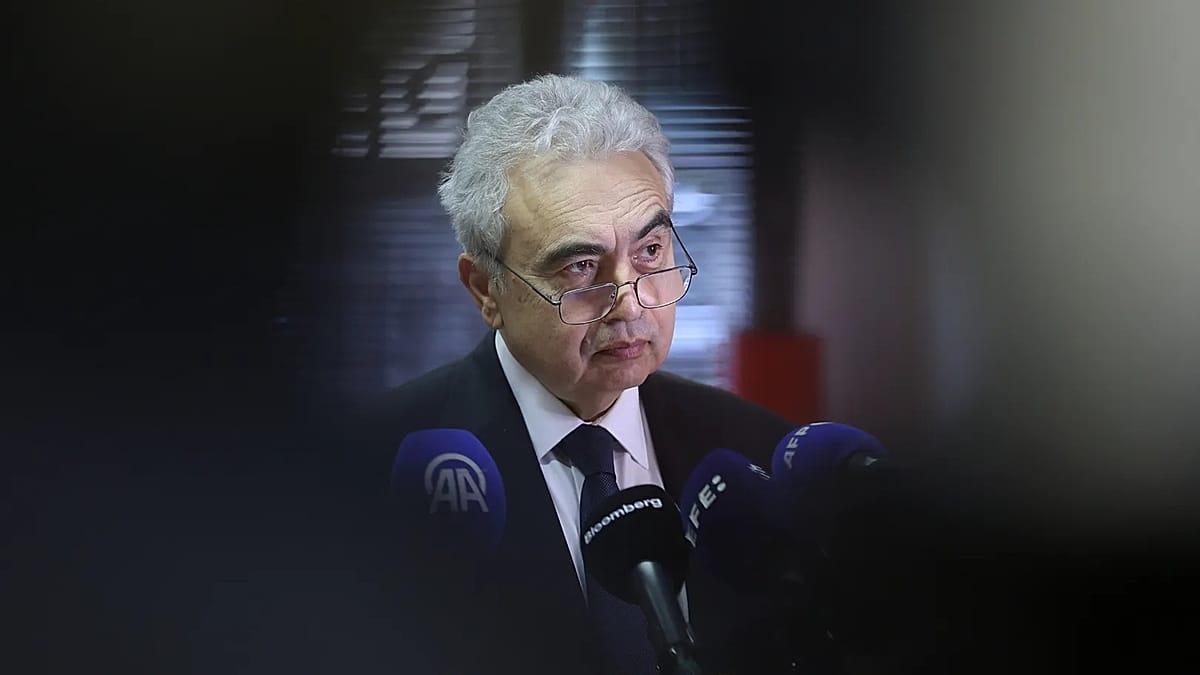
The International Energy Agency (IEA) has issued a stark warning: the war in the Middle East has triggered the most severe energy security crisis in modern history. In an exclusive interview with our chief Europe editor Maria Tadeo in Paris, IEA Executive Director Fatih Birol described a world that is "becoming more and more a dangerous place." The agency's motto, he said, is "no fear, no favour—we look at the data, we give a wake-up call to the countries."
The crisis stems from the blockade of the Strait of Hormuz, which has sent oil and gas prices soaring. The IEA's latest report, released today, warns that this disruption is forcing countries to diversify their energy mix, from fossil fuels to renewables. Birol stressed that the outcome will have "major implications" for investment across Europe and beyond. He urged an "unconditional opening of the Strait of Hormuz," warning that without it, shortages of jet fuel and diesel could persist for weeks. For more on the IEA's findings, see our full coverage here.
Magyar's Budapest-Brussels Reset
In Brussels, confusion reigned yesterday over a potential meeting between Hungarian Prime Minister Péter Magyar and European Commission President Ursula von der Leyen. After initial denials from EU spokespeople, Magyar confirmed via a triumphant Facebook post that the meeting would take place on Friday. The bilateral is expected to focus on unlocking €10 billion in frozen EU recovery funds—a key campaign pledge of Magyar's Tisza Party, which won a landslide in May. The funds were frozen under former Prime Minister Viktor Orbán over rule-of-law and anti-corruption concerns, and they risk being forfeited if not secured by August.
European Commissioner for Democracy, Justice and Rule of Law Michael McGrath described a "good start" in resetting relations between Budapest and Brussels, but added that more work remains. "We are there as a Commission to work with them on restoring rule of law and respecting fundamental rights," he said. Meanwhile, Magyar will meet NATO Secretary-General Mark Rutte today at the alliance's headquarters in Zaventem, with a press conference scheduled for 2:30 PM. For a deeper dive into what this means for EU-Hungary ties, read our analysis here.
Europe's Russia Whisperer Debate
In Lemesos, Cyprus, EU foreign ministers are grappling with a thorny question: should the bloc appoint a special envoy to engage with Russia? High Representative Kaja Kallas is pushing for a unified position on whether, how, and when to hold diplomatic talks to end the war in Ukraine. The idea gained momentum after Ukrainian President Volodymyr Zelenskyy urged Europeans to speak with "one common voice" and designate an envoy. Names like Alexander Stubb, Mario Draghi, and Angela Merkel have been floated for the role.
However, Russia's large-scale strikes on Ukraine over the weekend, coupled with a message urging foreign citizens to leave Kyiv "as soon as possible," have shifted the debate. Countries like Germany, the Netherlands, the Baltics, and the Nordics, already reluctant to engage, now have even less incentive. Even France, a vocal proponent of talks, has admitted the timing is not right. As our reporters Jorge Liboreiro and Luca Bertuzzi explain, Thursday's discussion aims to lay groundwork for when Russia might take peace seriously—a distant prospect given Moscow's escalatory rhetoric. Kallas warned reporters that choosing an envoy could be "a trap," as Russia is cherry-picking internally.
As the EU navigates these crises, the stakes are high for the continent's energy security, rule of law, and diplomatic cohesion. Stay tuned for updates.