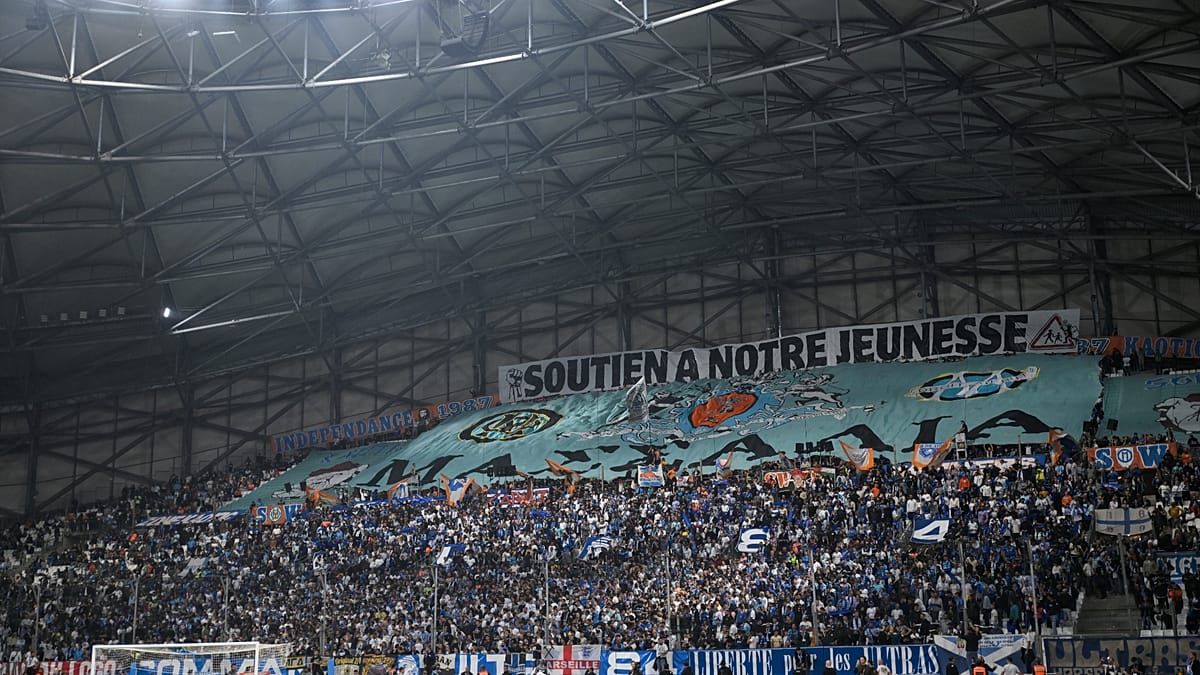
The violence that erupted at the Stade Vélodrome on Thursday evening before the Europa League match between Olympique de Marseille and Levski Sofia has escalated into a diplomatic incident, drawing condemnations from the highest levels of both the French and Bulgarian governments. The clash, which took place shortly before kick-off, left eleven Bulgarian supporters injured, five of them requiring hospital treatment for head and eye trauma.
French President Emmanuel Macron, attending a European summit in Brussels, spoke with his Bulgarian counterpart Iliana Iotova and condemned the attacks with “the greatest firmness,” assuring her that the incidents “would not go unpunished.” Iotova, visibly shaken, described the images from the stadium as “horrifying” and the violence as “unacceptable.” She called on French authorities to fully clarify the circumstances and urged UEFA to review the security arrangements at the venue.
The Bulgarian Ministry of Foreign Affairs issued its own statement, “firmly condemning the assaults committed against Bulgarian nationals in Marseille.” The ministry also expressed concern over the safety of Bulgarian citizens abroad and demanded that those responsible be brought to justice.
What happened at the Vélodrome?
The exact sequence of events remains under investigation, but French sports daily L'Équipe reported that around ten minutes before the scheduled 18:45 start, Bulgarian fans seated in the Jean-Bouin stand—outside the designated away section—repeatedly provoked the Marseille ultras. Among the gestures observed were Nazi salutes, one of which was captured on video and widely shared on social media before being restrained by a security guard.
The situation quickly spiralled. Several dozen OM supporters, mainly from the Virage Sud, left their own stand and moved toward the Jean-Bouin to confront the roughly 500 Bulgarians who had taken their seats. Blows were exchanged, with flagpoles used as weapons, and missiles and flares were thrown. Some Marseille fans wore balaclavas, obscuring their identities. Security personnel and riot police eventually intervened, deploying tear gas to disperse the combatants.
According to the Bouches-du-Rhône police prefecture, eleven Bulgarians were injured, five of whom were hospitalised, notably for eye and head trauma. No arrests were initially reported, though the police have opened an investigation.
The incident has raised broader questions about the safety of away supporters in European competitions and the adequacy of security measures at major stadiums. UEFA, which has yet to comment publicly, is expected to review the case under its disciplinary procedures. The governing body has previously imposed sanctions on clubs for crowd disturbances, including fines and partial stadium closures.
For Bulgaria, the attack has resonated deeply. Levski Sofia, one of the country's most storied clubs, has a passionate fan base, and the images of their supporters being assaulted in Marseille have sparked outrage in Sofia. The Bulgarian government has said it will seek a full report from French authorities and may raise the matter at the next EU justice and home affairs council.
In France, the incident has also reignited debate about football hooliganism and the effectiveness of existing measures to prevent violence at matches. Marseille's stadium has a history of crowd trouble, and the club has previously been sanctioned by UEFA for fan behaviour. The French interior ministry has promised a thorough investigation and said it would review the security protocols for future European fixtures.
The diplomatic fallout comes at a sensitive time for Franco-Bulgarian relations, which have generally been cordial within the EU framework. The two countries are partners in the bloc's efforts to strengthen border security and manage migration, and both are members of the Schengen area. The incident, however, has tested that partnership, with Bulgarian officials expressing frustration over the perceived lack of protection for their citizens.
As the investigation continues, both governments have stressed the importance of ensuring that such violence does not recur. Macron's office said the French president had asked his interior minister to take all necessary steps to identify and punish those responsible. Iotova, meanwhile, has called for a broader European discussion on fan safety, suggesting that UEFA should adopt stricter standards for stadium security across the continent.
The match itself, which Marseille won 2-0, was overshadowed by the events before kick-off. For the Bulgarian fans who travelled to Marseille, the night will be remembered not for the football but for the violence they endured. Their ordeal has become a stark reminder of the challenges that remain in ensuring that European football is a safe and welcoming environment for all supporters.



