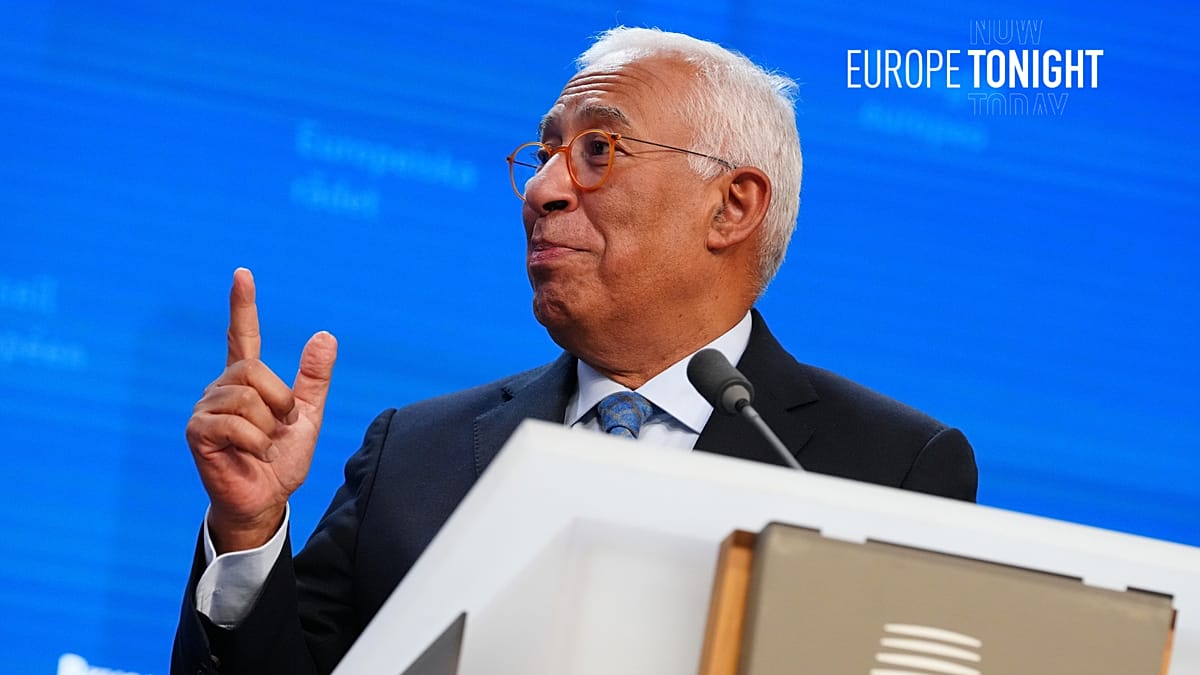
European leaders left Brussels empty-handed on Thursday night after a special two-day summit on the bloc's next seven-year budget (2028–2034) ended a day early. Talks broke down after midnight when German Chancellor Friedrich Merz and the fiscally conservative "frugal" nations walked out on European Council President António Costa. A final attempt to reach an agreement is now scheduled for a summit one week before Christmas.
The collapse exposes deep divisions over spending priorities. Berlin is pushing for expenditure cuts and wants to link Ukraine funding directly to the broader EU budget, with Merz threatening a veto unless all 27 member states sign on. By contrast, the "Friends of Cohesion" bloc, including Italy and Greece, is resisting spending cuts. Italian Prime Minister Giorgia Meloni maintained a firm stance, echoed by Greek Prime Minister Kyriakos Mitsotakis, who warned: "We cannot talk about a strong Europe with a weak budget." French President Emmanuel Macron also cautioned that failing to reach a deal before year-end would stall negotiations until after France's presidential election in April.
Spain's snap election could shift the EU's political balance
Spanish Prime Minister Pedro Sánchez skipped the Brussels summit to campaign ahead of Sunday's snap general election. Following Thursday night's final televised debate, polls suggest Sánchez's Socialist-led coalition could be unseated. A victory for a right-wing coalition could bring the far right into government for the first time in decades, significantly shifting the EU's political balance ahead of December's decisive budget talks.
The outcome in Madrid will be closely watched in Brussels, where the budget deadlock has already raised questions about the bloc's ability to act decisively. As leaders clash over strategic priorities, a change in Spain's government could alter the voting dynamics on fiscal matters.
UK publishes details of new EU reset deal
In London, the government has officially published the legal texts of Prime Minister Andy Burnham's new package of agreements with Brussels—covering shared food and agricultural standards, linked emissions trading schemes, and a youth mobility programme. Hailed by Burnham as a "win-win," the pact comes as polling shows a majority of Britons favour rejoining the bloc, sparking debate over whether the deal is a pragmatic reset or a first step towards full EU membership.
The UK's move adds another layer to the EU's already crowded agenda. With the budget talks stalled, some diplomats see the UK deal as a potential template for future cooperation, while others worry it could distract from internal priorities. The farmers' protests in Brussels over CAP funding have already highlighted the sensitivity of agricultural issues, which are also central to the UK agreement.
As the EU heads into a critical December, the combination of a possible Spanish political shift, the UK's new relationship, and the unresolved budget could reshape the continent's trajectory. The next few weeks will test whether the bloc can overcome its internal divisions and present a united front on issues ranging from Ukraine aid to long-term investment.



